
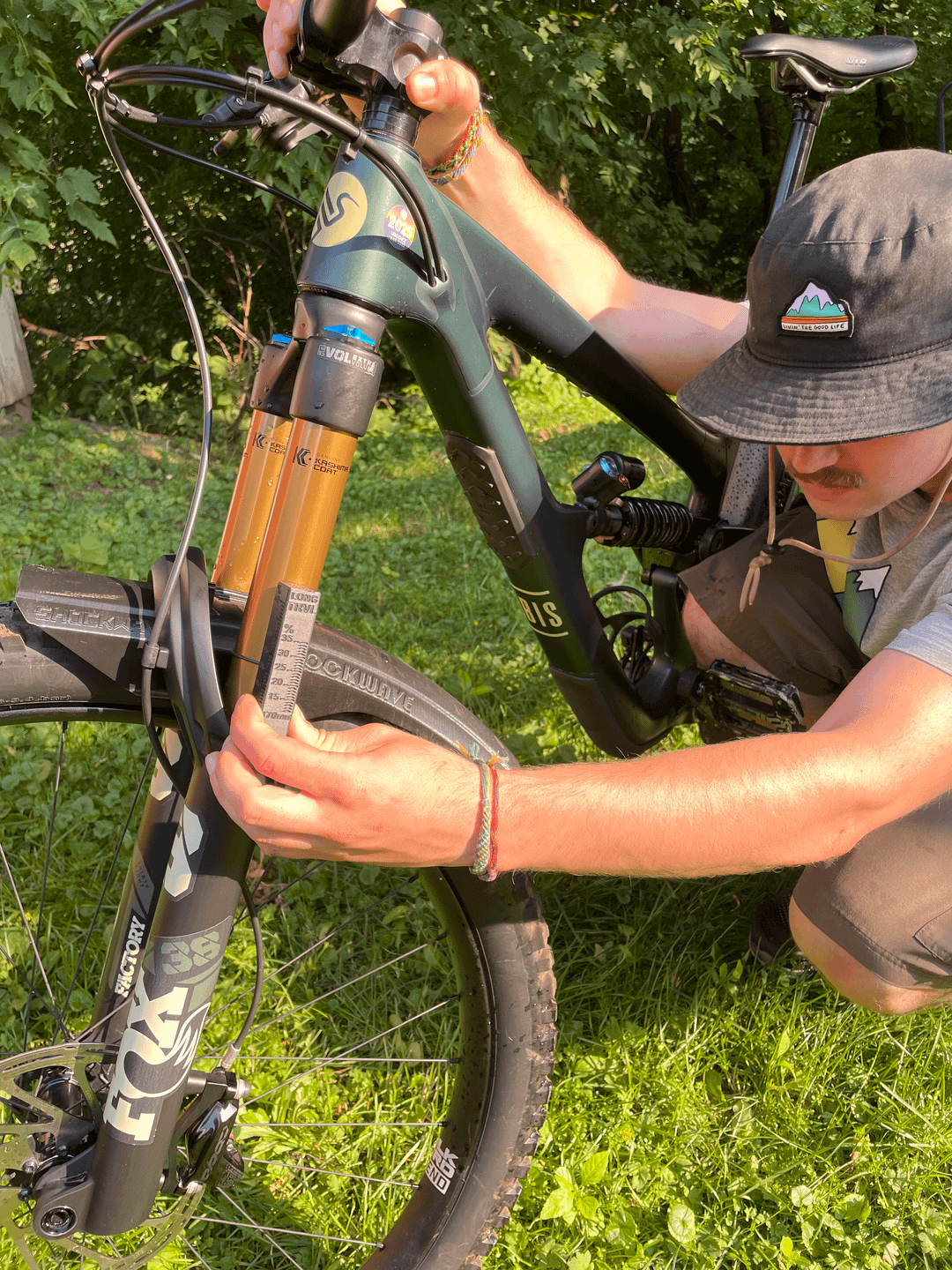
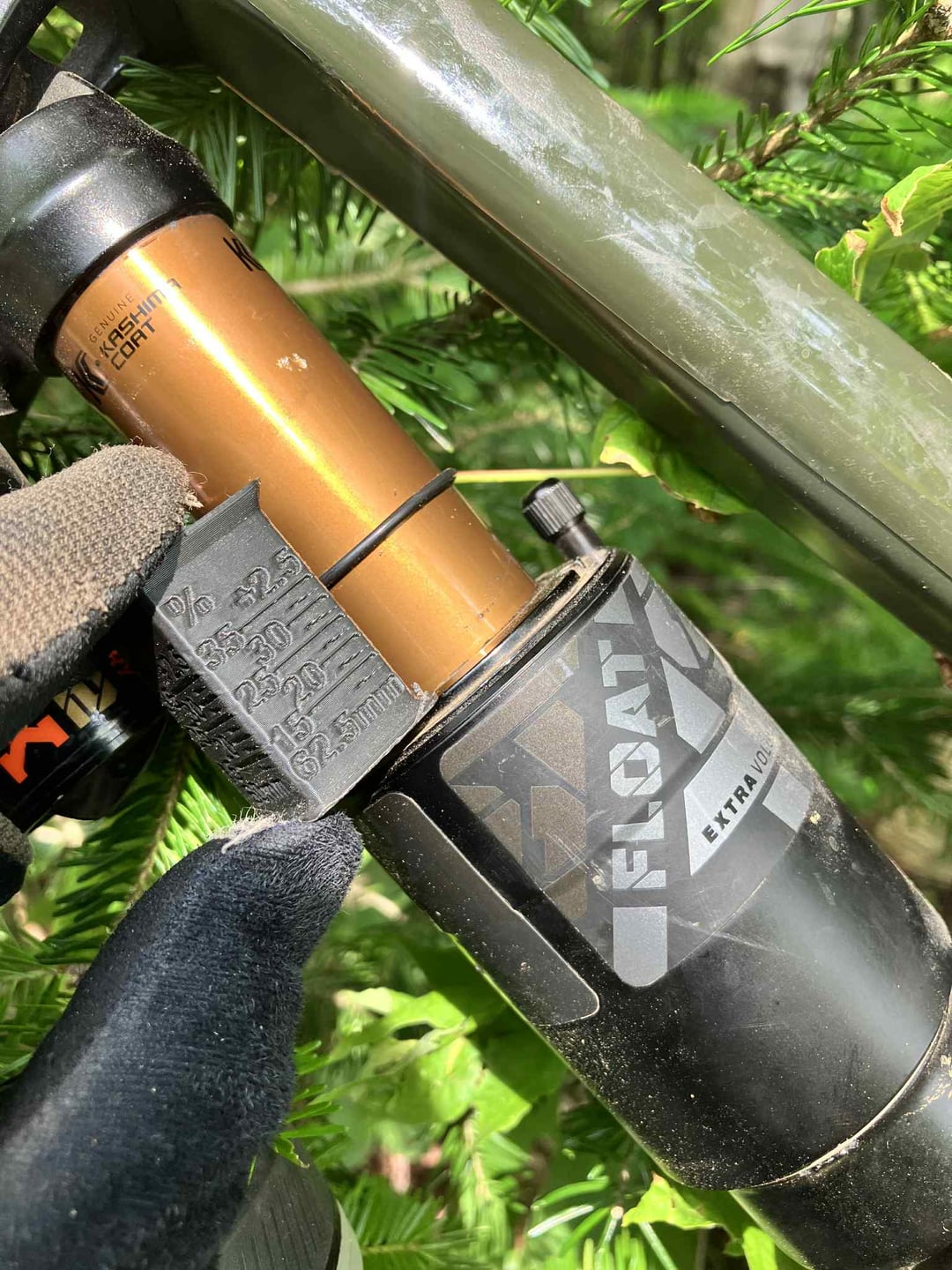
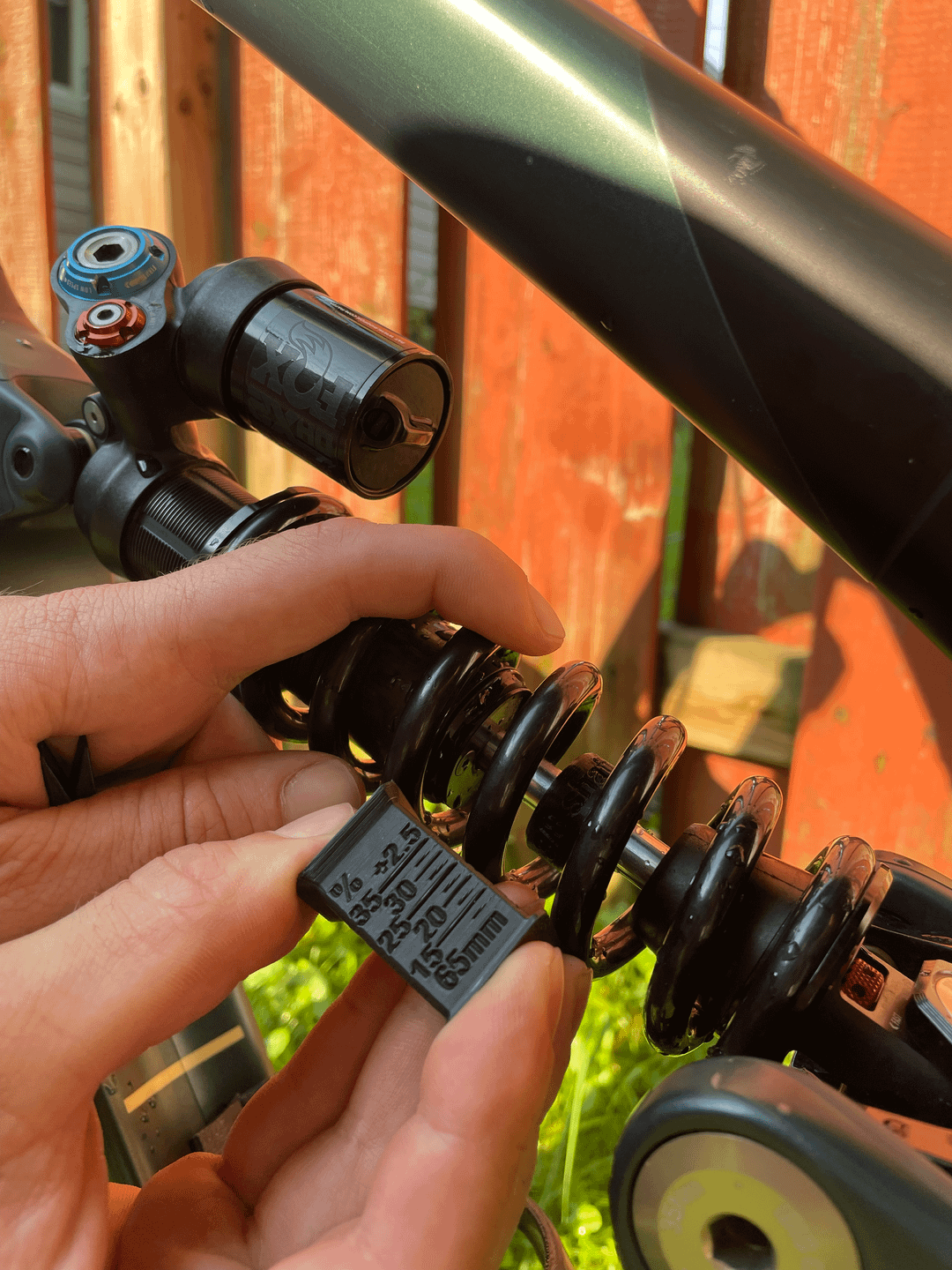
I’ve been playing around with sag measurements lately and even made myself a couple of tools for it. Pretty stoked with how they turned out.
Something I’ve noticed people mix up a lot is that rear wheel sag and shock sag aren’t the same thing. Because of leverage ratios and progression, the rear wheel usually shows about 3–5% more sag than the shock itself. To make sense of that, I put together a free little calculator that takes progression rates, leverage curves, stroke length, all that stuff, and gives you the real rear wheel sag.
At the end of the day though, consistency matters more than the exact number. If you always measure in the same way, you’ll be fine.
How do you usually check yours? Do you go by the o-ring on the shock, measure wheel sag, or just set it up by feel?
by TwistLevel6599
10 Comments
Unless it’s a Rockshox shock, it’s by feel. You stop worrying about numbers and go with your butt.
I will say last year as a full beginner I relied solely on the o rings. However as I got to the end of my first season and into my second this year I found myself checking travel use after rides and I ended up dialing it in better off of feel over a couple weeks until I found a sweet spot.
Every spring I check the pressure in my front and rear, then I sit on the bike and adjust until I have about 25-30% sag (eyeballing it).
Then I ride like hell for 6 months.
It’s extremely important. Start with the manufacturer settings. I just use o rings and a digital mm caliper. Just divide the o-ring distance by the full stroke distance. For the fork, most manufacturers recommend 15-20 percent. Rear shocks are trickier because different frames are designed around different sag ranges and determining the stroke length requires you look up your specifications for the shock; for a fork, you just divide the o-ring distance into the travel for the fork.
This year I took my bike to a suspension shop for a rebuild and they helped me dial in my setup. We started at 30% sag (with that being the lowest rate on the Sprindex I bought). Then I took it out adjusted based on feel. It’ll be a little less than that now, probably closer to 25%. I don’t measure sag though. It’s all about ride feel for me.
Never measure the fork sag. That’s all feels.
Sag is very useful in the rear as a starting point and a repeatable measure, but never get stuck to a number, GO BY FEEL. Once it feels right, then you can repeat that setting using sag, and then you’ll know your air pressure. Always always use the same pump, there’s a lot of variation between pumps.
On the front, sag is pretty useless. Set then rear, then set the front to feel balanced with the rear. Sag in the front can be misleading, so much depends on head angle and bushing/seal binding, it’s really inconsistent. Maintain your fork regularly, sag will vary widely at the same PSI if you’ve done a fresh lower service or if it’s been a while.
I open Google and type “20% of 170” to get the amount of sag I need and then measure where the O ring goes on the fork.
According the Jordi from Fox, sag is the most important thing to get right as everything else is set up after sag is set.
He also says it doesn’t matter if you measure sag at the wheel or on the shock as you want 30% of the total travel, so leverage ratios are irrelevant.
For my rear shock I type “30% of 65” into Google and then either measure my sag using the rubber bottom out bumper or the O ring if it’s an air shock.
What I never do is measure the full length of the stanchion and assume that is the max amount of travel for the fork/shock as it’s not often the case.
I set o-ring, go sit on the bike and be like: that seems to be about 26% ish, jup done no adjustment needed.
And only my rear shock I really made sure was right because if I put in 120psi I bottomed to quickly , if I put in 160 it still bottomed to quickly but had a firm feel, so I put in a volume spacer and that fixed it riding at 150 psi currently. And the fork I just set from what fox recommended and it was good ever after , setup once enjoy forever
Just a heads up, but there’s a good chance that bike will wind up snapping that particular coil shock. Might want to switch back to the Float X2, or one of the shocks Ibis lists in the bikes FAQ, before it becomes a problem.
[Fox’ criteria for mounting to a yoke.](https://tech.ridefox.com/bike/general-info/1138/information-on-%22strut-mount%22-bikes-and-fox-or-marzocchi-coil-shocks)
I’m surprised they don’t list the Ripmo explicitly in their list of known problem-bikes, but I just double checked on my own V2S, and the yoke length is outside of the safe range.
…..
…..
…..
I just used the recommended pressure and rebound settings and haven’t deviated from it since. 🤷