
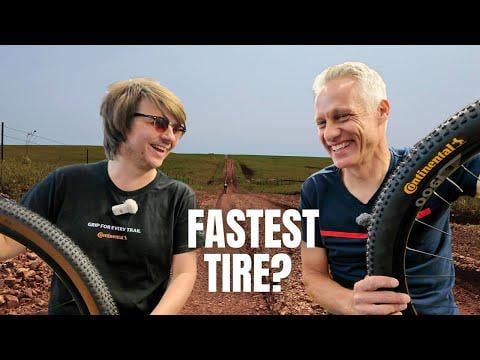
I've not seen this posted here, but I found it a nice listen w/ the morning granola.
https://www.youtube.com/watch?v=mlZCtv9-BD0
The TL;DR is not particularly new – if you want to avoid flats and get some comfort and ride rough terrain an XC tire is probably best. If the terrain allows, however, and the tire will survive the terrain, actual gravel tires are going to be faster most likely. Yeah, I know, shocking 😉
However also some interesting talk about how drum testing for RR is of limited utility, how they rely on power vs time data from their athletes, convergence of gravel and XC tires in terms of casing development / product lines, how gravel development is being influenced more by mtb than road now, etc…
by Antpitta
1 Comment
Brr is a good indication of speed when comparing to other brr tests. While limited it’s the most quantitative and comprehensive testing we currently have access to. FitbyJohn (i hope that’s the right user) and the bicycle station also do great testing in the real world but they’re also limited by real world variables. The correct answer is somewhere between all of the above. As for puncture protection, brr has a puncture section for that as well which is from what i know of the only actual testing done on punctures but this data can only really be compared to other tires of the same/similar volumes.