
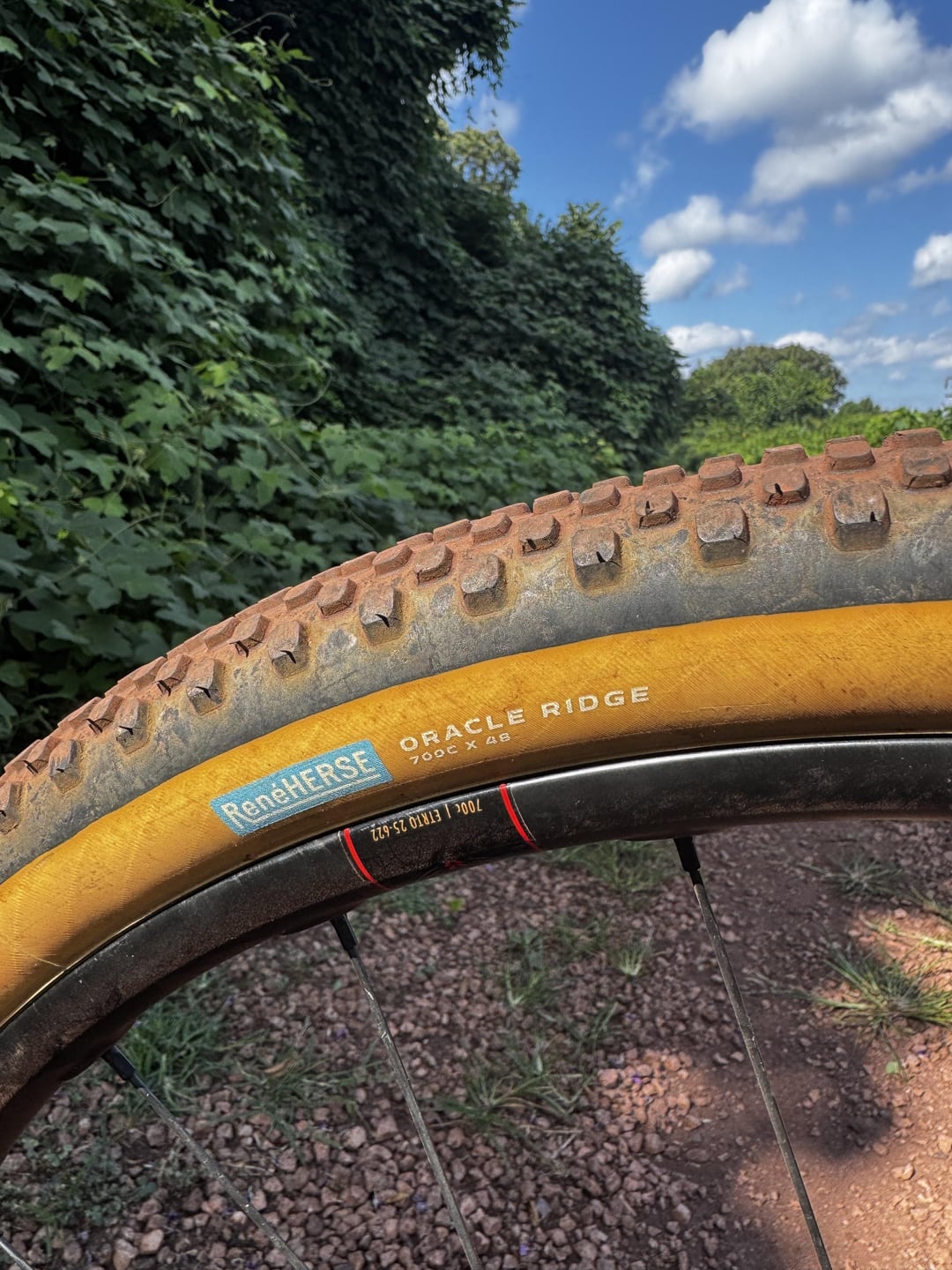
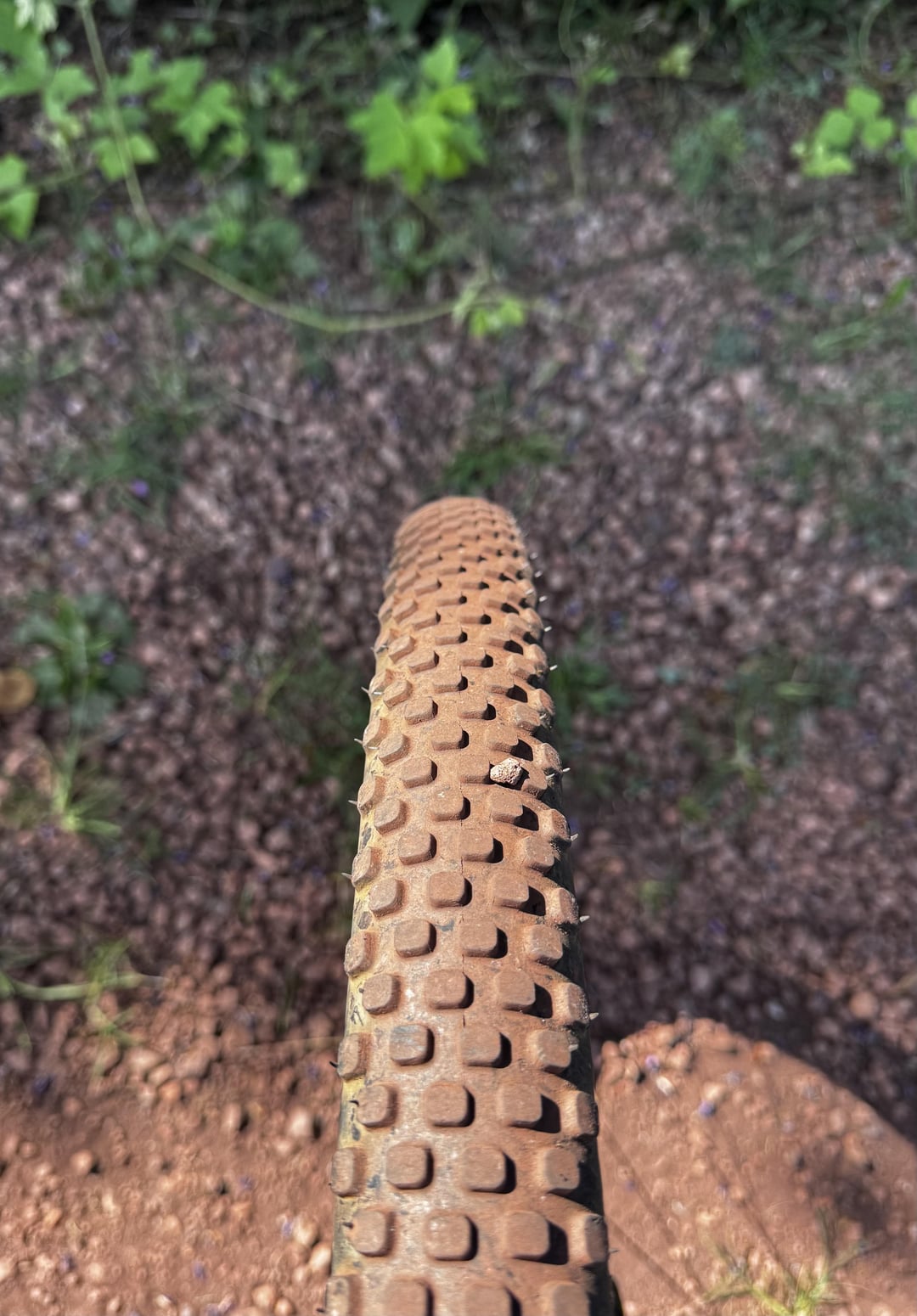
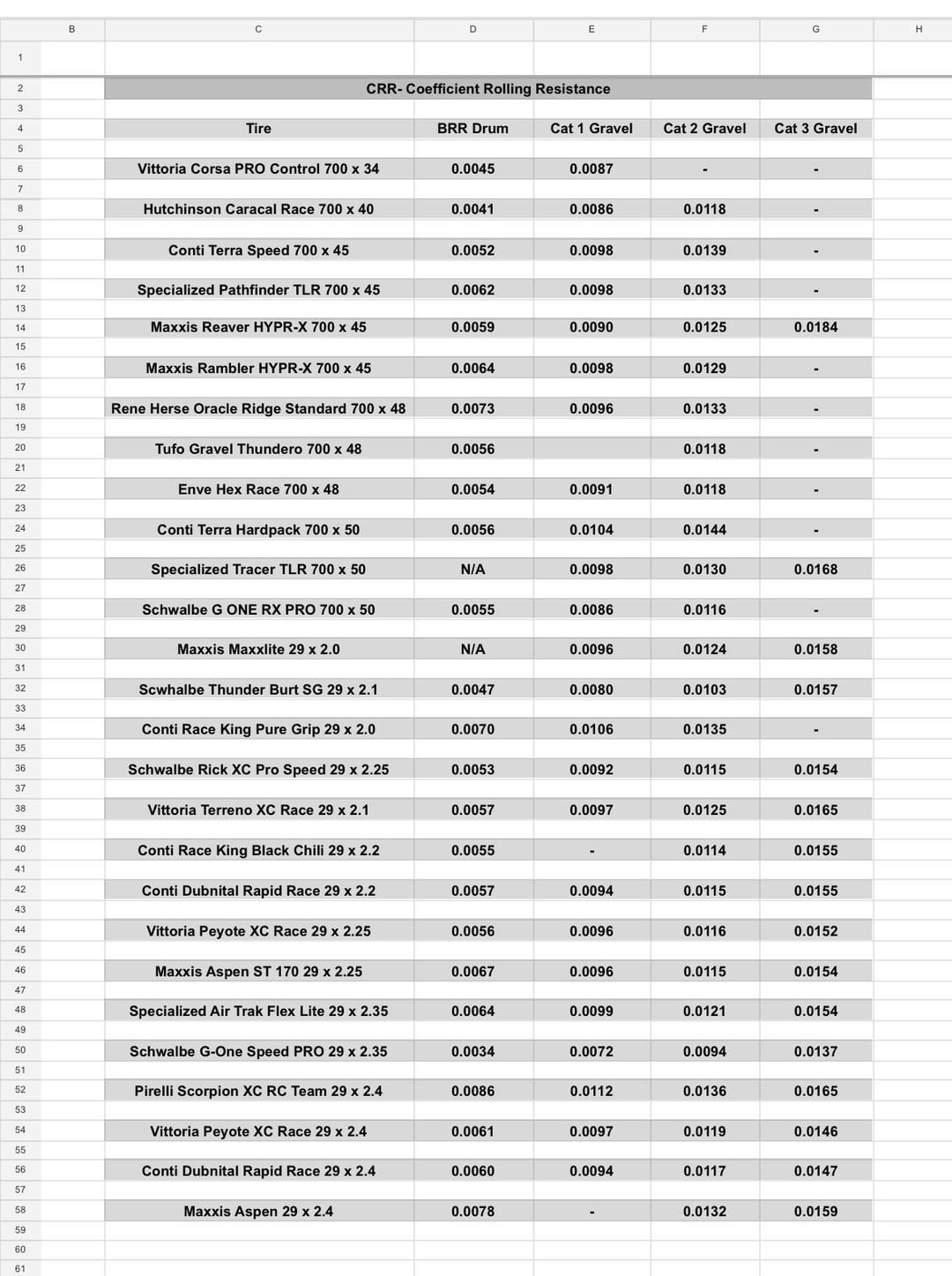
It seems every time I post tire results, someone asks when I will test something from Rene Herse, so I’m really glad to get these done! If you have trouble with the naming conventions here, this is the knobby tread version with the Standard casing. Per Rene Herse, this tire is comfortable and fast yet can take significant abuse. They also have “noise cancelling technology” which I regrettably didn’t test. These measured 47 mm wide on 25 mm Reserve rims.
These provide a supple sidewall, but if you want extra supple sidewalls the Extralight version includes those. The Standard tire I tested had some of the thinnest sidewalls I have used off road. If you notice how often you see the words supple and fast together to describe tires, it likely came from a Winter 2004 edition of Bicycle Quarterly: “High-quality tires with supple sidewalls provide less rolling resistance.”
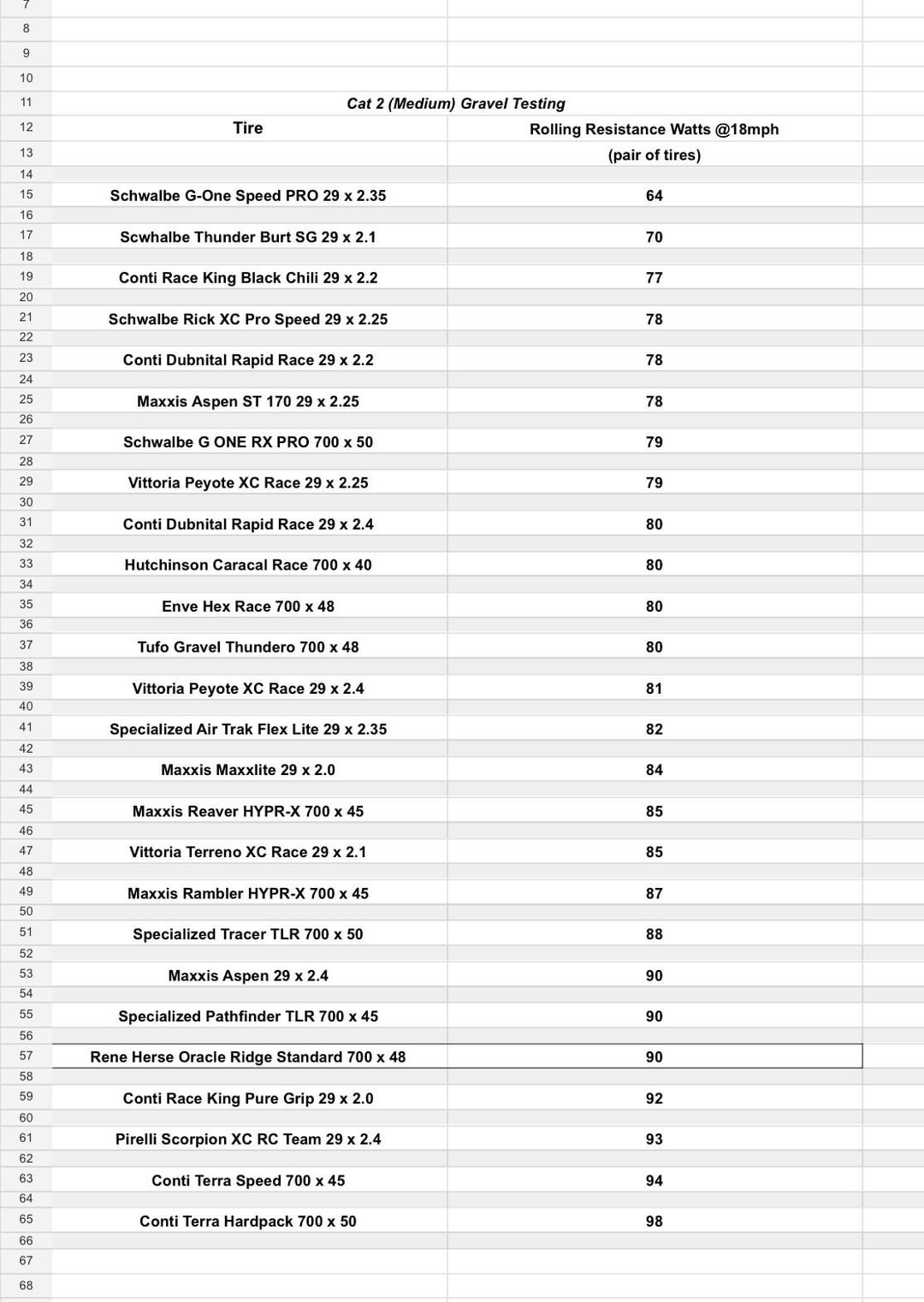
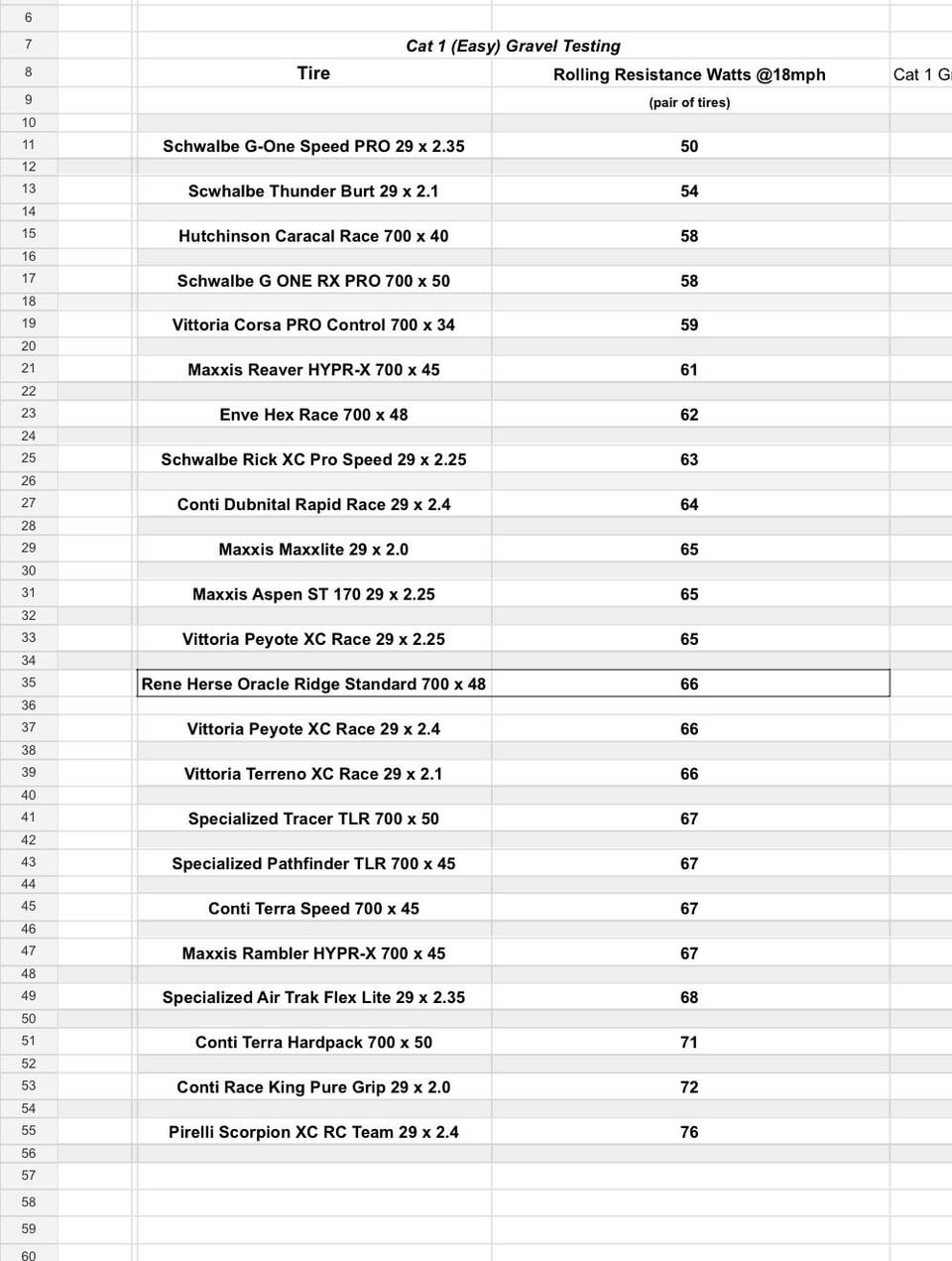
As you have seen with some other tests I have ran, there is no magic feature that makes a tire fast and this holds true for supple sidewalls as you can see in the results here. I did these on pavement also, which is only fair for a tire whose development focused on real world results, rather than only lab numbers. The pavement rolling resistance is higher than both of the new Maxxis gravel tires in similar sizes, but faster than the 50 mm Conti Race King Pure Grip. These aired up right away, had some initial pressure loss, but after riding some are holding air pretty well.
All gravel results are my own via Chung Method testing outdoors. This is data-intensive but appealing for me as it gives high precision and repeatable (both under 1%) measures of actual rolling resistance. Rolldown tests are attractive in their simplicity, but often lack resolution in these rolling resistance values and can suffer poor repeatability from quite subtle shifts in environmental conditions.
Oh, and about the tire pressure! Obviously, larger tires will require lower pressure than smaller ones to get the best speed and handling in general…especially off road. The Wolf Tooth calculator is very good in my usage for gravel and mtb tires. The Rough Gravel setting seems to get quite close to best pressure for not only rolling efficiency but also comfort and handling. I will start with that based on the measured tire size, go ride some, recheck pressure once the tire warms up, the reasess the setting based on how the tire is riding. If it feels obviously harsh, go down 1 psi at a time. If it feels squirmy or I am smacking the rim on hard hits, I will go up 1 psi at a time. Often I end up sticking quite close to what the calculator says initially but it isn't written in stone. Many calculators get too high a pressure for off road tires.
Rolling efficiency is actually almost identical across a bigger span of tire pressures off road than most realize, which means it is quite easy to get the pressure where the tire will be fastest…the rest is fine tuning to rider preference. Even though I’m testing I am also enjoying being out there so take the extra steps to see how the tire performs best.
by gravykarrasch
3 Comments
Thank you for your service
this aligns with my experience, they’re not the slowest but they’re not that fast either. what the supple casing does offer is a very plush ride that is make comfortable to me than the continental tires.
my favorite tire is actually the soma cazadero 50mm. it’s made by panaracer as well and has a very thin casing, almost as thin as the extra lights. but it has a continuous center tread that really helps them roll faster on the road and on hard packed gravel
If they’re that expensive, they better be fast. Oh well.