
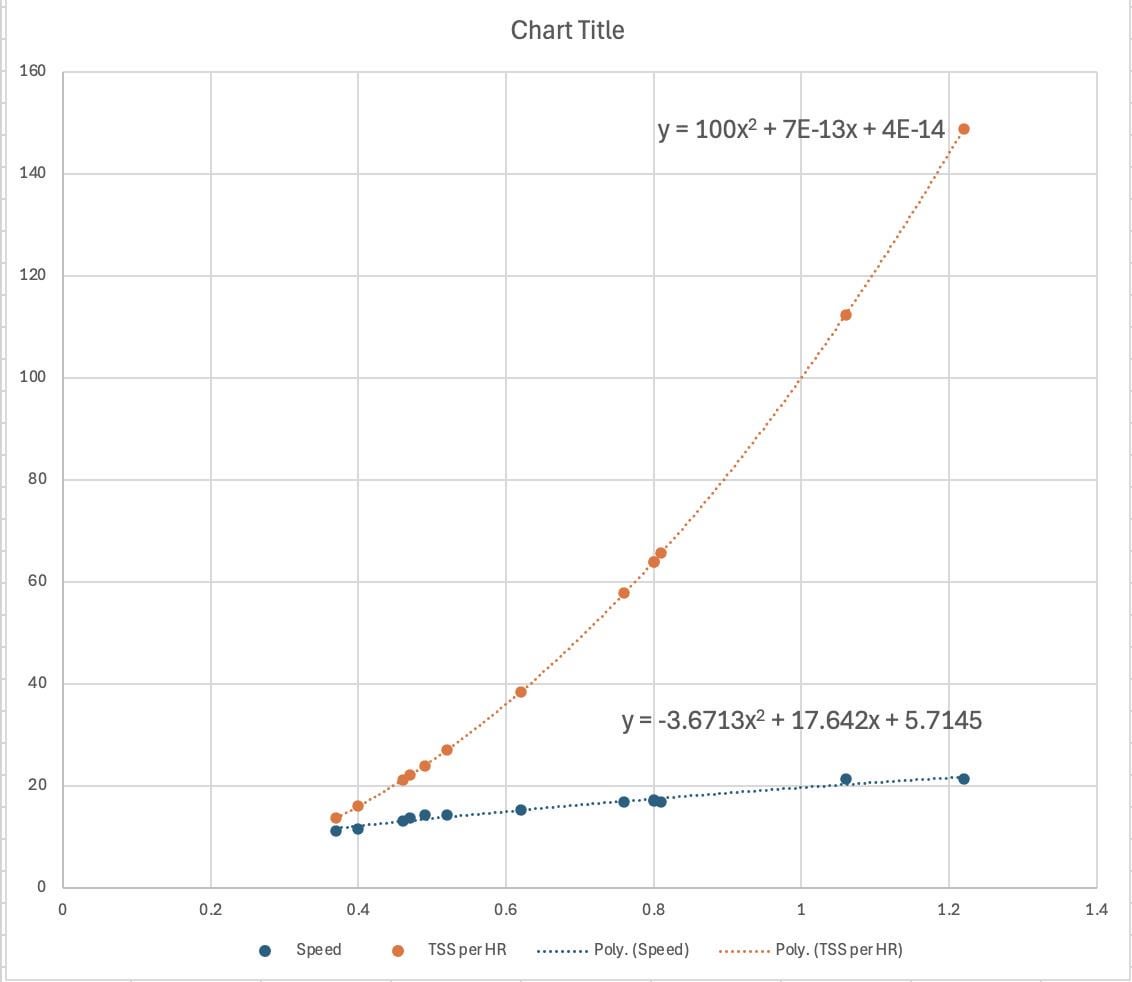
Nursing an injured knee and have been riding much slower than usual. Riding at 45% intensity (13 mph) vs the usual 75-80% (17 mph) and I was amazed at how less fatigue I was. Not just a little less fatigued. I felt like I could ride forever. Decided to look at a few rides and compare the stress scores (TSS). Of course entered it into Excel and plotted the trend lines. These are my trend lines, yours will be different, and probably better.
TSS
1 hour at 13 mph = 17 TSS (45% intensity)
1 hour at 17 mph = 57 TSS (76% intensity)
riding 30% slower requires < 30% of the intensity
The actual speeds are a little faster, about 1 mph, on flat straight roads, but this was the historical data I had. Interesting, though in hindsights it makes sense, tss is basically a measure of intensity squared.
So is a 24 hour ride in my future?
by Relevant_Cheek4749
9 Comments
Wind resistance is a bitch, ain’t it?
Drag forces increase as a function of the velocity squared.
Riding 13 miles is less strenuous than riding 17. Wind resistance (edit: and intensity) is a factor of course, but you did do 24% less work.
Less pushing, more spinning.
Maybe I’m wrong but rather than drag I would think is due to 13mph being closer to walking speed proportionally (about 1/5th of that) than 17mph which might be closer to jogging already. Us humans have evolved to be very efficient at doing just that.
24 hours at below endurance pace isn’t hard from an aerobic standpoint, but you will probably experience discomfort at all your contact-points and possibly cramps if you don’t train up to that kind of duration.
Push as hard as you can on the handlebars. Like a bodybuilder trying to murder a bench press. Veins popping out of your arms. You’ll go much faster and prevent knee pain!
Congratulations, you discovered aerodynamics.
This is why triathletes spend thousands of dollars to save 10 watts.
My ass and wrists limit me to like 11 hours