
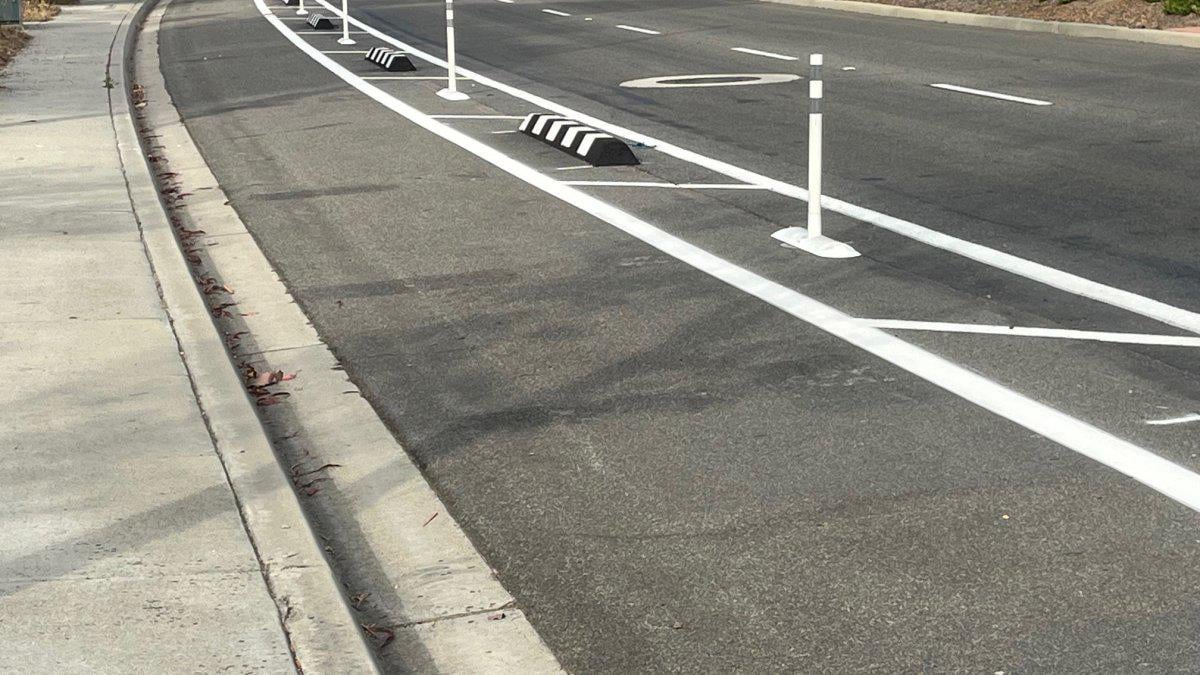
Local San Diego city council has voted to remove berms and bollards protecting a bike lane.
https://www.nbcsandiego.com/news/local/vista-removing-bike-lane-barriers/3864149/
While I personally disagree with this move, this type of bicycle infrastructure has been criticized before here in San Diego with even some cyclists calling them dangerous.
Does anyone have negative experiences with this type of infrastructure to share?
by Living_Emphasis_7317
16 Comments
You see this perspective all the time. It often comes from people known as “vehicular cyclists”, meaning they think bikes should use the road with cars. There’s a long history behind this POV in the US, and it’s probably held back the US adopting safer cycling infrastructure for decades.
People with this view are not always this upfront about saying they don’t care about the safety of “recreational riders”, which, to them, probably means anyone not willing to risk their lives mixing it up on the street with cars. That’s probably the majority of people willing to ride bikes for transport who currently don’t because there is not safe infrastructure.
All that said, implementation of protected bike lanes can be bad, but it depends on the details. You may need things like bike only green lights to prevent right turn conflicts, for example, or other infrastructure at corners to slow cars when they turn. But in my experience, people with the vehicular cycling POV are just opposed to any protected bike lane, regardless of the details.
edit: And in California, the vehicle code says that cyclists have to use painted bike lanes, even those that are in the door zone. But cyclists are not required to use protected bike lanes. In CA, at least, that kind of moots any point about the supposed danger of protected bike lanes for people who want to share the road with cars — they can choose to do that, but only with protected lanes.
We have some similar quick(ish) built infrastructure for pilot projects in my community (Reno, NV), and I would say they have been great for safety. But the issue I have with them is that they are way too easy to remove and do little for protection if a car attempts to cross into the bicycle facility.
It’s frustrating that city councils and engineers are way more concerned with drivers driving dangerously (sorry, I love good alliteration) and second priority is property, then maybe non-motorists (aka people). We have an issue here of high rates of drunk driving that leads to cars hopping curbs and slamming into store fronts. When we bring up this issue to our local MPO and the traffic engineers, they sight that clear zones prevent them from implementing hardened pedestrian infrastructure (think bollards, jersey, etc.). We shouldn’t be prioritizing people in their private metal boxes with airbags everywhere and crumple zones over pedestrians’ lives in their private metal area they’re supposed to be in.
My city has no protected bike lanes and probably never will. 🤷🏻♂️
International best practice is to build infrastructure for all ages and abilities. In Amsterdam, even septuagenarians ride bikes. As do little kids. I’m sure to a small number of people, the amount and speed of bikes there would be viewed as just awful. To everyone else, they’ve clearly done it better than us.
That’s insane. If cars are seriously running into those zebra painted bollards, that should be a red alert that the city has a crisis of geriatric or distracted drivers that shouldn’t have a licence. On top of that, I have a road bike and a beater bike- I would never use my recreational road biking preferences to undermine protective cycling infrastructure, that’s sociopathic. Ride courteously to the hills, THEN do your Lance Armstrong shit- trying to run a paceline in a city’s bike lanes is embarrassing behaviour.
I get the vibe that the mayor is one of those 15 minute cities paranoid schizophrenics and is pissing away the city’s money to try to make a culture war victory. Oh yeah, a bike lane on a SIX LANE HIGHWAY is really causing congestion pal… I bet making it 8 lanes will really fix that commute to Costco.
I feel it all depends on the road culture of the country/city. I’m not in the US but I use a bike path that has this type of protection and in the areas where it’s missing the cars most definitely seize the opportunity to use the bike path as an alternative bit of road to pass other cars, for example.
The other day I was almost hit by one because he didn’t think that I had the ROW, apparently. Thankfully I always assume car drivers will have zero consideration for my physical integrity and I managed to avoid it but it was quite scary.
So here I would say they’re necessary here, in my particular context.
I think the solution for the “ugly plastic bollards” are beautiful steel bollards.
They should only remove the protected bike lane until they find a viable alternative. But obviously these (wealthy and/or suburbanite) cyclists who dont want the bike lanes hate them because it forces them to go at a lower speed.If they want they can ride with the cars. Thats obviously their method of their actual transportation anyways. And how was the area beautiful before these bike lanes were install? It looks like it was 4 lanes going in both directions. Not saying the newer one is any beautiful. Now if they really wanted to make it beautiful, add some greenery protected bike lanes.
Yes benefiting the recreational riders is the point.
In the article itself they cite an increase in crashes but not if the overall number of cyclists rose. That’s incomplete at best but also possibly misleading.
I’m not crazy about that style of protection at all, but it’s better than nothing.
I would rather see some kind of physical separation, like grass or something that provides a buffer space.
The problem with barriers like these is they lock cyclists in and make it harder to take evasive action if something/someone gets in your path at the last minute. I was amazed, earlier this year I went to Austin TX and they have a lot of lanes that look like this. Just being there two days I saw not one but two cyclists crash due to hitting these, completely independent of anything to do with vehicle traffic! It seems like “recreational cyclists” who we are trying to cater to often aren’t comfortable riding in such tight confines with hard things they can hit.
Here we got bollards along a road where the road crosses a completely separated bike path. It happened after a cyclist got killed walking (not even riding) across the street in the crosswalk. This was after the town voted down building a tunnel under the road a year or two ago. So now the road has bollards. They do work for traffic calming. But they take them down for winter!
My only bone to pick with berms and bollards is that they get mowed down by cars and end up broken and blocking the bike lane in my area. There’s a curved section of road that constantly has a berm or two that’s been hit, detached, and now needs to be dodged.
On my route, I frequently have to get out of the bike lane for a number of reasons. Usually it’s because some jackass is blocking it with their car at an intersection. Having these berms would make it hard for me to get back into the bike lane. Cycling infrastructure is a tough issue to get right. Also I wouldn’t recommend any novice riders to take my commuting route even though it’s bike lanes most of the way. I only feel semi-safe because I’m used to riding with cars.
Nonsense. Concrete berms and bollards can be shaped and painted to become an aesthetically pleasing part of the streetscape. They don’t have to be ugly plastic, but for some reason, that’s what most NA cities go for when building bike lanes 🙄
“Avid cyclist” is code for someone who rode a bike as a kid, but hasn’t since and has no right to comment on infrastructure aimed at enabling cycling for transport.
I ride both athletically, recreationally and for transportation. We should recognize that all of these have slightly different infrastructure needs.
It looks like in this case they took a popular athletic cycling route and designed it around a recreational use. That means people riding fast in large groups gets funneled into a small corridor shared with pedestrians and slower riders with little room to pass. It’s obvious why athletic cyclists wouldn’t prefer this.
On the other hand, recreational cyclists aren’t even going to bother riding on a road with cars going 50mph without protection.
In my city, we have a wonderful rail trail that goes 15 miles. Super safe. If I’m riding with my kids this is where I do it. If I’m riding by myself for some exercise I avoid it like the plague. Too many pedestrians and slow bikers to make it safe to go fast.
I agree that’s separated bike lanes don’t serve fast, traffic-tolerant vehicular cyclists, but that’s not who they are designed for. The pro-car side has been amplifying vehicular cyclists’ voices for decades in an effort to discourage the construction of any bike infrastructure so, until very recently, we’ve been stuck with roads that only a few percent of people are willing to ride on.
All that said, flex posts and these temporary curbs are not appropriate for this design. They don’t provide any real protection and they tend to get knocked off and just become hazards in the bike lane. They aren’t very attractive and they are a long term maintenance headache. A raised concrete buffer or a sidewalk-level bike lane would be better.