
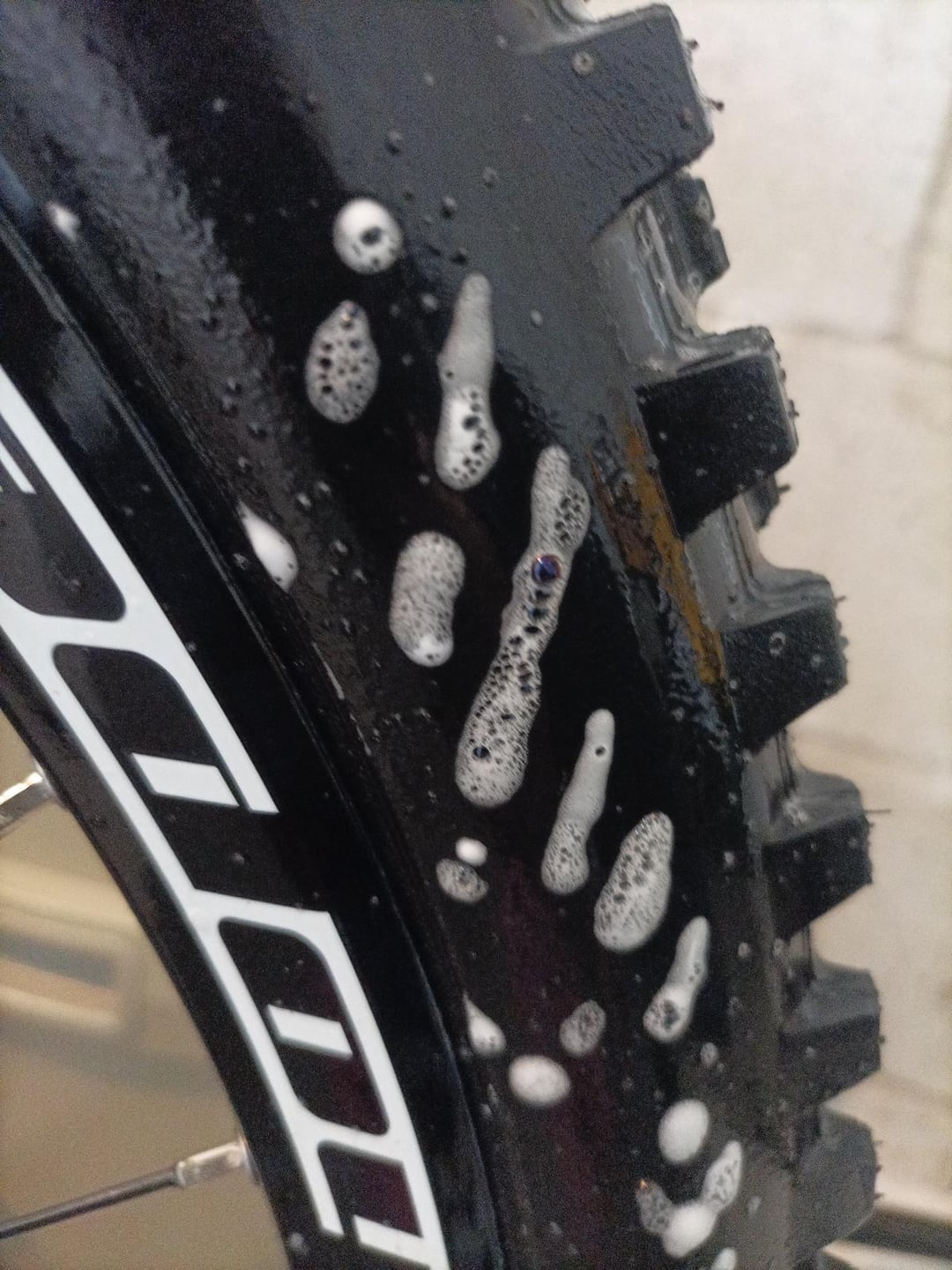
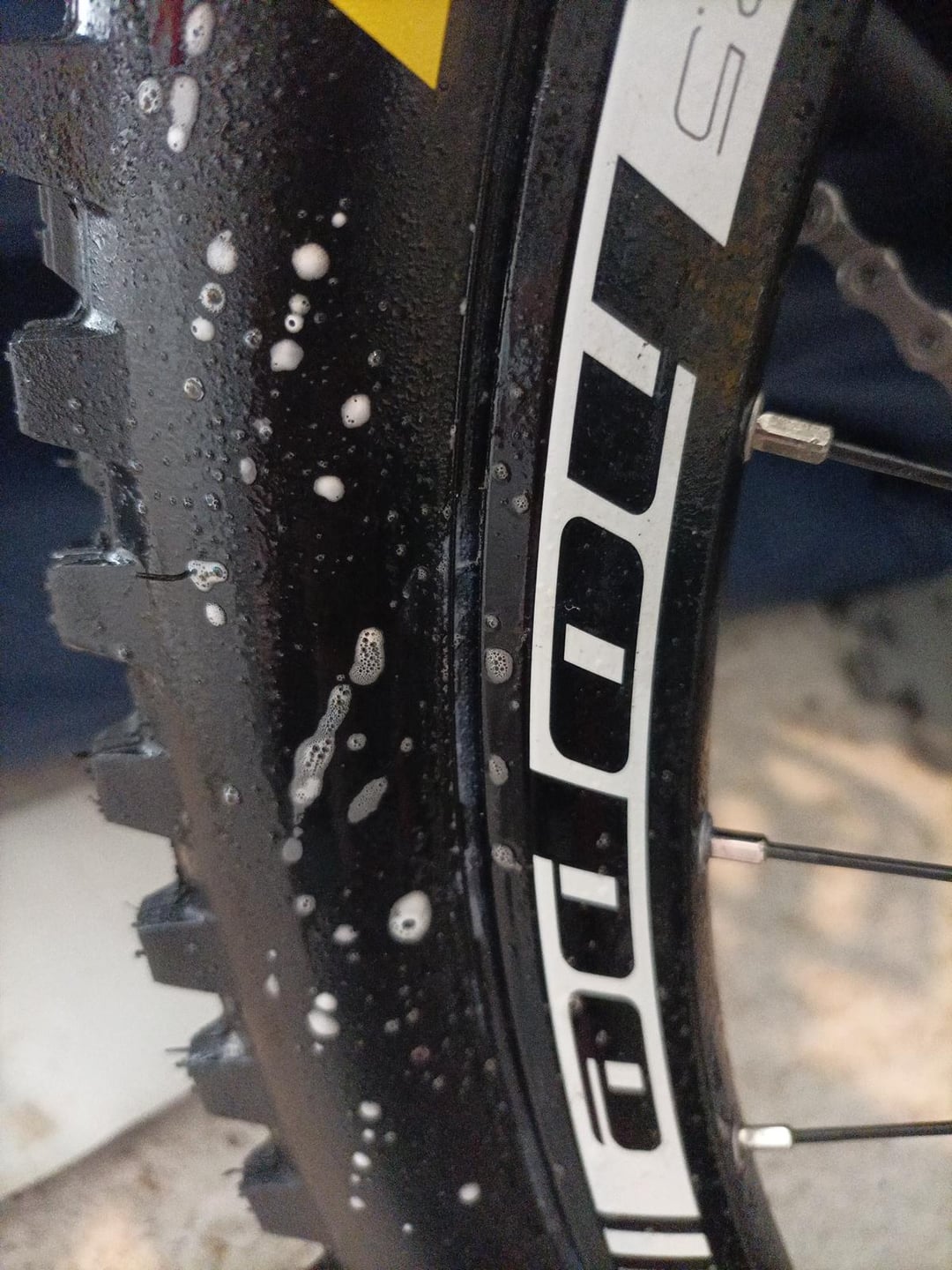
New to the tubeless world so had these fitted. Completely flat over night, looks to be a load of small leaks on the Sidewall. I've contacted the seller but just wondering if anyone has experienced this with new tyres?
by PretendYear7847
New to the tubeless world so had these fitted. Completely flat over night, looks to be a load of small leaks on the Sidewall. I've contacted the seller but just wondering if anyone has experienced this with new tyres?
by PretendYear7847
12 Comments
I’ve seen one video recently of a DH casing sidewall leaking air like that
Maybe that’s the issue as these are the dh casing
Did you put in enough sealant and spin the wheel to slosh the sealant around?
Had a similar issue on my enduro tires, fine for a few days then they completely lost air randomly.
Put in more sealant (at least 60ml) spin the tire to get the sealant to spread around evenly, and pump the tire as hard as you can. It’s normal for a correctly installed tubeless tire to lose a little air after the first couple days.
Maxxis is maxxising, it will pass. This is actually sealant at work. But it is quite possible there will be always some bubbles on the sidewalls, but they will work completely fine. Just add some sealant a bit sooner than normal and you will be fine.
BTW did you shook the sealant bottle really well before applying?
Why is it so wet on the outside?
Is there sealant inside?
Although all these Tubeless Ready tires are supposed to be “Tubeless Ready” in reality they are not 100% leak proof. Some are better than others.
In my experience what is best is to make sure you have shaken your sealant very well to make sure you have an even distribution of the particles that seal holes, and add a little more fluid than is recommended if it’s a new setup.
You need the solution to coat the inside of the tyre and go off a little to add a seal on the whole of the inside of the tyre, until this has occurred (or maybe forever) you’ll experience some loss of air over days or weeks, and I’ve also found when it’s hot sometimes you get a little of the sealant leaking through the sidewall on thinner sidewall tyres.
Personally I run Cushcore, this edges of the insert press on the inner wall of the tyre so I don’t get sealant in thoes areas due to the inserts position and movement against the inner wall when riding.
Currently on Maxxis Assegai’s front and rear mullet, DoubleDowns sidewall, max-grip Tripple compound, running Stans normal (not race) sealant, I lose about 10psi over a several weeks. Not had any sealant seeping through sidewall, yet.
Bike lives inside currently, so I checked it regularly since my crash, so that’s fairly accurate.
If you get seeping sealant just gat a cloth wet with mildly soapy water and clean it off, then rinse of the soapy water and protect the surfaces with some bike shine or similar (soap can dull paint etc) don’t get contamination on your discs/pads etc.
If your tyre keeps leaking film it and show the shop. Sometimes they’ll replace them, at least here in the UK.
What sidewall is that? It’s pretty common. They’ll all leak some. I had DH DHR2 do this but the thinner sidewalls will do it more likely. Take it for a ride around the neighborhood. Flex the tire some (push into the turns). Sealant will seal 🦭
Is this a DH casing specific thing? I just installed a new DD tyre using Peaty’s sealant and didn’t see this.
It’s normal to lose 1-2 psi a day with tubeless too. I always have to top mine up a few psi each time I ride.
What sealant did you use? I’ve seen Stans do this, never seen orange seal do it.
In my experience most new tubeless MTB tyres I mounted needed some time to seal and stop leaking substantially, I believe this is due to porosity of rubber and that is the reason you need to slosh the sealant inside the newly seated and inflated tyre to allow it to coat it fully and seal those pores.
And even after the initial sealing period I still need to pump up my tyres a few PSI every few days due to air leakage that is higher compared to tubes (based on experience with Maxxis, Schwalbe and Specialized tyres)
TL;DR: Tubeless tires need a special barrier layer to prevent fast leaking. Some tires are better than others, yours are terrible. Sealant will not be a solution as it will only slow down the leaking slightly. Send the tire back to teach them a lesson. Don’t waste your time and sealant on this junk.
Long version:
Tubeless tires are a bit special and as others said, they will never be perfectly tight. I’ve been quite happy before with everything but a maxxis rekon. A colleague of mine had really bad luck with some Schwalbe recently and after months of hassle went back to tubes.
So why does it happen?
Normal rubber has a relatively open molecular structure. That’s one of the reasons why they can be so elastic. However, this will also mean that small molecules can easily pass through this structure. For this reason, air balloons will deflate quite quickly without any evident leak. Some polymers will be less leaky than others. For tubeless tires they will insert a layer of a less leaky polymer. This should ensure that the tire holds air quite well, ideally a few weeks to months. However, these layers are not ideal for the tires tire-properties and are also a bit expensive to fiddle in. Therefore, some manufacturers decide to save some of it, leading to very leaky sidewalls.
Now, as others have suggested, sealant seems to be a good answer to the problem, right? Wrong, because sealant will never form a truly dense layer like we need. Lots of dried up sealant will only delay the deflation a bit, but it’s very suboptimal. You should send the tire back with some documentation of it’s leakyness, so that Maxxis get their shit together.
It will get better over time when the sealant has started working. No tyre is completely airproof, that’s why you need to check air pressure regularly on vehicles.