
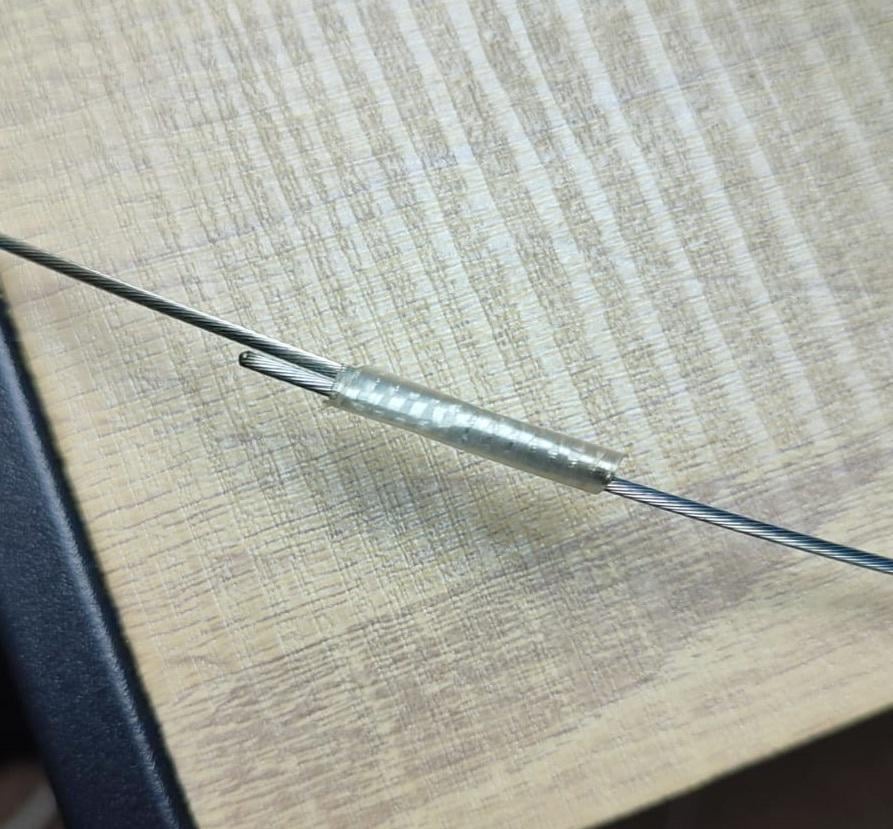
I have the magnet kit for doing an internal cable replacement but it is so much easier to just connect one end of the new cable to the snipped old one and use the old to pull the new through the frame. I just need a more reliable method of connecting the two, short of soldering. Ideas?
by NucleurDuck
12 Comments
Crimp them together with a cable end that you cut the closed end off.
Heat shrink tubing?
Yeah, the magnet kit is for when you’re routing a cable on something that hasn’t had a cable before – making use of the old cable/housing is always easier!
I prefer to run cable housing through and over the old cable, rather than trying to get the cable through first.
Adhesive lined heatshrink,or maybe rubber bands and a dab of superglue.
This works well:
https://www.jensonusa.com/rockshox-reverb-stealth-barb-connector-2
This isn’t connecting the cables, but works great for me. Push this ultra-thin liner over the old cable, until it reaches the other end. Then remove the old cable, guide the new cable through, remove the liner.
This worked great on all of my bikes. Even on the Kuwahara Lion, which is famous for being a pain for brake routing.
https://preview.redd.it/xdgwqrkgop2f1.png?width=651&format=png&auto=webp&s=db62248b518c08860faef5910766408a537a2978
I find using internal sleeves the easiest method for replacing internal cables. Just slide a sleeve long enough to come out both end onto old cable, hold the sleeve and pull out old, slide in new. Shift housing has a sleeve inside, just gotta splice it open. Brake housing has it too, but you need compression less housing to do the same.
I buy cheap ptfe cable liner, then run it over the existing cable until it is visible at both ends. Then withdraw the existing cable. This leaves me with a path to feed the new cable. Then remove the liner.
No magnet kits, no fishing, no soldering, no fuss.
Well i have never broken a cable. Usually the housing is going before. So if I change cables, I change housings.
copious amounts of electrical tape always works for me, a nicer solution would be shrink tube connectors with glue
Crimp but not together just like to rough up the surface then use super glue.
What you’re doing reminds me of my days as an electrician apprentice.
I don’t know if it would work for internal routing of cables on an integrated frame; but we would do new wire with a small bit of electrical tape to the old wire; not so much that it won’t fit through your cut but enough that it’s secure, and snake/fish them through. Pull the old wire through as it comes out from the exit, slowly and don’t force it as even if the tape is done properly, it can still separate… I haven’t ever done it with bike cables but this is how we would wire floor to floor in a finished project.
Hope that helps, even if it’s just future knowledge should you do some lV network drops at home.