I don’t recognise the crank but recognise the mechanism at work.
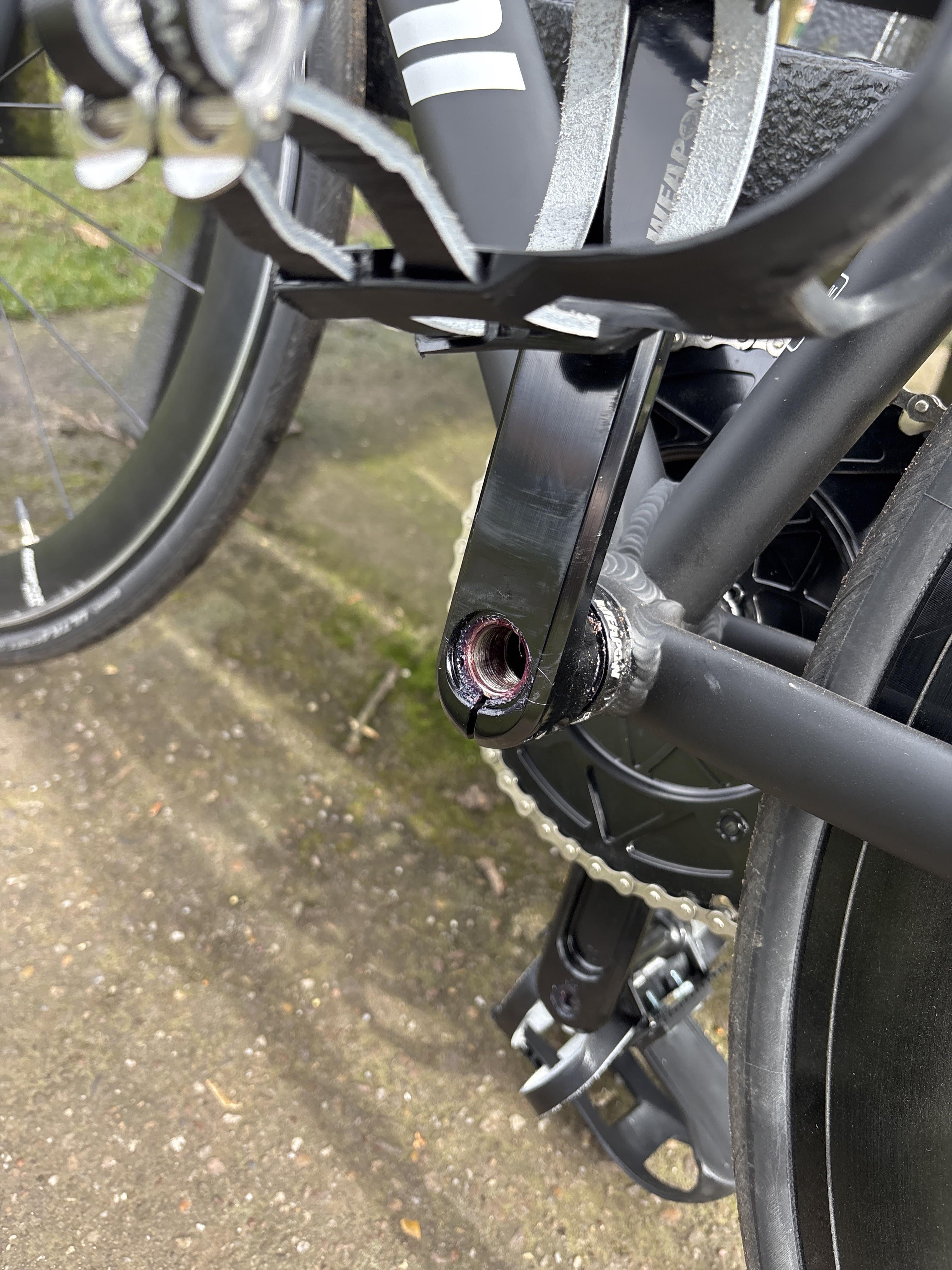
You’re missing a compression cap (plastic screw) that is used for setting the bearing preload at crank installation. That is hand-tightened (no tools) and can therefore unscrew by itself in unusual circumstances.
The crank itself is held on the axle by one or usually two screws on the side of the crank, which clamp the split crank onto the axle like a stem clamps onto a steerer tube (but with serrations to positively lock the position, so that the two cranks remain perfectly opposed).
Therefore, if this crank was properly installed, there is no chance of it falling off, with or without your missing compression cap.
So this problem is aesthetic only until someone needs to reinstall the crank (for example, after replacing the bottom bracket bearings).
But even then, there are ways to properly achieve bearing preload without the cap.
So not really a big deal. Certainly safe to ride – that is, if it was installed correctly.

1 Comment
I don’t recognise the crank but recognise the mechanism at work.
You’re missing a compression cap (plastic screw) that is used for setting the bearing preload at crank installation. That is hand-tightened (no tools) and can therefore unscrew by itself in unusual circumstances.
The crank itself is held on the axle by one or usually two screws on the side of the crank, which clamp the split crank onto the axle like a stem clamps onto a steerer tube (but with serrations to positively lock the position, so that the two cranks remain perfectly opposed).
Therefore, if this crank was properly installed, there is no chance of it falling off, with or without your missing compression cap.
So this problem is aesthetic only until someone needs to reinstall the crank (for example, after replacing the bottom bracket bearings).
But even then, there are ways to properly achieve bearing preload without the cap.
So not really a big deal. Certainly safe to ride – that is, if it was installed correctly.