The Sequoia was originally designed as a comfort road bike but I haven’t kept up with it. Comfort is the focus more than speed. Lower seat height and higher handlebars with shock seatpost and cushy handlebar tape.
The Allez is more of a traditional road bike meant more for speed than comfort and a lot lighter weight.
InnocentGun on
The Sequoia is an “adventure” or “touring” bike. Compared to an Allez, the Sequoia will have:
*A lower bottom bracket, giving you more stability (sacrificing the ability to pedal through corners where you are leaning over a lot, more of a race thing)
*A longer wheelbase, giving you more stability
*A longer head tube, giving a more upright riding stance
*Shorter top tube, bringing bars closer to you
*Larger tire clearance, giving you more comfort
*Lower gearing, making it easier to get up hills (especially if carrying cargo)
*Mounting points for racks and fenders
Basically the Allez is a race bike, you buy it if you want to ride fast (or like the idea of a faster bike). The Sequoia is a better bike for nearly all other roads/light gravel riding.
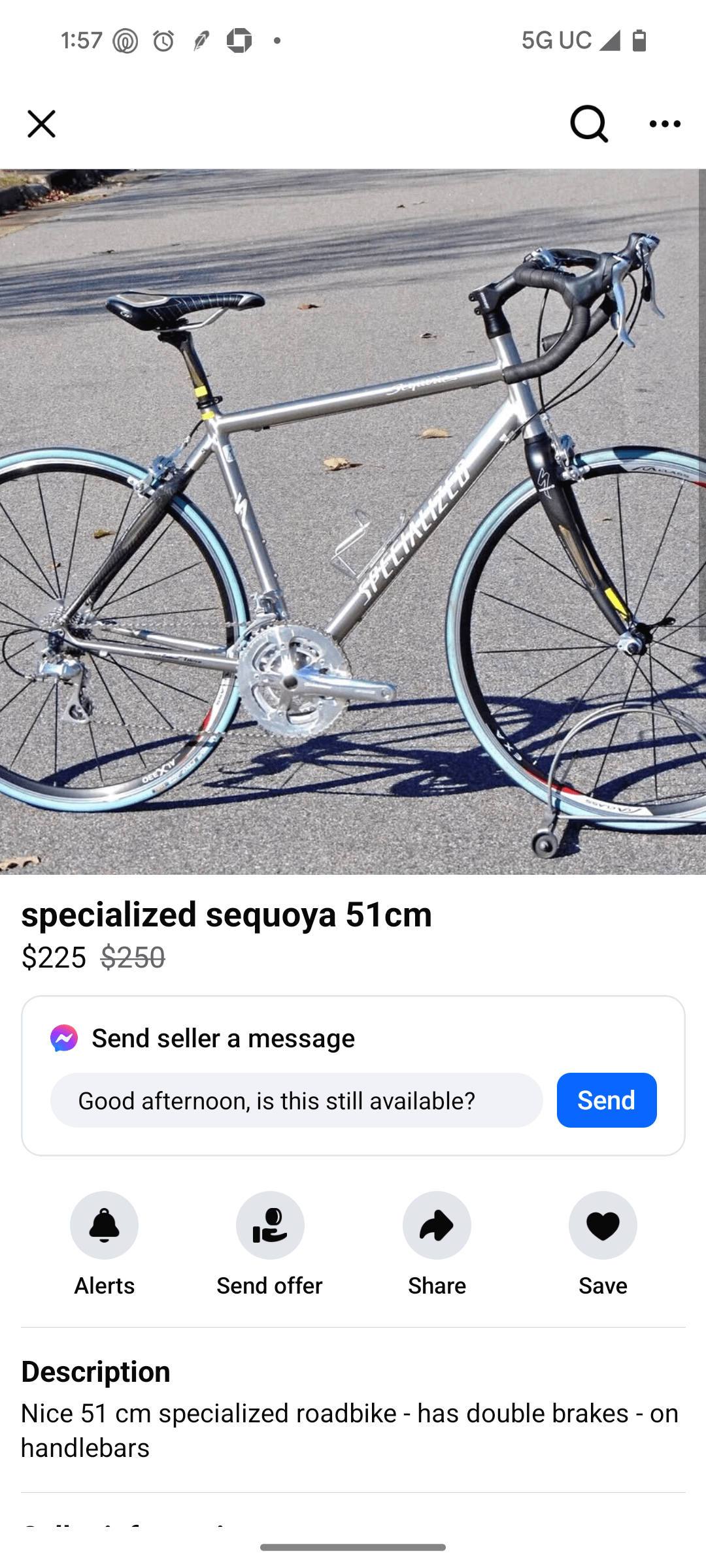
This is an older model, from the early 2000s by the look of it. It won’t have the tire clearance of a newer gravel/adventure bike (back in 2004 28 mm tires were considered fat), but if you want a nice frame for more relaxed riding (not looking to join the “A” ride that borders on racing), this looks like a well-maintained one.
Note that the components are older 9-speed Shimano. You can still get 9 speed cassettes, but you will have to pay close attention to the capacity and max tooth count of the derailleur (eg might be limited to an 11-25 or 11-28).
The shifters sometimes get gummed up, but flushing them with degreaser usually restores their clicky feel.
Other than that, it’s a pretty simple bike, which is a good thing from a maintainability standpoint. As long as you don’t wreck it, you could probably keep it going for as long as you can find replacement chains and cassettes.

2 Comments
The Sequoia was originally designed as a comfort road bike but I haven’t kept up with it. Comfort is the focus more than speed. Lower seat height and higher handlebars with shock seatpost and cushy handlebar tape.
The Allez is more of a traditional road bike meant more for speed than comfort and a lot lighter weight.
The Sequoia is an “adventure” or “touring” bike. Compared to an Allez, the Sequoia will have:
*A lower bottom bracket, giving you more stability (sacrificing the ability to pedal through corners where you are leaning over a lot, more of a race thing)
*A longer wheelbase, giving you more stability
*A longer head tube, giving a more upright riding stance
*Shorter top tube, bringing bars closer to you
*Larger tire clearance, giving you more comfort
*Lower gearing, making it easier to get up hills (especially if carrying cargo)
*Mounting points for racks and fenders
Basically the Allez is a race bike, you buy it if you want to ride fast (or like the idea of a faster bike). The Sequoia is a better bike for nearly all other roads/light gravel riding.
This is an older model, from the early 2000s by the look of it. It won’t have the tire clearance of a newer gravel/adventure bike (back in 2004 28 mm tires were considered fat), but if you want a nice frame for more relaxed riding (not looking to join the “A” ride that borders on racing), this looks like a well-maintained one.
Note that the components are older 9-speed Shimano. You can still get 9 speed cassettes, but you will have to pay close attention to the capacity and max tooth count of the derailleur (eg might be limited to an 11-25 or 11-28).
The shifters sometimes get gummed up, but flushing them with degreaser usually restores their clicky feel.
Other than that, it’s a pretty simple bike, which is a good thing from a maintainability standpoint. As long as you don’t wreck it, you could probably keep it going for as long as you can find replacement chains and cassettes.