
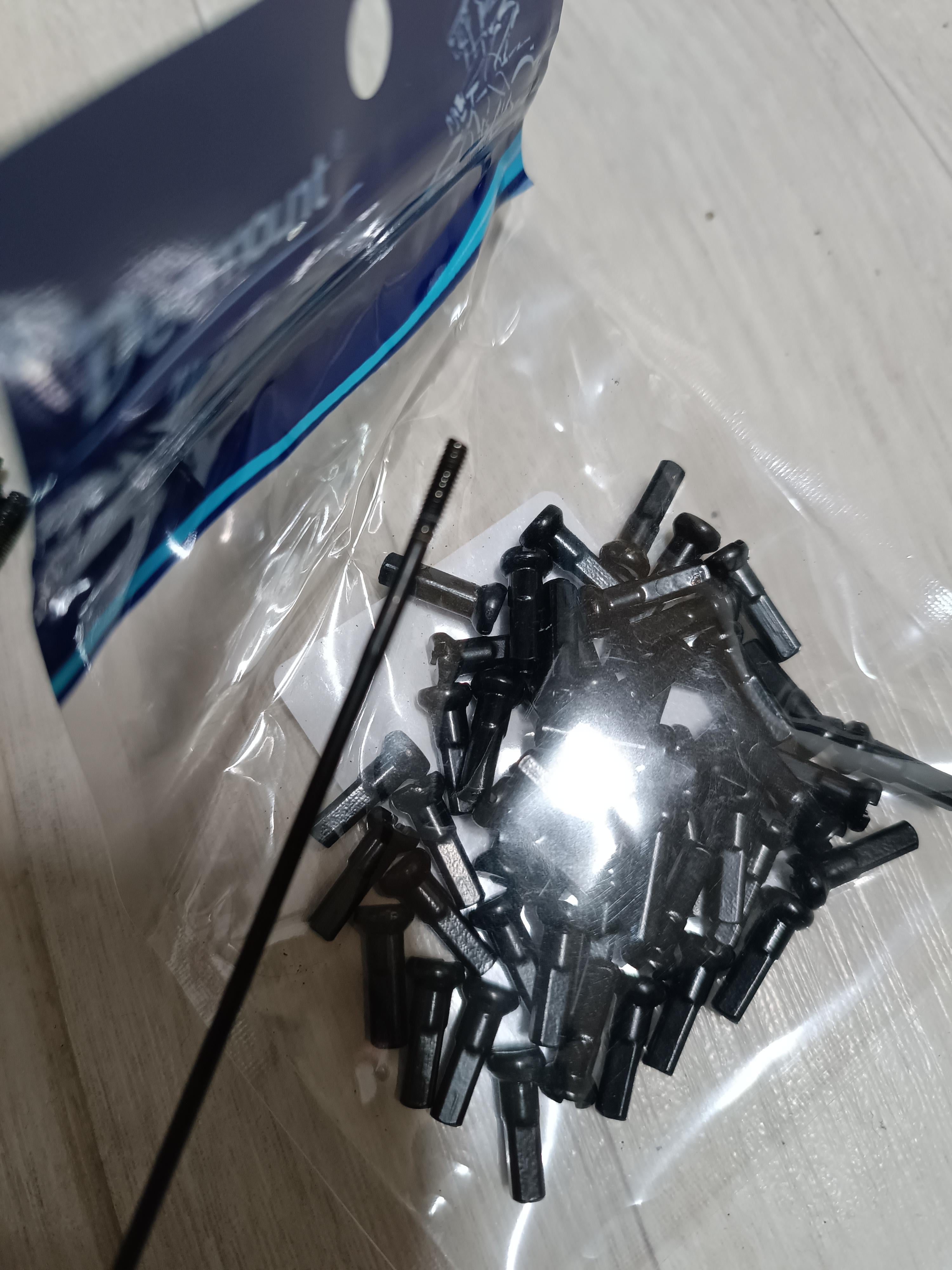
Do you have to apply grease or lube to the spoke threads and nipples before wheel building? Or should you do it dry?
by CoffeePanzer
Do you have to apply grease or lube to the spoke threads and nipples before wheel building? Or should you do it dry?
by CoffeePanzer
17 Comments
Some people use [Spoke Prep](https://wheelbuilder.com/fix-spoke-prep/), some old school builders I know use Linseed oil or a dab of Blue Loctite.
This is a good question, i would also like to know.
When building initially after getting everything all done and buttoned up I’ll coat them in a drop or so of Tri Flow. But the saltwater gets everything at the beach.
My LBS typically uses something like this [spoke prep](https://www.modernbike.com/product-2126192927) compound.
Here’s my routine going on decades: grease on the nipple beds (apply with a Q-Tip to the rim) and linseed oil for the spoke/nipple threads. Bundle all the spokes together, swish their threads in the oil; wipe; done. Linseed oil not only lubes the threads during the build but dries to a gummy adhesive which prevents the nipple unwinding if the spoke ever becomes untensioned. Consider it a more supple version of Loctite.
I’ve used anti-seize (permatex-nickel) with pretty good results. (Easy to adjust, great at protecting against corrosion.)
I usually use chain oil. Dipping every spoke thread before installation.
I’ve always used beeswax on the threads ever since I read about it in some Bridgestone catalog decades ago. It works well, have not had any issues at all with nipples freezing up or moving when they shouldn’t.
Granted, I’ve only occasionally built wheels but all the ones I’ve built have held up great over a long period of time. If you’re doing it all the time, though, then applying the melted beeswax may be a bit of a faff.
I use spoke prep on the threads then once I am at about a 5 on my park tensiometer I add a drop of triflo to each nipple/rim interface and spin the wheel. Hundreds of wheels built this way.
Yes, do it. Otherwise the wheel might start screaking and squeaking when under load (standing pedaling)
Always lube your nuts.
I’ve used linseed oil, spoke prep, and purple loctite. Had good results with all of them. Use one of them, but don’t overthink it.
I wrap each thread in Teflon tape. Laugh if you want, it works. It never dries out, never evaporates, is impervious to heat, cold, vibration, and years. And it compels you to inspect each spoke before you lace the wheel.
I use a drop of Phil Wood Tenacious Oil
Over 1800 wheels built. I’ve used linseed oil on every single one. It lubricates the threads and eyelets during build making it easier to get to your required tension without excessive spoke wrench force and spoke windup. Then it sets sticky to stop your nipples from unwinding, but it never sets hard so you can break them free if you need to true your wheels down the road. Spoke prep is designed to work the same way but costs significantly more. There are Loctite compounds designed to behave like linseed oil (acts as a lubricant and sets hard) but if you use the wrong Loctite you’ll be gluing your nipples onto your spokes and that’s not a good thing. I think Purple Loctite is what you want to use on spokes.
My lbs uses lithium based grease on all the wheels they build and nothing bad happened.
Get two different coloured spoke preps. It help preventing mixing up spokes