
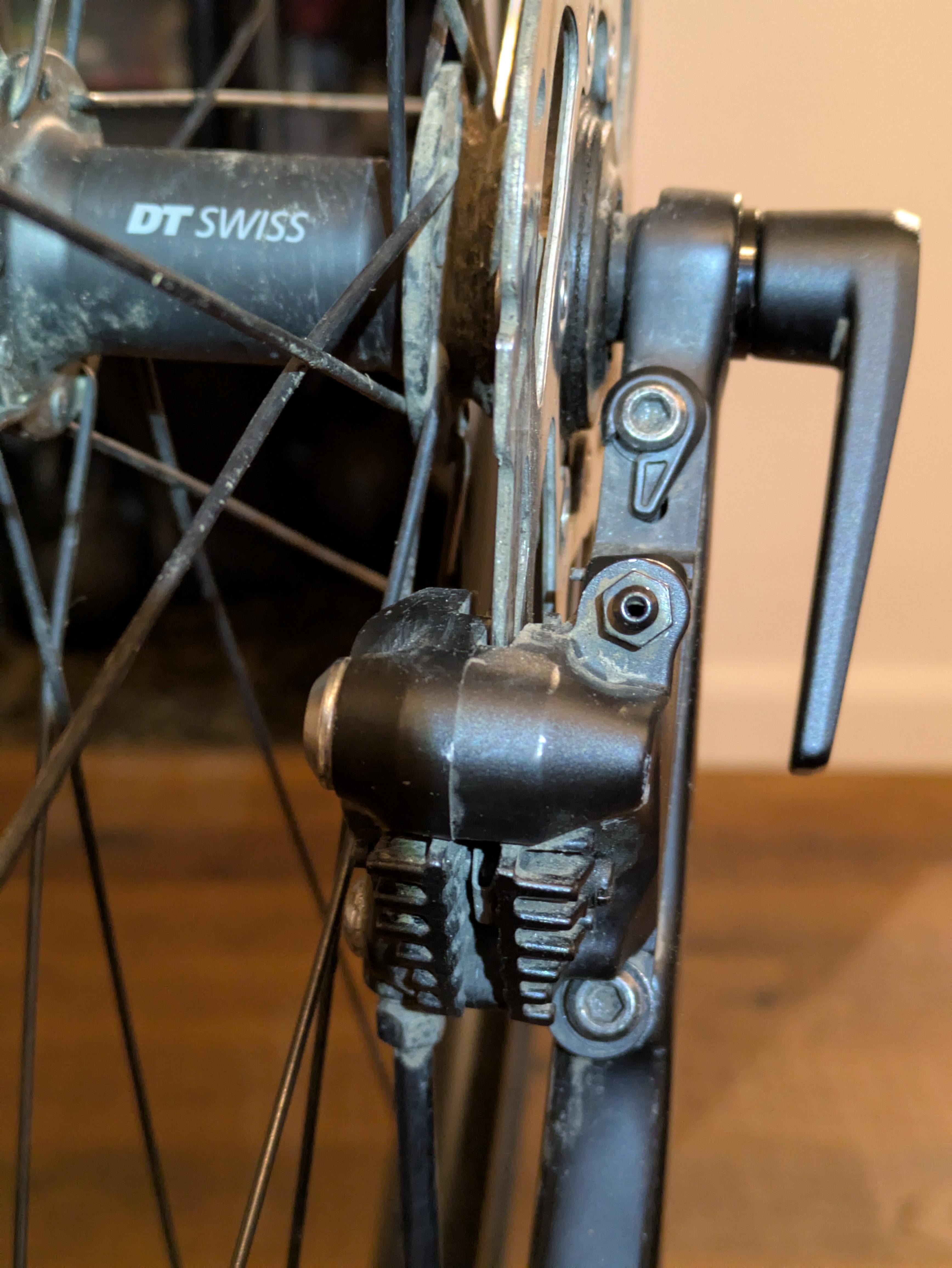
Hi all.
This evening I've gone to put my front wheel back on as per normal. Initially I found it weirdly difficult to get the rotor into the caliper. Then once I finally got the wheel on I've found that it's rubbing badly. Usually I would solve this by loosening the two 4 mil Allen bolts, applying the brake lever, then tightening them up to center the pad. But now that seems to have limited effect. Sometimes the rub seems to so bad that it sounds more like a metallic clank than the standard soft 'shhh' noise.
I have tried this 6+ times now, no joy. I've inspected the pads with a torch, can't see any obstruction or anything.
Any suggestions? Am I missing something obvious?
by Zestyclose-Mistake15
6 Comments
Are you sure it’s your brakes rubbing and not something else? (You can check by removing wheel and spinning it)
1 – Can you post a photo looking down the brake caliper slot showing the pads? This angled photo doesn’t help with anything.
2 – Are you 200% sure you have the QR axle fully in the dropouts? I like to open the QR, put a lot of weight on the bike, and then close the dropout. QRs are notorious for lack of repeatable alignment on disc rotors if sufficient attention is not paid when inserting the wheel.
3 –
> Usually I would solve this by loosening the two 4 mil Allen bolts, applying the brake lever, then tightening them up to center the pad.
This technique relies on brake pistons that are extending and retracting properly. If your piston seals are filthy, dry, cracked, or otherwise not operating smoothly it can prevent extension or retraction, and without that the “loosen, brake, tighten, release” trick won’t work because the pistons won’t be moving the caliper body for you.
One other thing I’ve just noticed: the brake lever seems to have less range of movement than usual and when I apply the brakes with the wheel removed the pads don’t seem to spring back apart with much life at all.
I have changed the handlebar this week but didn’t touch the hydraulics, just removed the hoods and then placed them back on the new bar without altering the cables, but maybe there could be a problem in the hydraulics due to cable angle or something?
It is possible to have too much fluid in a hydraulic brake line, caliper, and reservoir. When bleeding a brake it is important to use the correct bleed block. If a bleed block that is to small is used, you will end up with pads that are to close and will constantly rub.
Now, there are lots of other reasons for brake rub. As another poster said, seeing the pads with a white piece of paper behind them to visualize the gap would def help.
Almost all rotors are not perfectly shaped. The closer the pads end up after the bleed will cause a very low tolerance with the trueness of the rotor.
Another issue is squareness of the caliper to the rotor. Flat mount hydraulic rotors have very little wiggle room for angle of the caliper. The mounts “Should” be square so that the caliper mounts square.
So, a proper bleed with a proper sized bleed block might allow for the proper amount of tolerance. Truing of the rotor can also help. I would say the most invasive step would be to take it to a Bike shop to have the mounts faced if the other options fail.
You need to do the technique you have tried, but first push the pistons back to ‘reset’ them.
I see one of the pistons fully loaded and almost all the way out do this remove the brake pads and bleed your brakes and also return the pistons back to home position make sure you use a block while bleeding the breaks and get some 1k grit sand paper flatten them down a bit not to much you just want to clean the face not remove material then put everything back together wheel and so on then test once the wheel is in press and hold the brake lever loosing the bolts to the caliper while still holding the break lever down and tighten the bolts again and spin the wheel