
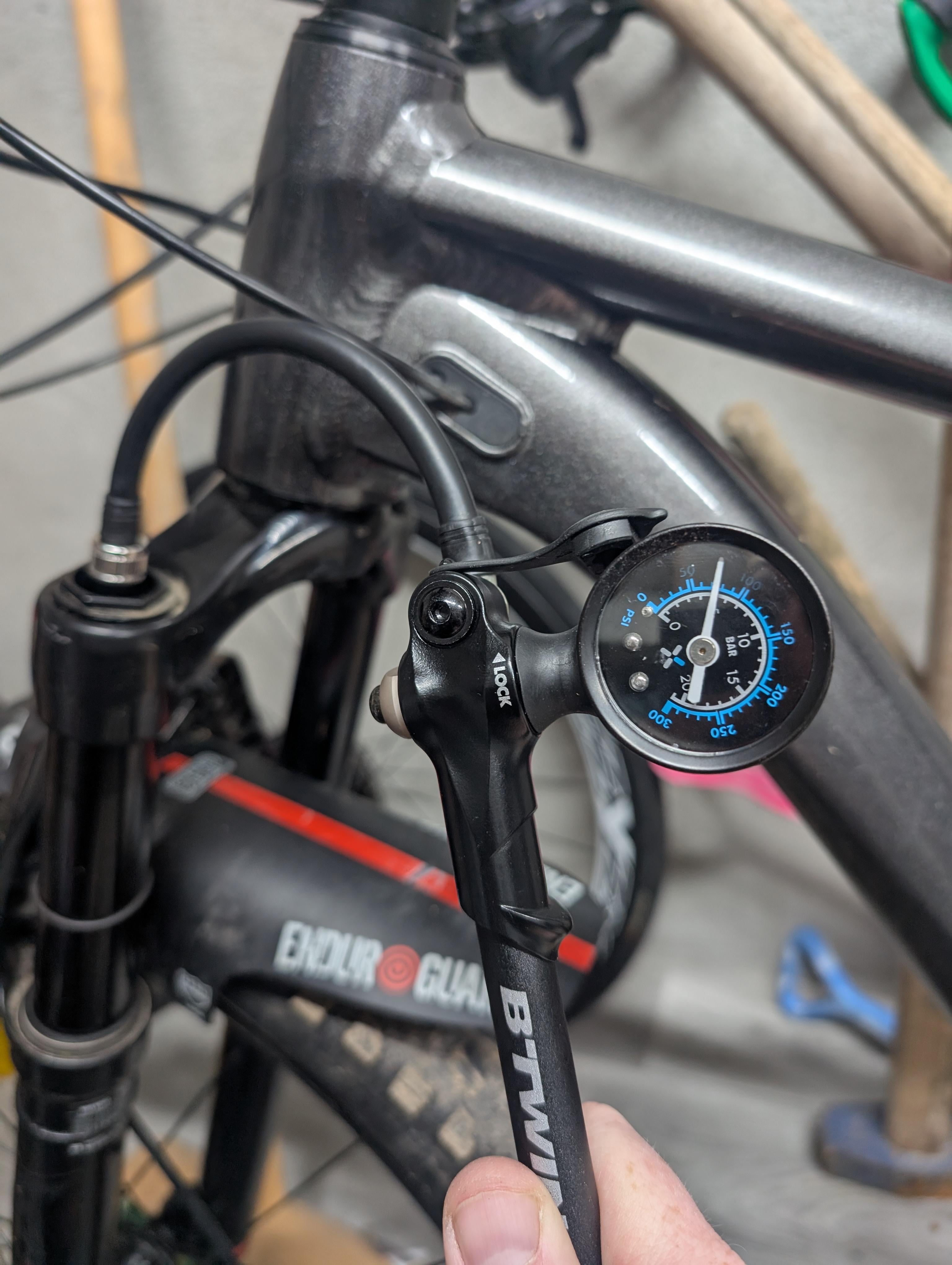
When setting sag I've always removed the pump and tried it, then reattached the pump and added / removed air.
Someone literally just asked me why am I doing that and I just said I always have! I never gave it any thought.
Have I wasted countless minutes?
by MuffinNecessary8625
6 Comments
If the suspension feels good and you’re happy, not a waste of time.
It’s normally advised that you cycle the travel a few times to equalize positive and negative air chambers (pump off). Set sag when you reattach the pump afterwards and adjust the pressure (usually a top up)
As long as you get to your end result it doesn’t matter but know it’s not necessary. Just remember that every time you attach the shock pump you’re equalizing with the hose. So if you pump to 100psi, remove and reattach you could see a pressure drop of a few psi, especially a rear shock. Same concept with tires, I’ve had people think they have a leak because they pump it, and check again and lose 20 psi. I have to explain that it’s equalizing with the hose.
Tried it as in? If it’s a proper ride, then makes total sense. But a more practical approach I use is just leave the pump dangling (making sure it doesn’t scratch the stanchions) and check the sag, then adjust.
Ok. So if you set sag with the pump attached you’re making the air chamber larger and reducing the compression resistance ramp rate (air springs have a non-linear ramp rate) this is the opposite effect of adding air chamber spacers.
Conclusion – you have been doing it right.
Sag is just an indicator. As long as you always measure the same it does not really matter. Leaving the pump on increases air volume slightly which may have tiny effect on sag. For a rear shock more so than a fork as the air volume is much smaller.