
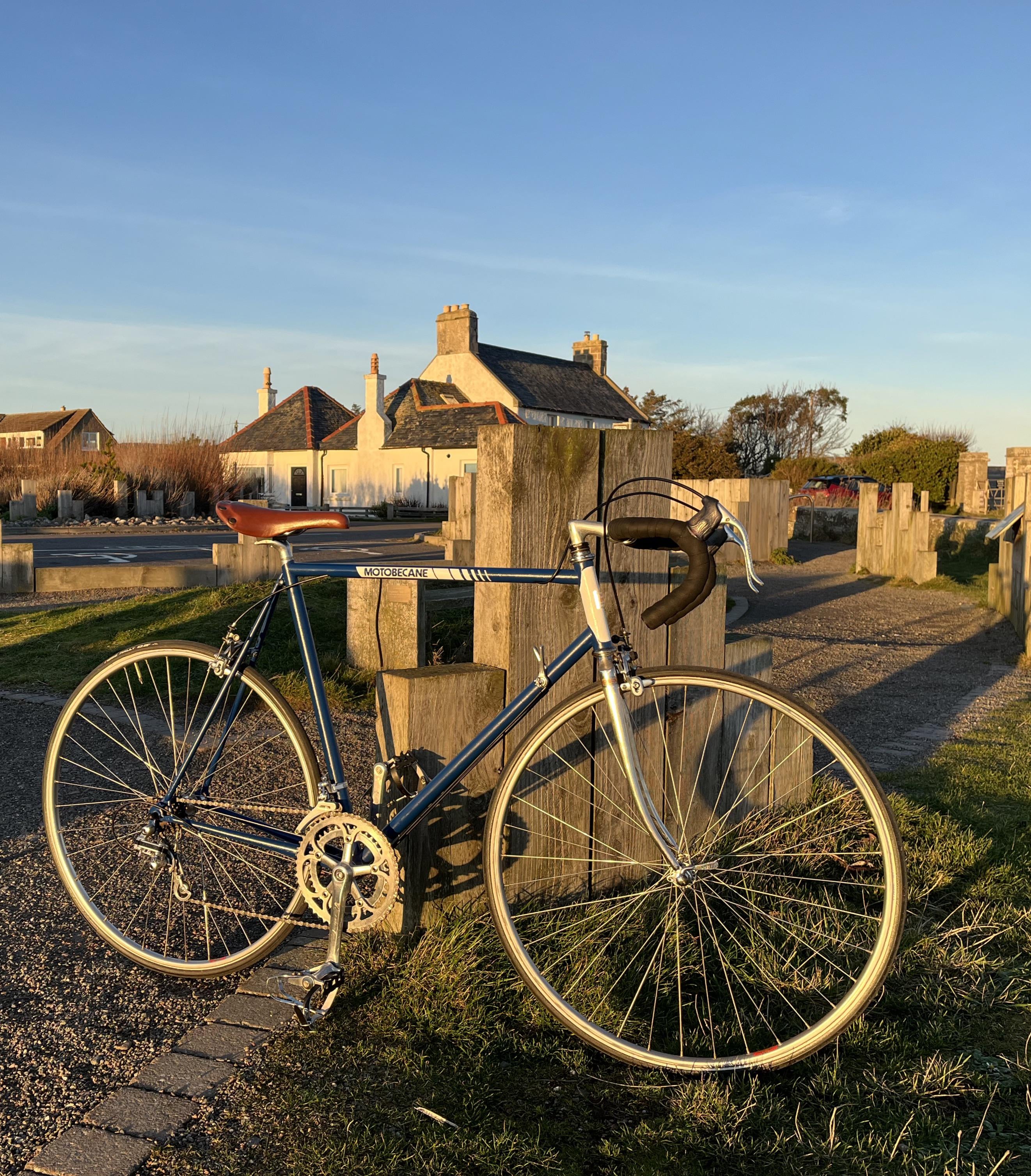
Bought this bike for £20 pounds last month as a project to help me learn bike restoration. It was plagued by rust and Maillard Helicomatic hubs (iykyk). Because of this, I decided to sand the frame free of rust and repaint and get a new wheel set.
All original components. Drive train is made up of Suntour BL GT derailleurs and Nervar crank set. Weinnman 500 brakes. All were in good condition but very dirty and required disassembly and a deep clean to function. I did switch the saddle out as the old one was pretty nasty. My favourite part may be the Maillard cxc pedals which I’d find comfortable, if tricky to get used to, and cool in an art deco way.
Painted with Spray.Bike primer, paint, and transparent coat. Just had to sort the rust and get a good scratch coat first. Worked very well despite my amateurish painting skills.
Finally, I applied stickers I found online and sealed them with top coat. They are nothing like the originals really, but I like them and it makes my bike unique.
Most importantly, it rides well. Geometry makes it quick and zippy and Columbus steel makes it feel firm and strong. It’s light too just under 10kilos!
The things I learned that may be useful to others restoring similar Motobecanes:
– Mine had a British standard BB. Despite the old shell being French made (Stonglight) and many people suggesting online that most Motobecanes were either French or Swiss threading, I went with my gut and got it off. It seems around 1983 Motobecane began using British standard.
– The frame and brakes (Weinmann 500) accommodate 700c wheels fine despite the originals being 630s.
– If you also have an 83 Jubilee Sport with its original pedals, they are likely the NON-SERVICEABLE models. Don’t waste too much time trying to fix, see if you may be able to get the serviceable models for a reasonable price.
– Don’t bother trying to fix Helicomatic hubs or freewheels. They suck, require an antique proprietary tool, have weird bearings, and can be unsafe.
by Lainglives