
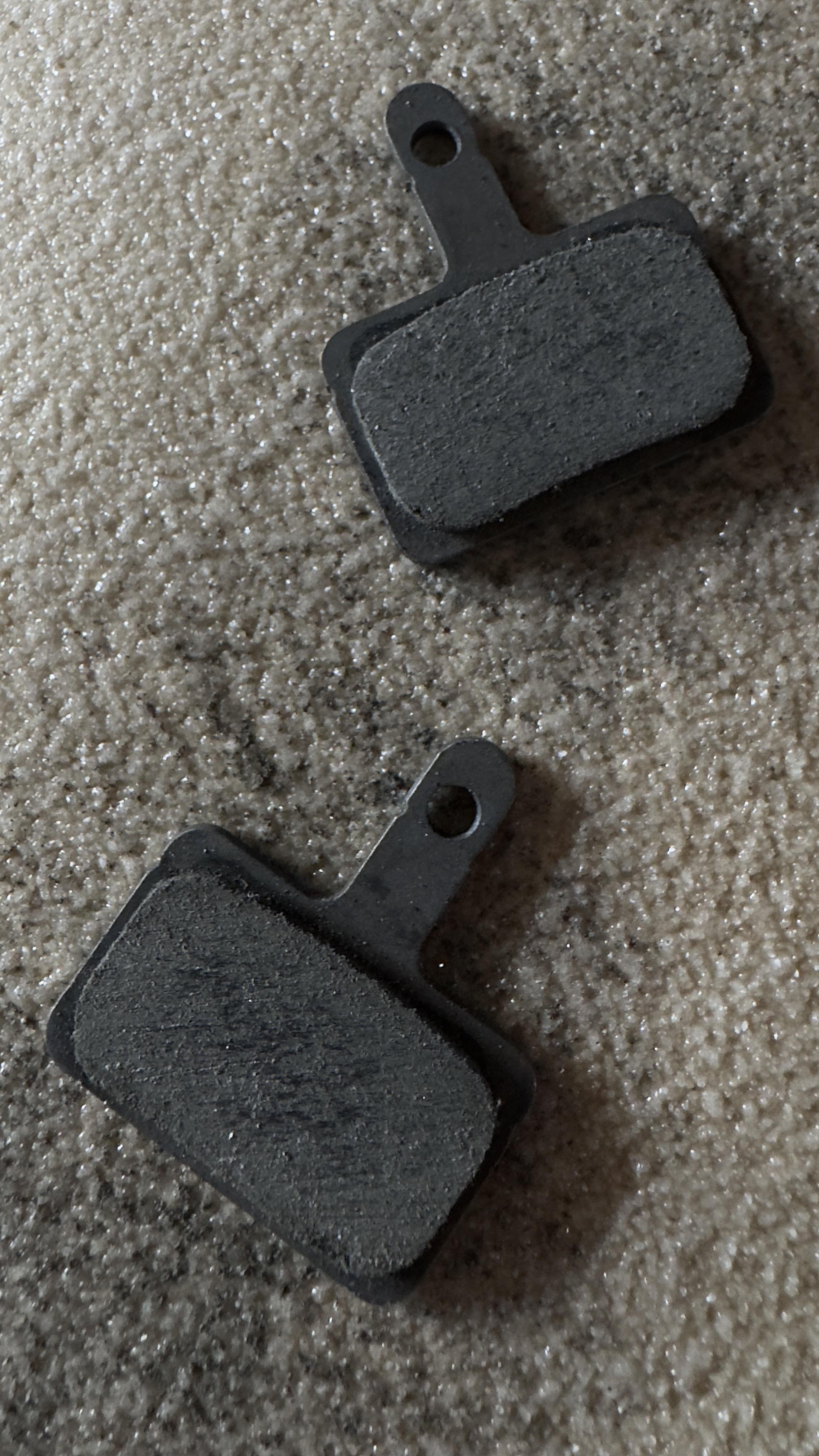
How clean do my brake pads have to be? It keeps squeaking under heavy braking. I sanded and clean my disc with ISO and it’s not helping.
by Auelogic
How clean do my brake pads have to be? It keeps squeaking under heavy braking. I sanded and clean my disc with ISO and it’s not helping.
by Auelogic
8 Comments
Are they sintered steel pads? If so, this might be your answer
What helped for me was, to buy some specific disc break cleaner, clean everything thoroughly and then do the following steps until the pads looked clean (so no black stuff visible):
Sand down for a few seconds,
Spay disc break cleaner,
Light it on fire,
Clean with disc break cleaner,
Repeat
Dude they are now oil pads. Look how black they are….
No cleaning necessary
Best check for Leaks on the brake caliper and get new rotor and pads. Sucks
Edit; or are they this dark colour when new? Still would go down to new pads then at least, and brake caliper checkup
You’ve done the right thing by trying to clean them, but you also need to clean the rotors too. Unfortunately, resin/organic brake pads are porous, so any slight contamination on them usually means it’s terminal – new pads are cheap, just bin them and get fresh ones, *after* cleaning the rotors!
Another thing to consider is the noise isn’t contamination, but poorly set up calipers and pistons. Make sure the brake caliper itself is dead central over the rotor, do this *without* the pads in. You want to align the caliper to the rotor, not the pads to the rotor. Once aligned, pop the pads in, and check that each pad hits the rotor at EXACTLY the same time. You’ll hear a resounding *ding* noise when they do. This is called balancing the pistons. If one pad hits the rotor first (you’ll see the rotor deflect) then using a flatblade screwdriver, *carefully* hold back that pad by putting it behind the opposite pad. Then squeeze the brake. The slower piston (the one that’s hitting second) will advance futher, the other pad will stay in the same place, and they should be striking together. Repeat this until they do. Balanced pistons means the optimum braking power, which means less noise.
You also need to bed pads in correctly, look up how to do that. Correctly bedded pads are more powerful and quiter.
Lastly, some combos of pad material and rotor are simply noisier than others. Try everything above first, then if they still make noise, try experimenting with different pads.
Hit em with a torch
i put my in the oven for some minutes
replace them and decontaminate the rotor.
Lots of wrong advice in this thread.
Clean the rotor with brake cleaner very vigorously. No sanding necessary.
Clean the brake support itself. Try finding if there’s maybe a leak on it, if it’s hydraulic. If there’s a leak, new brakes.
Yeet these pads in the bin. These are done. Nothing will get the oil out completely. No burning, no sanding, no chems. The oil here is wayyy too deep. Put in new ones.
Pads and rotors do not like oil and other sticky stuff. Keep them clean. Regular mud and water are not too bad. Comes off with a wash. If you’re spraying oil on the chain(better to oil it with drip cans), be very careful where else the oil hits.