Short story long: I was attempting to remove the anodizing from my aluminum for a silver part. We did several other parts and it turned out beautifully. So I through my parts into the same bath.
The bath was 10-15% lye (sodium hydroxide) mixed with regular ol’ tap water.
30 minutes later we take it out and there is a black “soot” on the surface. No sweat all the the parts had the same, just hit is with a toothbrush and it comes right off leaving a shiny smooth surface.
Well my part was different, for starters it was a different aluminum alloy, 2014 and 7075 In my case. Other parts were 6061 and mystery cast aluminum.
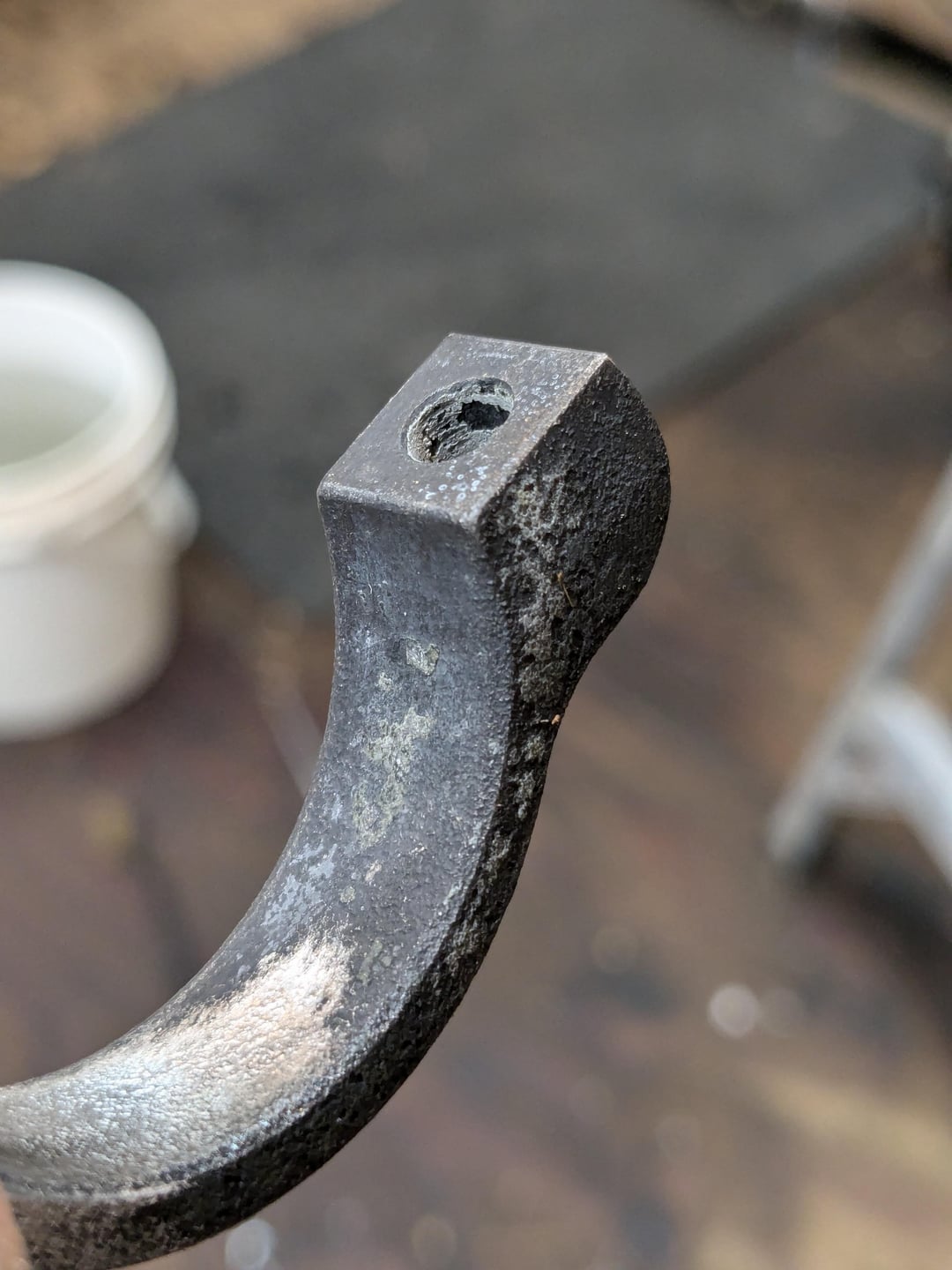
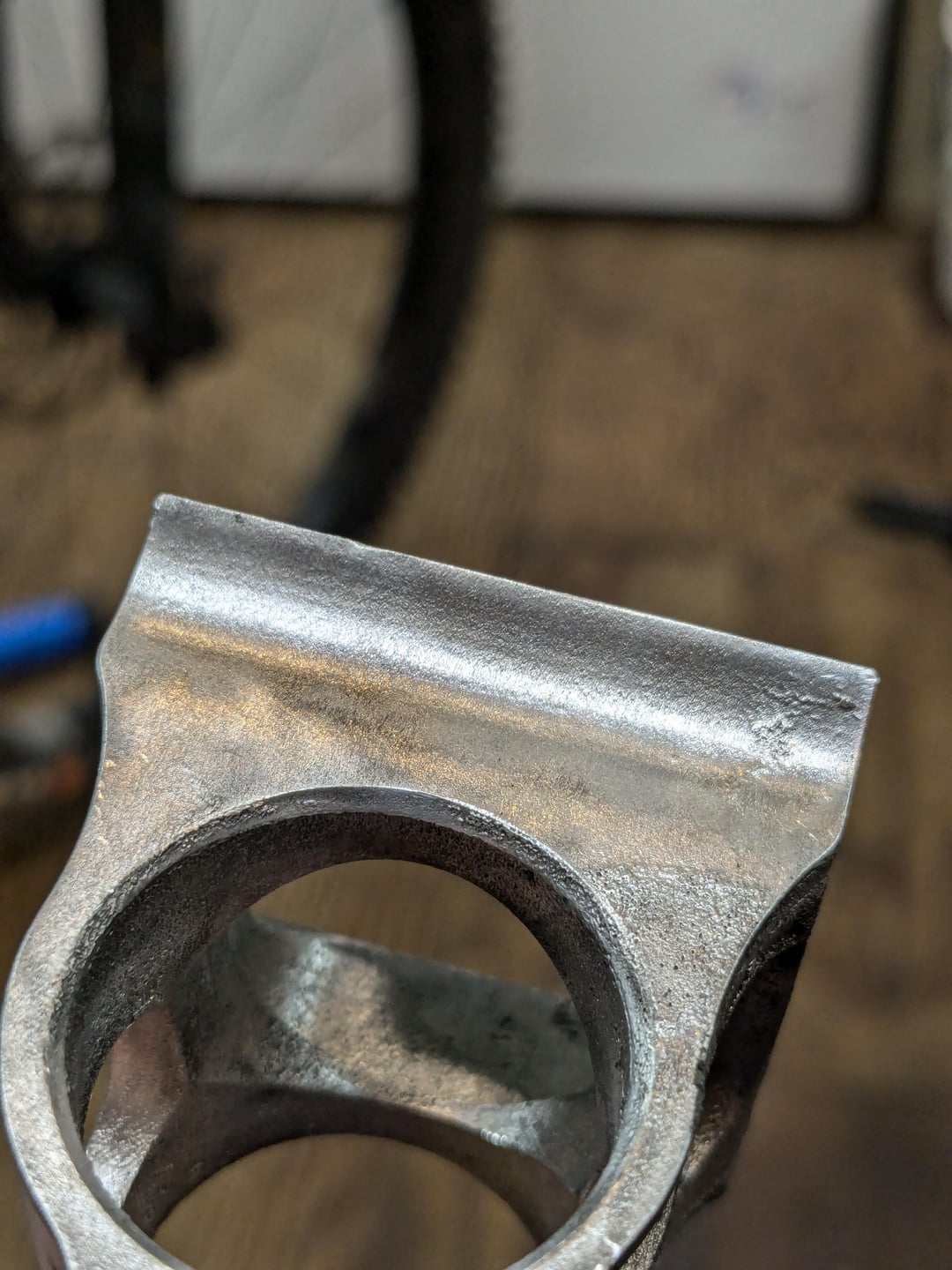
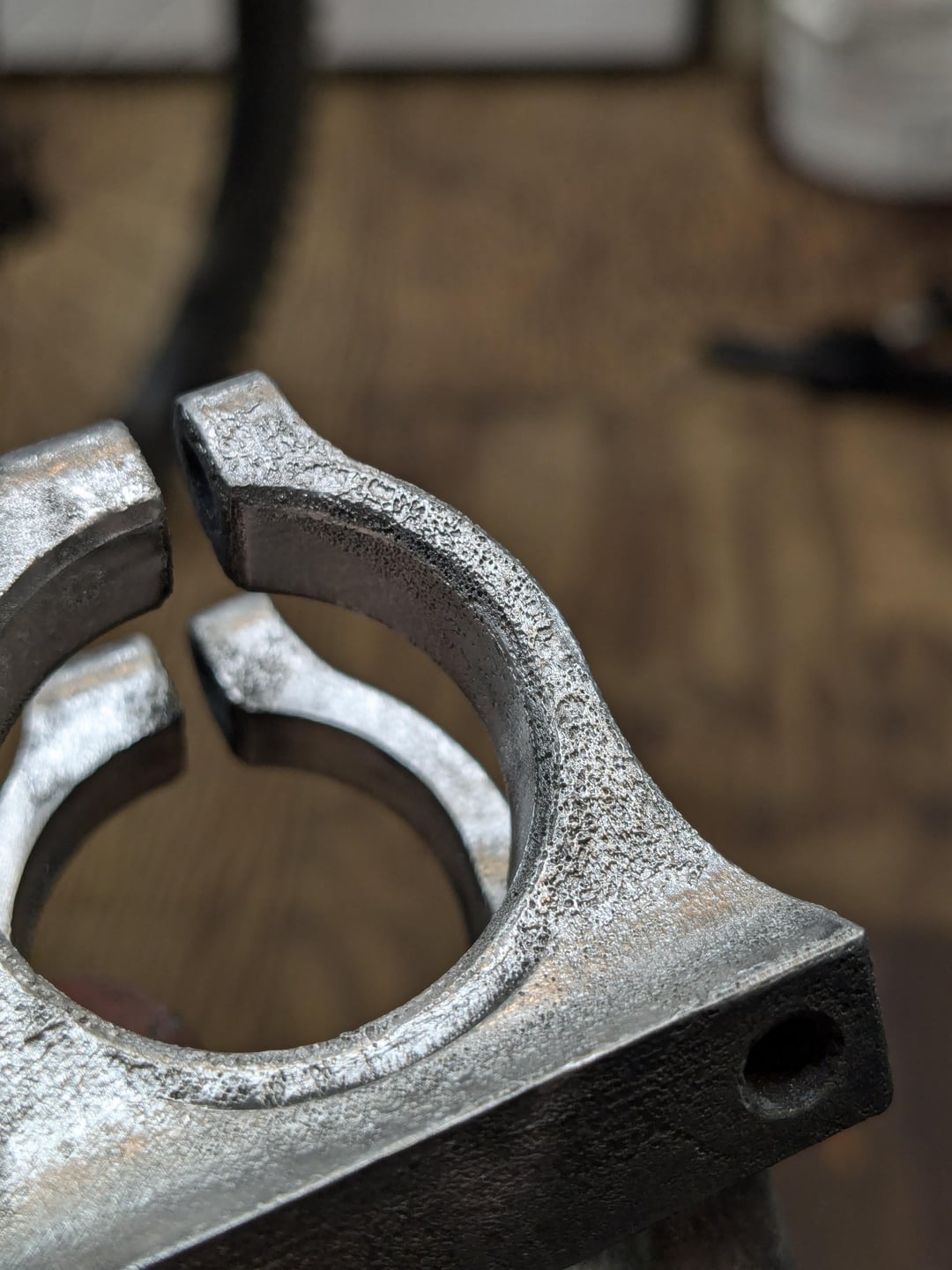
The soot wouldn’t easily come of with the tooth brush so I swapped over to a Dremel with a stainless steel wire wheel. The soot came off… Mostly. It was difficult to remove and what was left behind was a hard porus surface.
I posted 3 pictures, one was how it came out the bath, the other was after wire wheeling, last was a part that somehow didn’t have the surface.
SOO (TL;DR) what is this “soot” and porous surface and how do I get rid of it, if I can…
MachineGrunt on
Kinda looks cool, now I want my stem to look like this. Matching pedals too. You may have inspired a new trend.
RamblingTaoboy on
I’m not sure what the soot is. I’ve stripped anodizing off parts in the past with oven cleaner. It worked well and didn’t damage the surface. As far as cleaning it up, find a machine shop with a tumbler and have them tumble it for a bit.
Useless3dPrinter on
I used lye to clean some parts too, but it mostly required just a couple of seconds to remove most of the anodising. You really shouldn’t leave any aluminium parts in a lye bath, it can keep continuously eating away at the part like here. 7075 apparently oxidizes way faster than 6XXX after removing the protective coating, so it needs sole new protection quick, clear coat or a new anodising or paint.

4 Comments
Short story long: I was attempting to remove the anodizing from my aluminum for a silver part. We did several other parts and it turned out beautifully. So I through my parts into the same bath.
The bath was 10-15% lye (sodium hydroxide) mixed with regular ol’ tap water.
30 minutes later we take it out and there is a black “soot” on the surface. No sweat all the the parts had the same, just hit is with a toothbrush and it comes right off leaving a shiny smooth surface.
Well my part was different, for starters it was a different aluminum alloy, 2014 and 7075 In my case. Other parts were 6061 and mystery cast aluminum.
The soot wouldn’t easily come of with the tooth brush so I swapped over to a Dremel with a stainless steel wire wheel. The soot came off… Mostly. It was difficult to remove and what was left behind was a hard porus surface.
I posted 3 pictures, one was how it came out the bath, the other was after wire wheeling, last was a part that somehow didn’t have the surface.
SOO (TL;DR) what is this “soot” and porous surface and how do I get rid of it, if I can…
Kinda looks cool, now I want my stem to look like this. Matching pedals too. You may have inspired a new trend.
I’m not sure what the soot is. I’ve stripped anodizing off parts in the past with oven cleaner. It worked well and didn’t damage the surface. As far as cleaning it up, find a machine shop with a tumbler and have them tumble it for a bit.
I used lye to clean some parts too, but it mostly required just a couple of seconds to remove most of the anodising. You really shouldn’t leave any aluminium parts in a lye bath, it can keep continuously eating away at the part like here. 7075 apparently oxidizes way faster than 6XXX after removing the protective coating, so it needs sole new protection quick, clear coat or a new anodising or paint.