
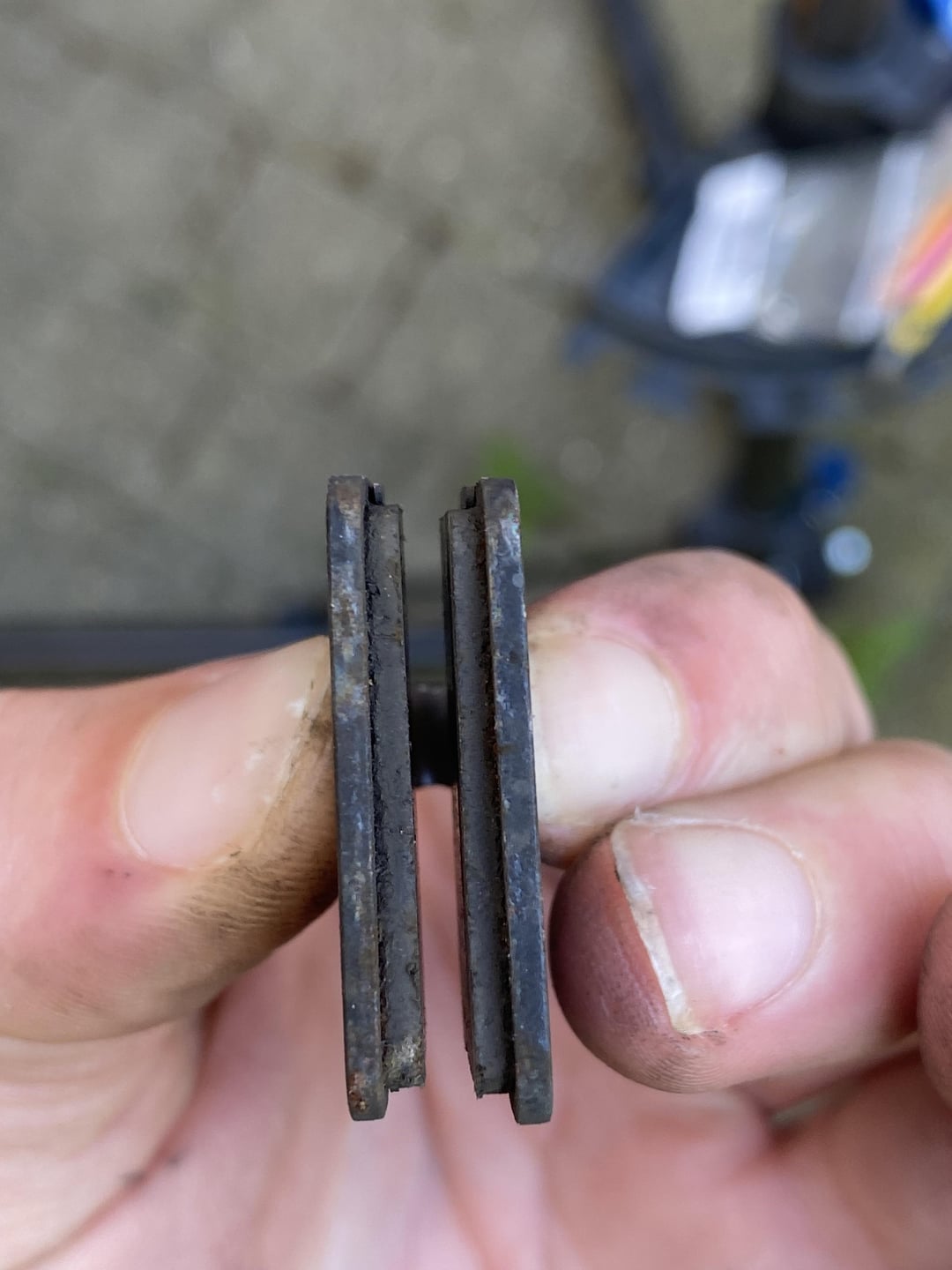
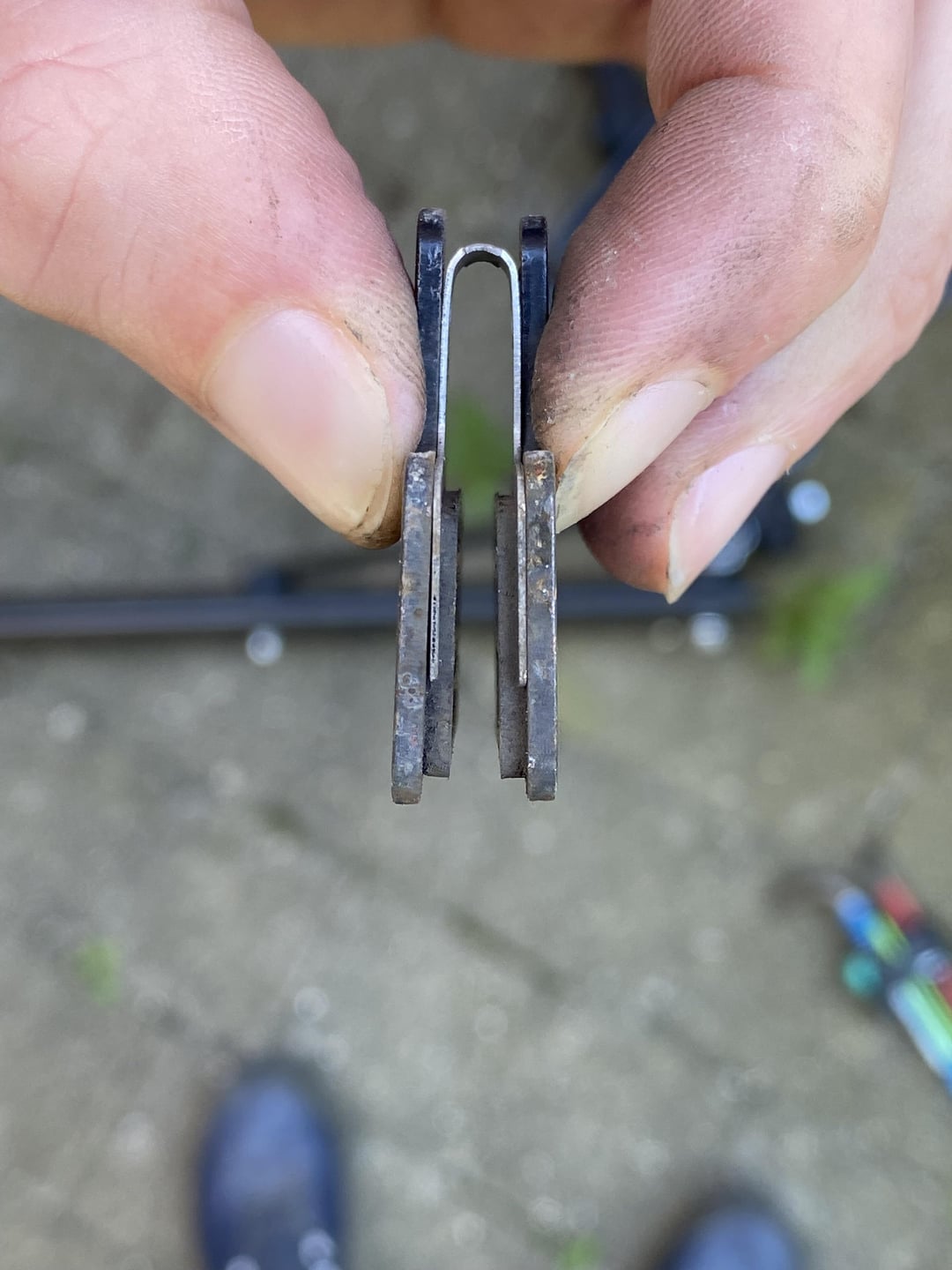
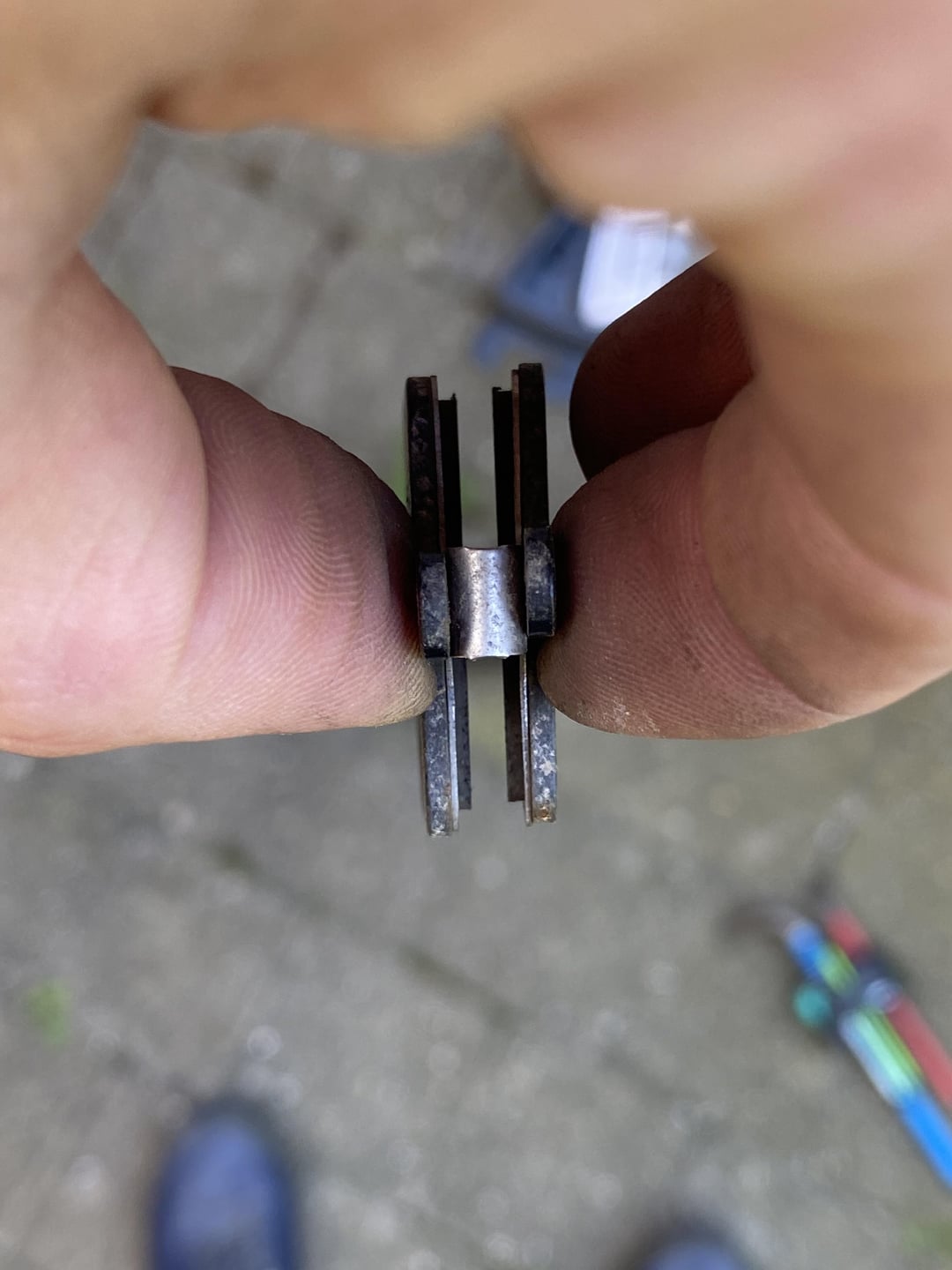
They squeal a lot, and the braking felt bad, and when I looked at the wear from the caliper they seemed toast, but once I took them out they seem to have a reasonable amount of padding left.
I changed them anyway since I had bought new ones, and the braking is now very quiet and feel much better.
When I compared the old ones and new ones they didn’t seem to have a lot of more padding, so how do you know when to change them?
by Appropriate-Affect-6
7 Comments
They are definitely still good. You can see in the picture that there is a lot of padding left. You can try to sand them slightly and see if that helps against the squealing.
they still got plenty of meat on em. contaminants (like WD-40 or similar solvents/lubricants) can cause squeal and slipping and they are very hard to get off of pads.
They have lots of life left, padding wise. Sometimes it’s just crappy imported pads that suck. It’s a gamble, sometimes they’re great and sometimes they’re horrible and squeal and don’t work very well.
Also, keep in mind that there are three main types of pads. Metal, semi-metallic and organic. Metal will definitely squeal a lot more than the others. In theory they will be a bit more powerful, but of course it depends on the pads. You sometimes hear worlcup DHers squealing their way down the mountain because of (I assume) metallic pads.
They are almost new.
Try to sand them gently with a fine sandpaper. Then clean with alcohol. That MIGHT get you where you want to be. Or maybe not.
My recipe to revive old contaminaded brakes:
Buy some acetone or wax&grease remover. Not brake cleaner, not gasoline, not alcohol, not turpentine. Only acetone or wax&grease.
Then remove the pads. Get a sharp pick and scribe on each pad where it goes (FL, FR, RL, RR) so you can assemble them the same.
Wash them with soap if they’re very dirty, dry off an put them in a small jar. Pour acetone on them so they’re fully submerged. Close and leave sitting like this for 24 hours or longer. Occassionally shake. This will pull out any traces of grease and contamination from the pads.
Meanwhile, unbolt the rotors, and scrub them with an old toothbrush and acetone. Make sure you get into all holes.
After the brakes are done, you can roughen them up a little bit with some clean sandpaper. And put on as they were according to markings.
Thanks for the answers everyone, this confirms my thoughts!
The one in the picture is the rear one from my gravel bike.
The front one was much more worn as expected, and now that I come to think of it, it was probably really the front one that was squealing hard. Anyway the new pads were shimano ones for 8€ so I’ll keep these old ones as backups just in case but they’ll probably live 10 years in my garage before I find them again and toss ‘em