
Hi all,
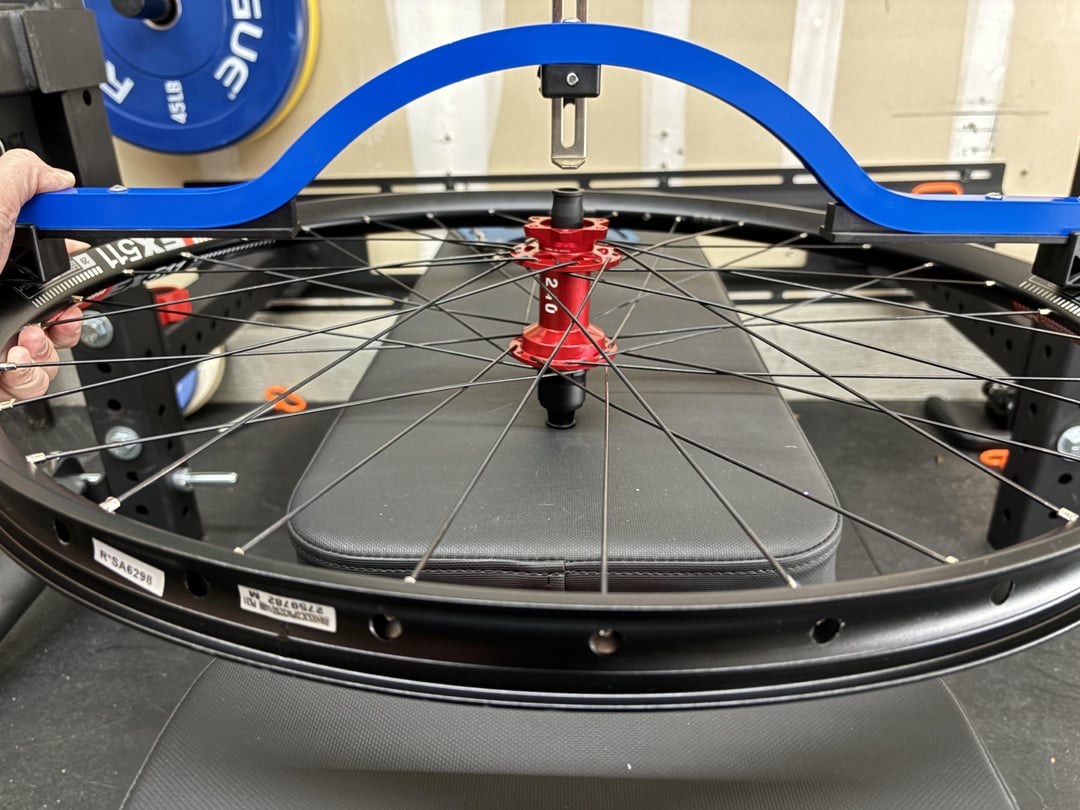
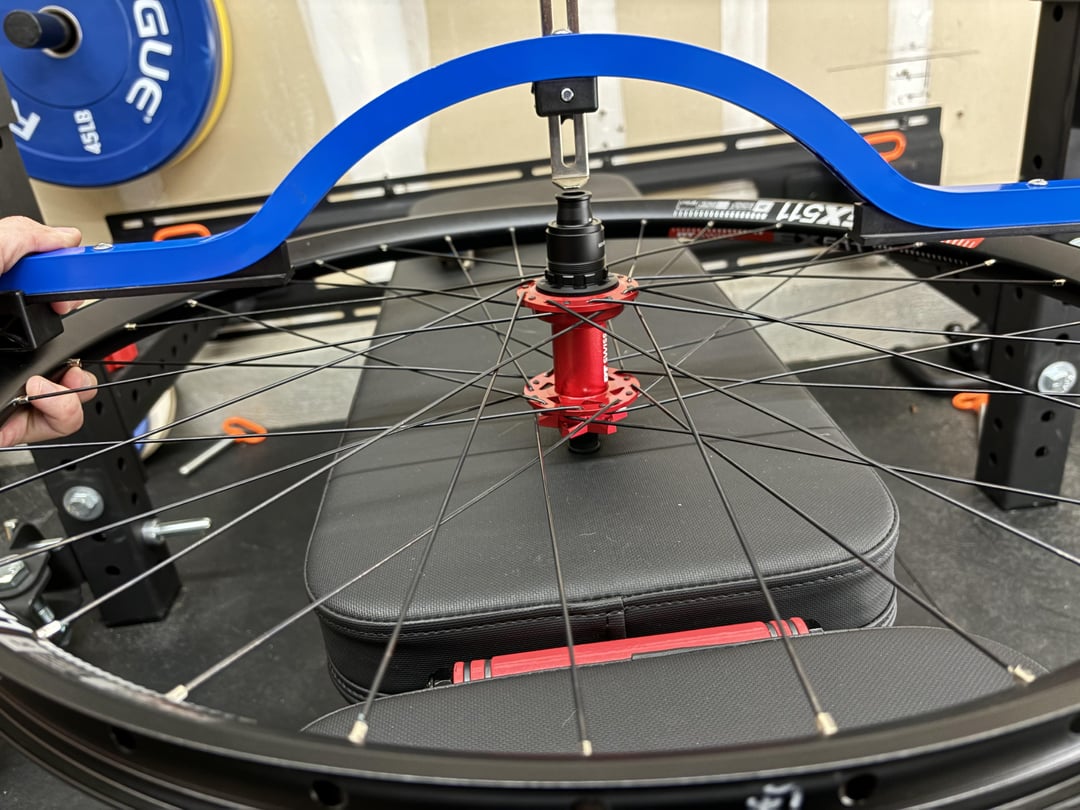
So this was my first full wheel build where I did a 3 cross pattern on my DT Swiss Ex511 29, using the new DT Swiss Deg Hub.
I have 2 different size spokes, 291mm and 292mm since that is what the calculator suggested.
I currently have laced it, and done the lateral and radial truing part so I can check the dish. I’ve added a video to see the first part of truing (will post videos of lateral and radial in comment)
However the dish is way off. Would the process for me fixing this be – half a turn on all non-drive side to move the hub that way? And if so, should I correct lateral and radial right after that and then recheck dish?
Any suggestions would be great! Thanks!!
Lj
by Ljubeb
10 Comments
Won’t let me upload videos in comments, but I can ensure it’s true and less than 1mm deviation in lateral or radial direction.
In the future, how do people link videos on Reddit along with pictures?😅
Sounds like youve got it backwards. You need to tighten the DS and/or loosen the NDS. “Tighten the touch” and “loosen the gap” are stickers on my dish tool.
You should check all three adjustments throughout the true: lateral, radial, dish. Fix whichever is the most wrong. So, fix the dish and check the others. Once they’re getting close, keep an eye on spoke tension too. You’re done when all 4 are good.
I thread each nipple on the same amount until things start to get just a little tension, then dish to get close, then bring up tension to spec by going equal turns on every spoke and then true and minor dish adjustments from there while constantly checking and keeping tension on target. What are your spoke tensions around the wheel on each side?
Tighten drive side 1/4 turn. Check dish. Repeat as needed.
I always do spoke tightening in smaller increments than seems needed. Then I don’t have to backtrack and loosen. Sometimes when getting back to the valve hole what seemed like not enough, turns out to be about right after the cumulative tightening.
You should aim for a spoke tension that’s correct for your rim. Commonly it’s around 100 kg.
In your case you need to increase the tension of the driveside spokes IN RELATION to the non-driveside spokes.
If driveside spokes are still far under the target tension, you can tighten the driveside spokes. However if they are close to the target tension, you may need to loosen the non-driveside spokes.
Half turn tighter on the drive side, half turn looser on the non drive(brake disc) side. Then check your dish again.
The wheel should be dished before you start trueing
https://www.parktool.com/en-int/blog/repair-help/how-to-build-a-wheel
I plan to do a half turn on drive side to tighten and then a quarter turn looser on non-drive and then check disk. Thanks all for info
do you have a means to measure spoke tension? i know it’s a bit of a luxury for a home mechanic but i am fully reliant on it personally. and no, plucking the spokes like strings doesn’t tell you much 😛
building is a process best taken very slowly, with every factor taken into consideration at every turn of every spoke: radial, true, dish, tension. i divide my wrench turns into big 1/4 turns and small 1/8 turns. for every spoke that gets a big turn to tighten, each adjacent opposite spoke gets a small turn to loosen. this was taught to me in a class i took two decades ago at a well-regarded bicycle school in the northeast and has served me through dozens of wheel builds.
preparation is very helpful too. i like Spoke Prep by Wheelsmith but i have colleagues who think it’s overpriced placebo, and claim that cheap linseed oil or even a lubricant alone work well enough. all i know is the wheels i’ve built with it hold well for a long time, and when they do need service the substance has coagulated well enough to keep the nipples moving smoothly and holding securely. make sure to allow enough time to dry before lacing the wheel.
i also like to add the tiniest drop of oil (I like Triflow) between the nipple and the eyelet/rim wall, just to help with smooth turns. but you need to be careful not to contaminate braking surfaces/wipe down with alcohol after.
part of the point of that preparation is to reduce spoke windup. even so, when turning spokes, try to be mindful of the spoke getting wound up. you may need to overturn and then turn back slightly. *very important: after every round of tensioning/truing, release spoke tension by squeezing opposite pairs of spokes.* that will help unwind any and you’ll hear a nice satisfying ping. it also helps bed the spokes into the hub/rim, giving you an accurate reading of the tension. not doing this will leave you with an under-tensioned wheel after its been ridden a bit, and under-tensioned wheels are broken wheels.
as for fixing the dish here – fist off, are you sure you used the right spokes on the right side? 1mm won’t really matter in the end, but if i thought i’d made a mistake here i would want to start over just for my own comfort. dishing really is just a matter of uniformly tightening or loosening all spokes on one side of a wheel. you tighten the side you want to pull the rim towards, or loosen to move the rim away from that side. it’s probably the case that your drive side spokes here are under-tensioned so yes, start by giving all of those a 1/4 tightening and see where you’re at.
always do a complete cycle of radial, true, dish, release tension (squeeze) as you bring a wheel up to tension.