
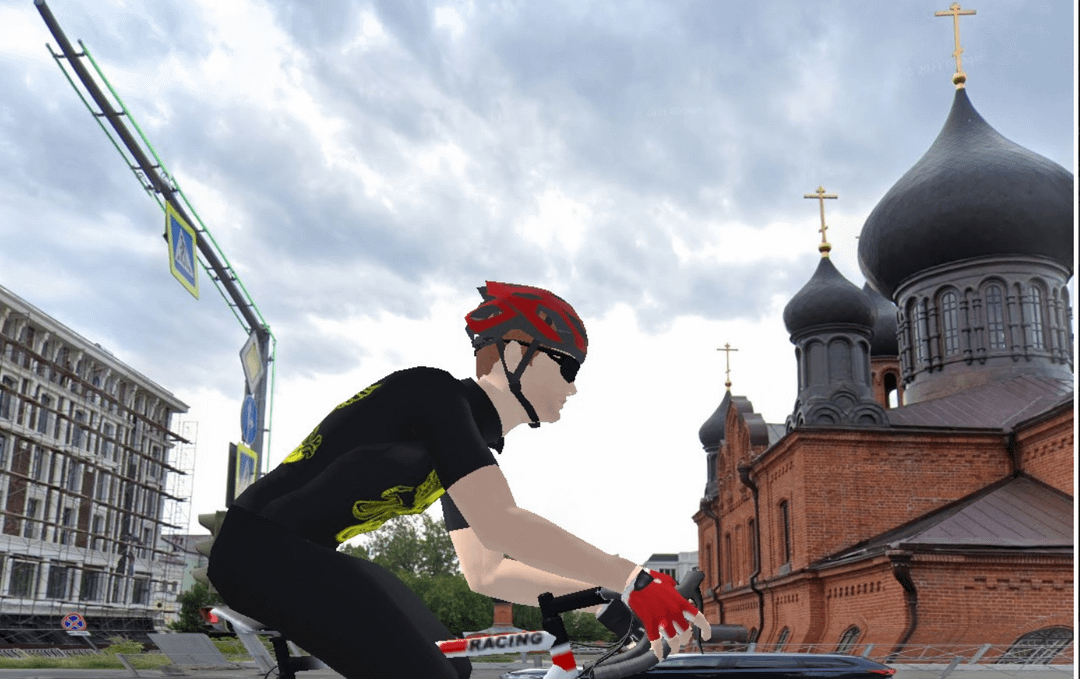
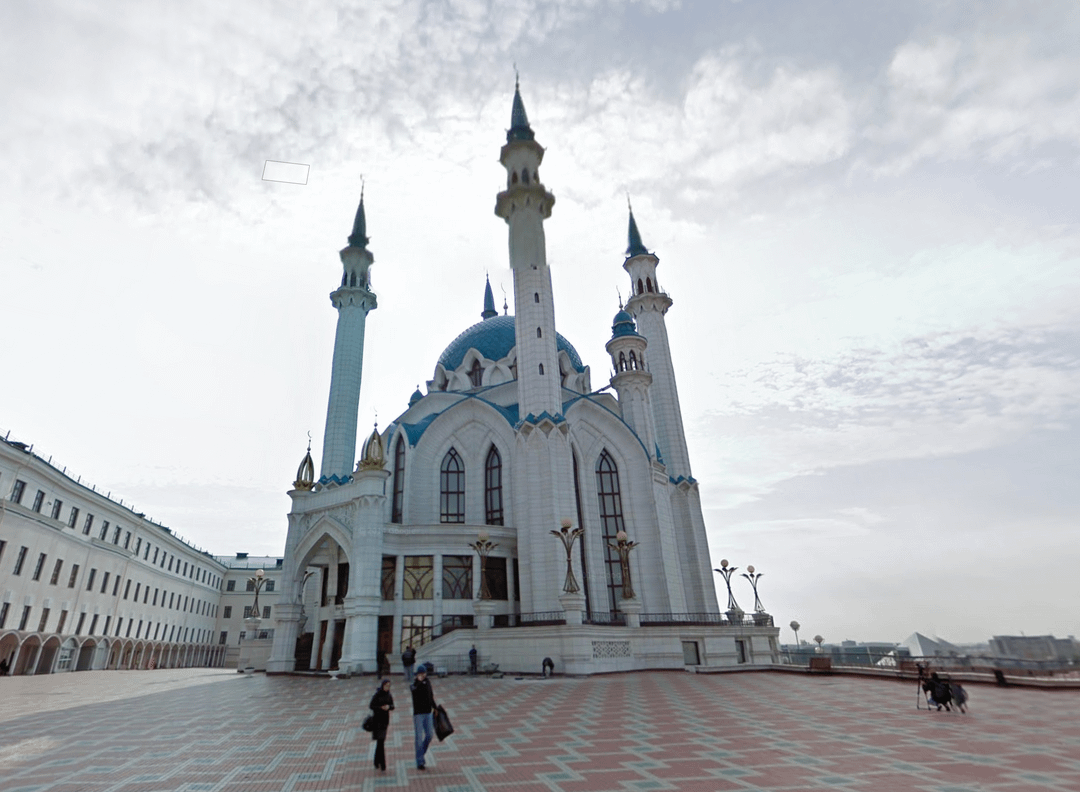
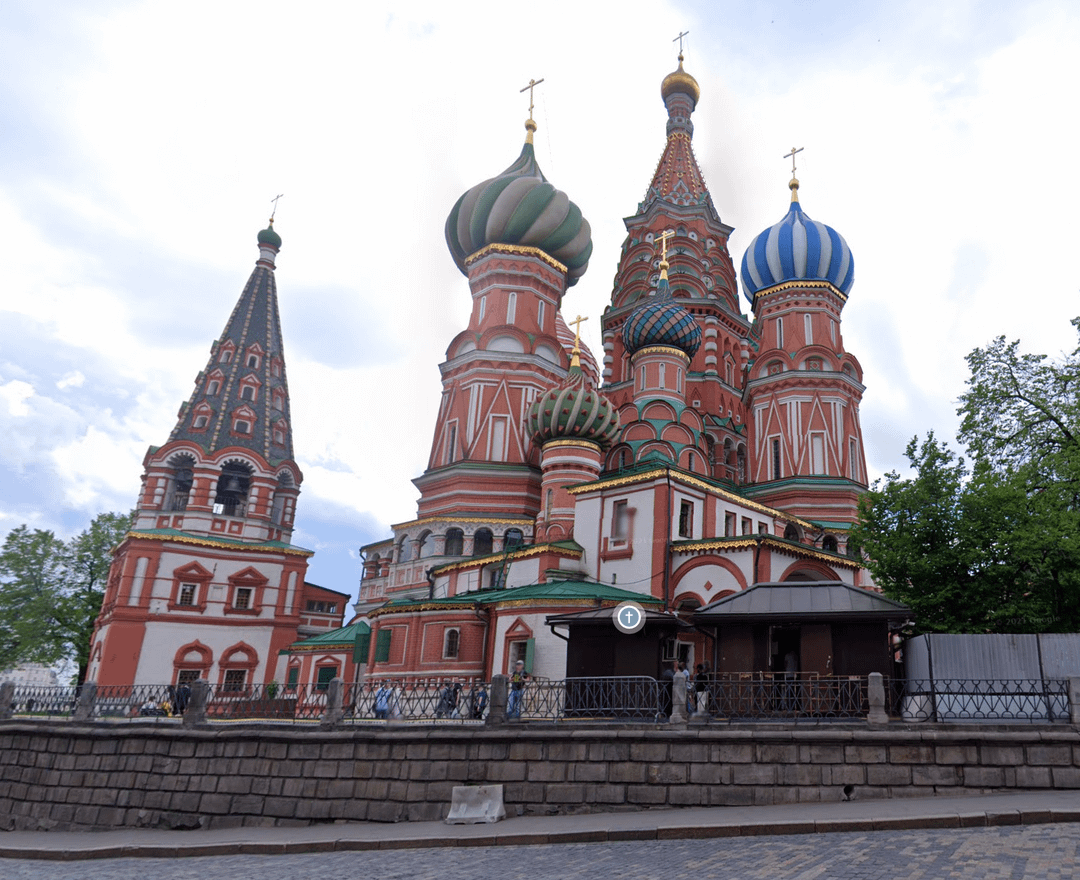
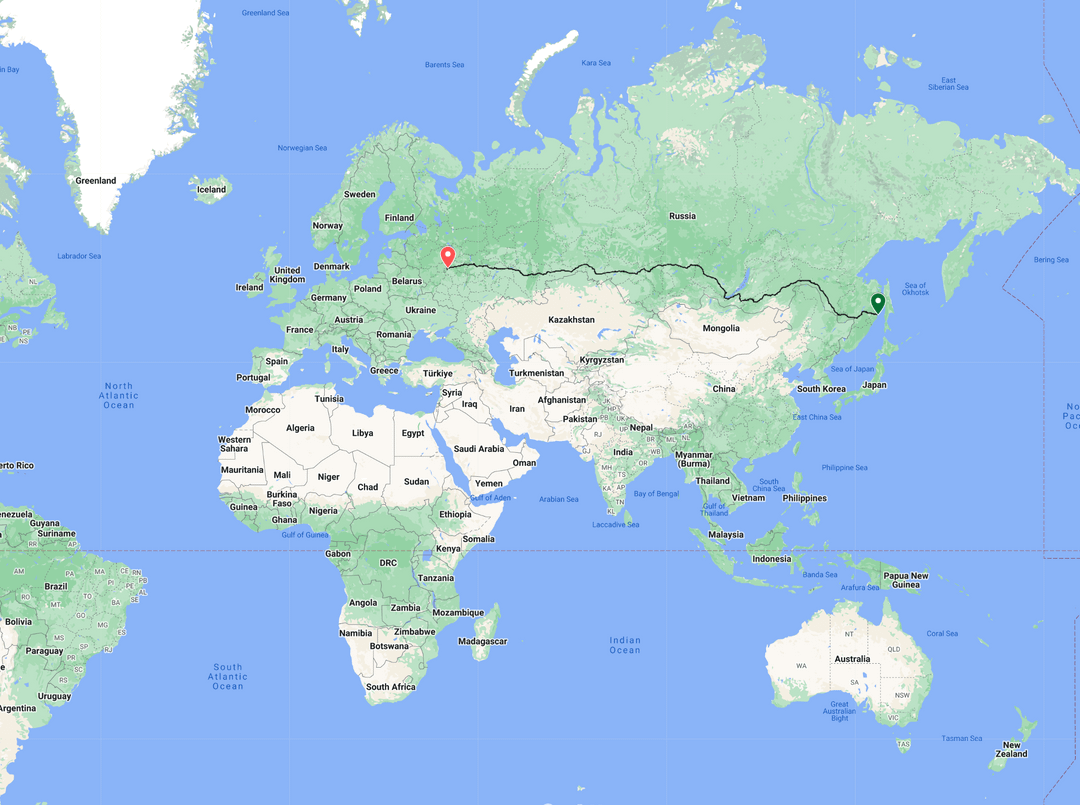
Using a VR headset and my road bike mounted on a trainer, I just completed a 220 day 5600 mile VR tour of Russia. VR software uses data from Google Street view to generate a 360 view of the areas I am riding through, and the trainer dynamically adjusts based on incline data.
by Shon_t
2 Comments
End times are truly upon us
Here is some tech info on my ride… First of all.. I don’t mean to put this on par with actual bike tours… I just thought it might be of interest to those that can’t get out there right now… and those that are looking to scratch an itch… or perhaps preview some possible routes for their next tour. It is also a great way to stay in shape during off season.
Equipment needed:
* Meta VR Headset (Currently supports Quest 1-3, and Quest Pro)
* VZFIT software ($10 monthly subscription)
* Exercise bike (It can be an old bike, folding bike, etc… it just needs to be something that can allow for a cadence sensor to attach to the pedals.
* cadence sensor ($20 on amazon)
Optional equipment:
* A Bluetooth enabled smart trainer can be used in lieu of a cadence sensor. This will allow for a more authentic riding experience where hills actually feel like hills.
* aftermarket headstrap for VR headset $30+ (helps with balance of headset, sweat mitigation, etc. )
* strategically placed fans (helps create a more “authentic feel of the wind blowing as you ride, also helps with sweat mitigation.)
Tech Description:
The VR software allows for customized riding routes all over the world, wherever google street view is available. Users can create A to B routes or even “open routes” that allow for open exploration… For example, just drop into Paris and ride where ever you want. You can steer by tilting or leaning… for closed routes you can simply set an auto steer option if you prefer. With a cadence sensor, the software reacts to how fast or slow you are pedaling, you would have to manually adjust your bike for the difficulty of riding up hill. Certain Bluetooth enabled smart trainers will interact with the software to allow for “dynamic resistance” meaning hills feel like hills. The software can be finetuned to make the riding speed and feel close to authentic or otherwise according to your preferences. You could choose to increase the difficulty for example to compensate for extra weight when bike packing.
As mentioned above, the VR software uses Google Street View photos, which are 360 photos. It processes the photos in a way that makes it feel as if they are stitched together. This process is NOT perfect by any stretch of the imagination, and it can be an acquired taste. The illusion works best in rural environments, where objects and scenery are distant from the rider. There is “stretching” of images… and in urban environments, objects closer to the rider can be noticeably distorted. There are other riding modes available like “slide show mode” which is more like a rudimentary flip book that just advances the rider from one 360 photo to another. This feels less like riding through the world, and more like being stationary as the world moves around the rider. Different software users prefer different software settings. There are many other settings, games, etc that I am not covering in my description… for example, there is a “multi player” mode that allows friends to join rides on their own bikes.
Summary of my experience:
Some years ago, I started a virtual tour of Japan… I fell in love with the promise of what VR might offer. I rode 1400 miles through various villages, cities, parks and the countryside. I saw many shrines, castles, and just every day people going to work, or going to school. As I progressed in this hobby, the software and hardware also progressed, and I updated my equipment over time, in an effort to come as close to possible in having as authentic a riding experience as I can. Eventually, I took on the challenge of riding across Russia. Most of it was just thousands of miles of Siberian Tundra. I typically planned ahead and rode to different points of interest in various cities I passed through before moving on. With the VR software, I can stop when I get tired, and just pick up where I left off. Using my street bike, it is infinitely customizable, if I want to customize something or need a tune up, the bike shop is just down the street. Over the years I have had medical issues, where my doctor has actually ordered me off my bike for periods of time… so having an open timeline that allows me to ride when I am healthy enough to ride has been great for me.
VR is extremely flexible… so I can easily jump around to different parts of the world, or various rides in progress if I desire. It also allows for riding in impossible locations, for example… I did 200+ miles down the Colorado River through the Grand Canyon. I just pretended my bike was a peddle kayak.
I don’t want to oversell the experience… it is “virtual reality” not reality. Still… there are times after a hard climb, that I just have to stop at a vista and enjoy the beautiful view… before continuing my journey. I find riding the local trails to be repetitive and boring, I am only able to occasionally get out of town to ride. So this has definitely been one of the only exercise activities that I have been able to engage in consistently over many years.