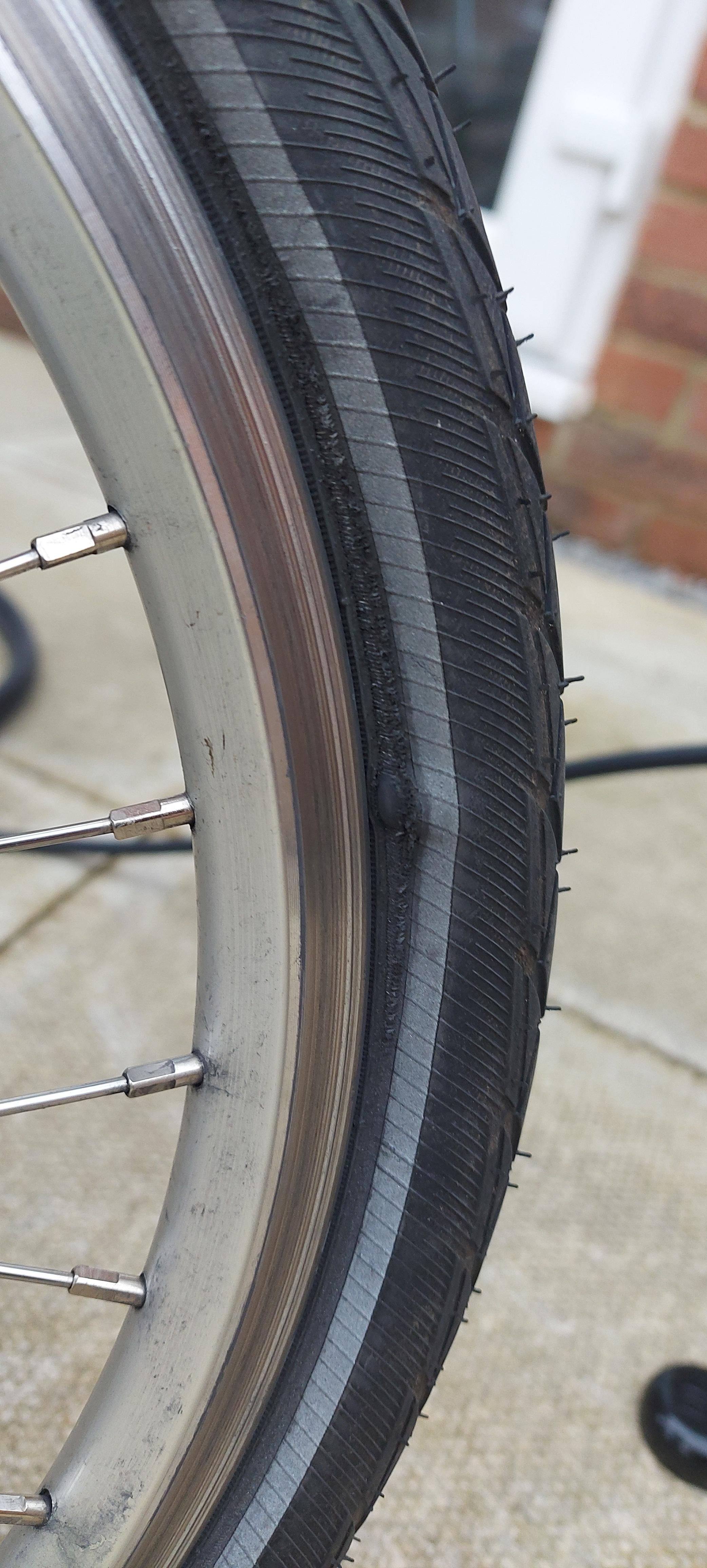
I had a flat today, and after getting home I’ve found a defect in my tyre side wall. In October I also had one of these on a different brand tyre (Contact Urbans). This tyre was installed at a LBS on my way into work, after I found the defect with on the way in (and had a puncture). The walls on that side show some signs of wear, but I am certain that my brake pads are not making contact with the anything apart from the rim. I feel like 2 weak walls is more than bad luck, and must be due to something I’m doing wrong. I just didn’t really want to replace my tire again so soon.
YourMother0HP on
My tires failed after multiple brushes against the kerb. Also riding with heavy weights and under inflated tires are prime suspects for sidewall failures. You can check one of my previous posts on my tire sidewall failures as well.
anlumo on
I’ve had three tires in the first 8 months fail like that. I think that’s normal on a Brompton.
The repair technician told me to check the air pressure every fortnight, just to make sure.
silverfish70 on
it’s possible to cause this sort of damage if you are a bit too forceful in using tyre levers to pry the bead of the tyre off the wheel rim. Maybe you or the LBS did it that way.
Diluteme on
Do you know if this wear occurred in the same location on the wheel for both tires? Is the wheel true? Are you inflating to 100PSI and checking regularly? The brakes and brake shoes are properly secured and lined up and checked while under load? Two tires with the same problem definitely makes me think this is mechanical and not the tires.
_AARAYAN_ on
Had a flat yesterday and haven’t checked yet. Thanks for posting
Oriolj on
Check that the brake pad is not touching the tire when braking
VisibleOtter on
It does look like the sidewall is tearing away from the bead over about 5 or 6cm, you can see the frayed edges. That’s usually, but not always, caused by wear from a brake pad.
Firstly check that the brake pad is aligned correctly and isn’t rubbing on the sidewall (although if that were the case I’d expect to see the damage around the entire sidewall, unless there was a bulge in the wall at that point). It’s also possible that you’ve damaged the wall by hitting a pothole or hopping up a kerb, although that wouldn’t cause the frayed edges.
It may just be that the tyre has failed through wear. If the tyre isn’t at the correct pressure the sidewalls can flex excessively and weaken and eventually tear, exposing the wire bead. That’s normally indicated by the appearance of a herringbone pattern on the sidewall where the fabric under the rubber is flexing. It’s really important to keep the tyres up to max pressure, 100psi.
Or you might just be unlucky and have a bad tyre. It doesn’t look old. If it’s under a year old then Schwalbe will usually replace it under warranty.

8 Comments
I had a flat today, and after getting home I’ve found a defect in my tyre side wall. In October I also had one of these on a different brand tyre (Contact Urbans). This tyre was installed at a LBS on my way into work, after I found the defect with on the way in (and had a puncture). The walls on that side show some signs of wear, but I am certain that my brake pads are not making contact with the anything apart from the rim. I feel like 2 weak walls is more than bad luck, and must be due to something I’m doing wrong. I just didn’t really want to replace my tire again so soon.
My tires failed after multiple brushes against the kerb. Also riding with heavy weights and under inflated tires are prime suspects for sidewall failures. You can check one of my previous posts on my tire sidewall failures as well.
I’ve had three tires in the first 8 months fail like that. I think that’s normal on a Brompton.
The repair technician told me to check the air pressure every fortnight, just to make sure.
it’s possible to cause this sort of damage if you are a bit too forceful in using tyre levers to pry the bead of the tyre off the wheel rim. Maybe you or the LBS did it that way.
Do you know if this wear occurred in the same location on the wheel for both tires? Is the wheel true? Are you inflating to 100PSI and checking regularly? The brakes and brake shoes are properly secured and lined up and checked while under load? Two tires with the same problem definitely makes me think this is mechanical and not the tires.
Had a flat yesterday and haven’t checked yet. Thanks for posting
Check that the brake pad is not touching the tire when braking
It does look like the sidewall is tearing away from the bead over about 5 or 6cm, you can see the frayed edges. That’s usually, but not always, caused by wear from a brake pad.
Firstly check that the brake pad is aligned correctly and isn’t rubbing on the sidewall (although if that were the case I’d expect to see the damage around the entire sidewall, unless there was a bulge in the wall at that point). It’s also possible that you’ve damaged the wall by hitting a pothole or hopping up a kerb, although that wouldn’t cause the frayed edges.
It may just be that the tyre has failed through wear. If the tyre isn’t at the correct pressure the sidewalls can flex excessively and weaken and eventually tear, exposing the wire bead. That’s normally indicated by the appearance of a herringbone pattern on the sidewall where the fabric under the rubber is flexing. It’s really important to keep the tyres up to max pressure, 100psi.
Or you might just be unlucky and have a bad tyre. It doesn’t look old. If it’s under a year old then Schwalbe will usually replace it under warranty.