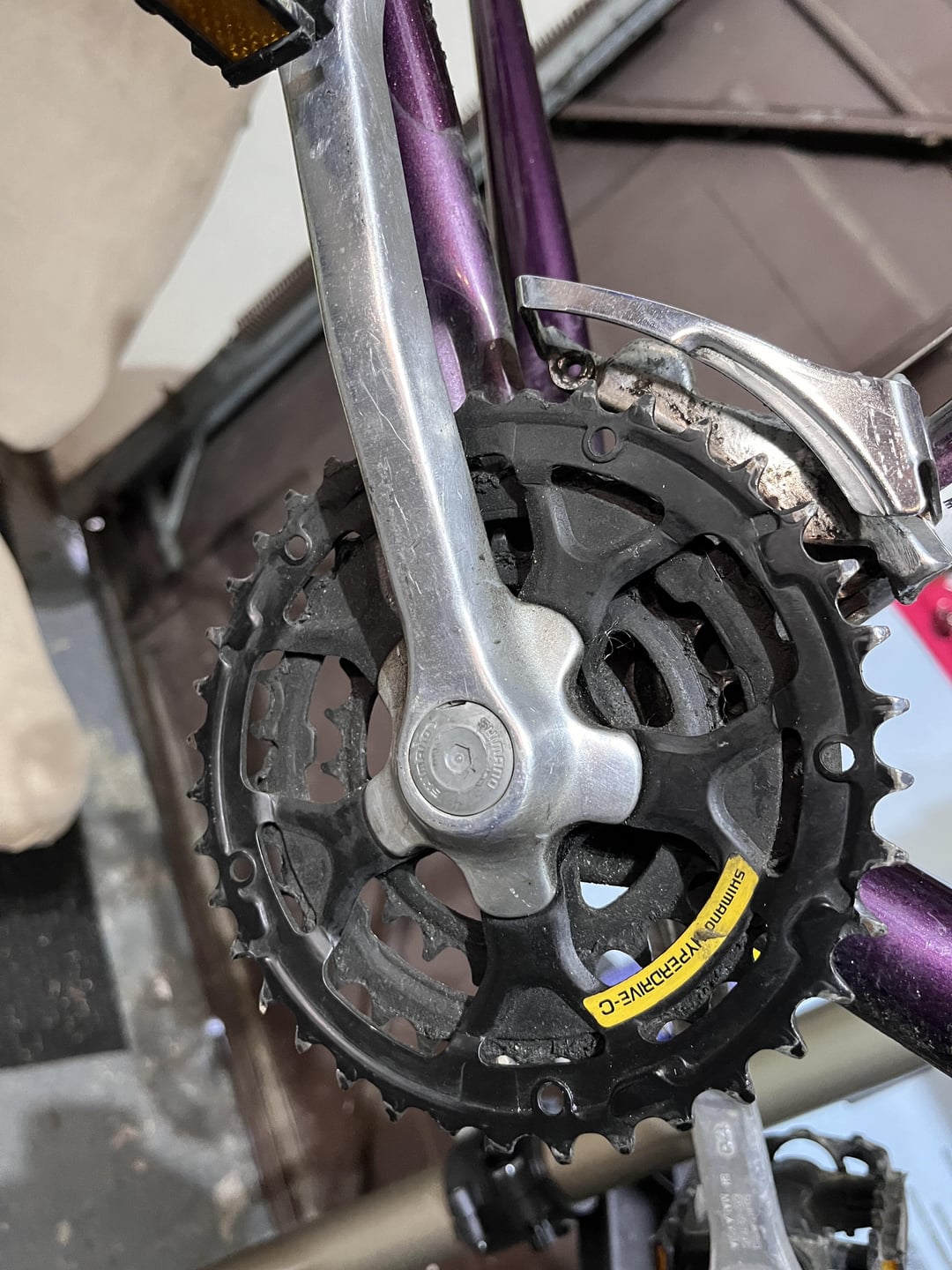
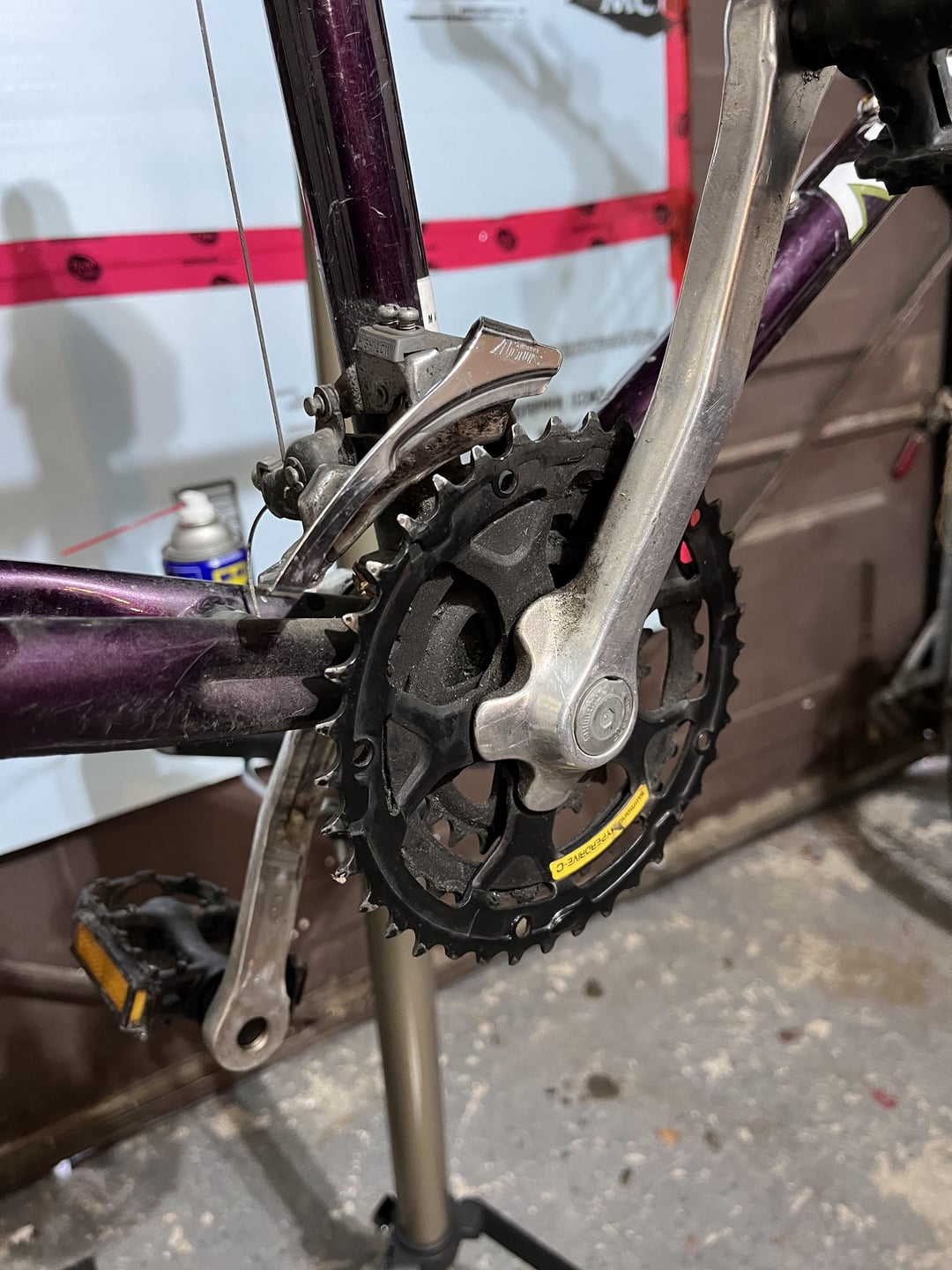
Look fine to me, you’ll have to see what they’re like with a new chain on.
GenericName187 on
Step 1, check the model number of the cranks to make sure they are not one of the following FC-CT90, FC-M290, FC-MC12. Those cranks have been recalled and Shimano will replace them. The model number is stamped on the inside of the crankarm.
Assuming it is not one of those models, chainring wear can be a bit harder to measure. Most cranks built after 1994 or so will have specially shaped chainrings with ramps and oddly shaped teeth to help the chain move from one chainring to the next. What may look like a damaged chainring may be a feature intentionally designed in the chainring shape.
Chains usually wear out fastest, then cassettes, then chainrings. This is especially true on cheaper cranksets where the chainrings are made of steel. If you replace the chain, a new chain may skip on a worn chainring, this is usually most noticeable on the middle chainring. If your chain is not skipping, I would not worry about visually inspecting for wear. Really worn chainrings look like pointy shark teeth.
Your crankset uses riveted chainrings, the whole unit would need to be replaced. Replacing one chainring would not be an option.
If you do need a new crankset, try to match the teeth 42-32-22. You would also likely need a new bottom bracket, as each crankset model is designed for a specific length of bottom bracket spindle.

3 Comments
Look fine to me, you’ll have to see what they’re like with a new chain on.
Step 1, check the model number of the cranks to make sure they are not one of the following FC-CT90, FC-M290, FC-MC12. Those cranks have been recalled and Shimano will replace them. The model number is stamped on the inside of the crankarm.
https://bike.shimano.com/en-US/information/customer-services/recalls-and-repairs/fc-ct90-m920-mc12-cranks.htm.html
Assuming it is not one of those models, chainring wear can be a bit harder to measure. Most cranks built after 1994 or so will have specially shaped chainrings with ramps and oddly shaped teeth to help the chain move from one chainring to the next. What may look like a damaged chainring may be a feature intentionally designed in the chainring shape.
Chains usually wear out fastest, then cassettes, then chainrings. This is especially true on cheaper cranksets where the chainrings are made of steel. If you replace the chain, a new chain may skip on a worn chainring, this is usually most noticeable on the middle chainring. If your chain is not skipping, I would not worry about visually inspecting for wear. Really worn chainrings look like pointy shark teeth.
Your crankset uses riveted chainrings, the whole unit would need to be replaced. Replacing one chainring would not be an option.
If you do need a new crankset, try to match the teeth 42-32-22. You would also likely need a new bottom bracket, as each crankset model is designed for a specific length of bottom bracket spindle.
Look good.
Pedal away.