
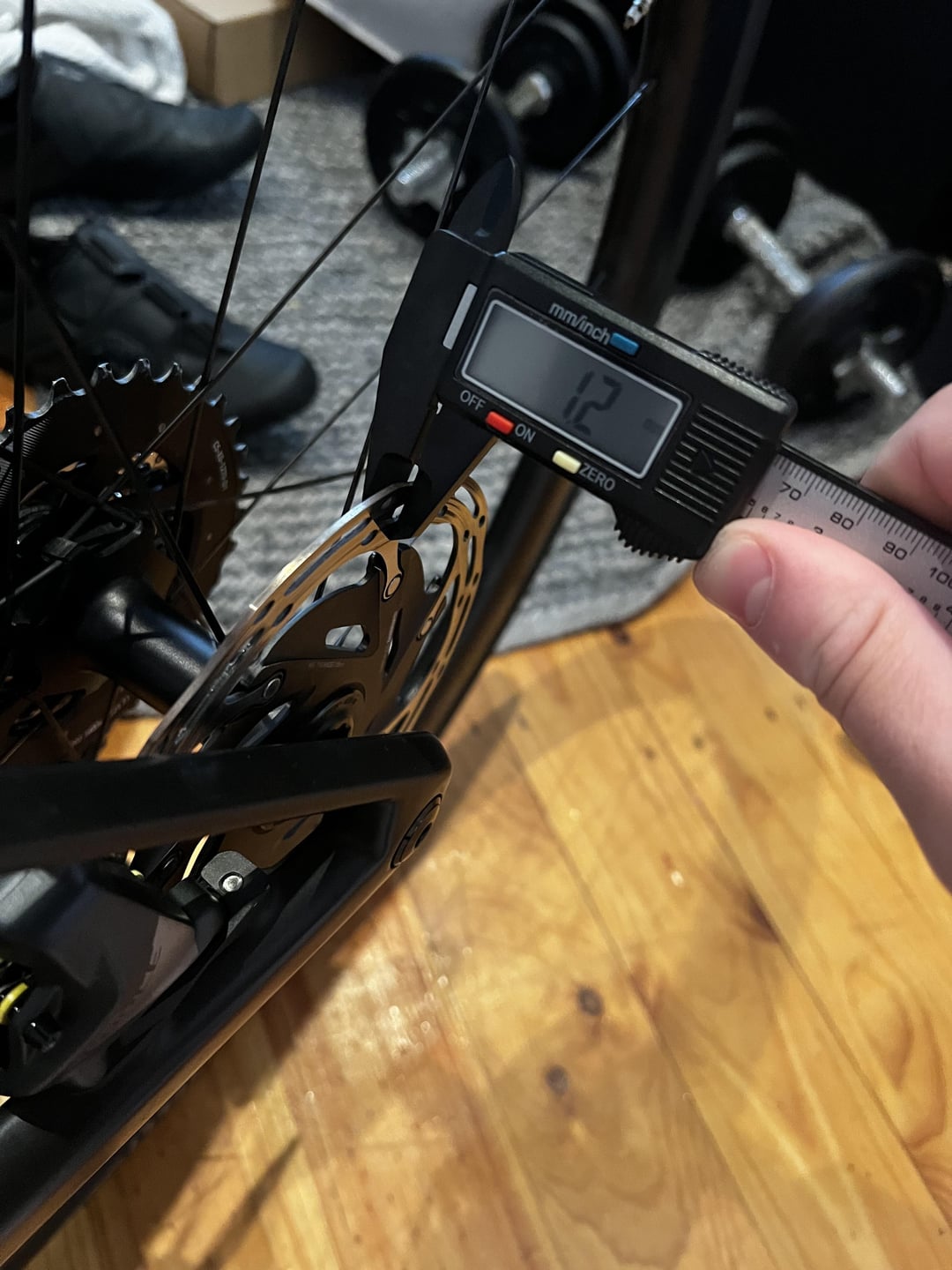
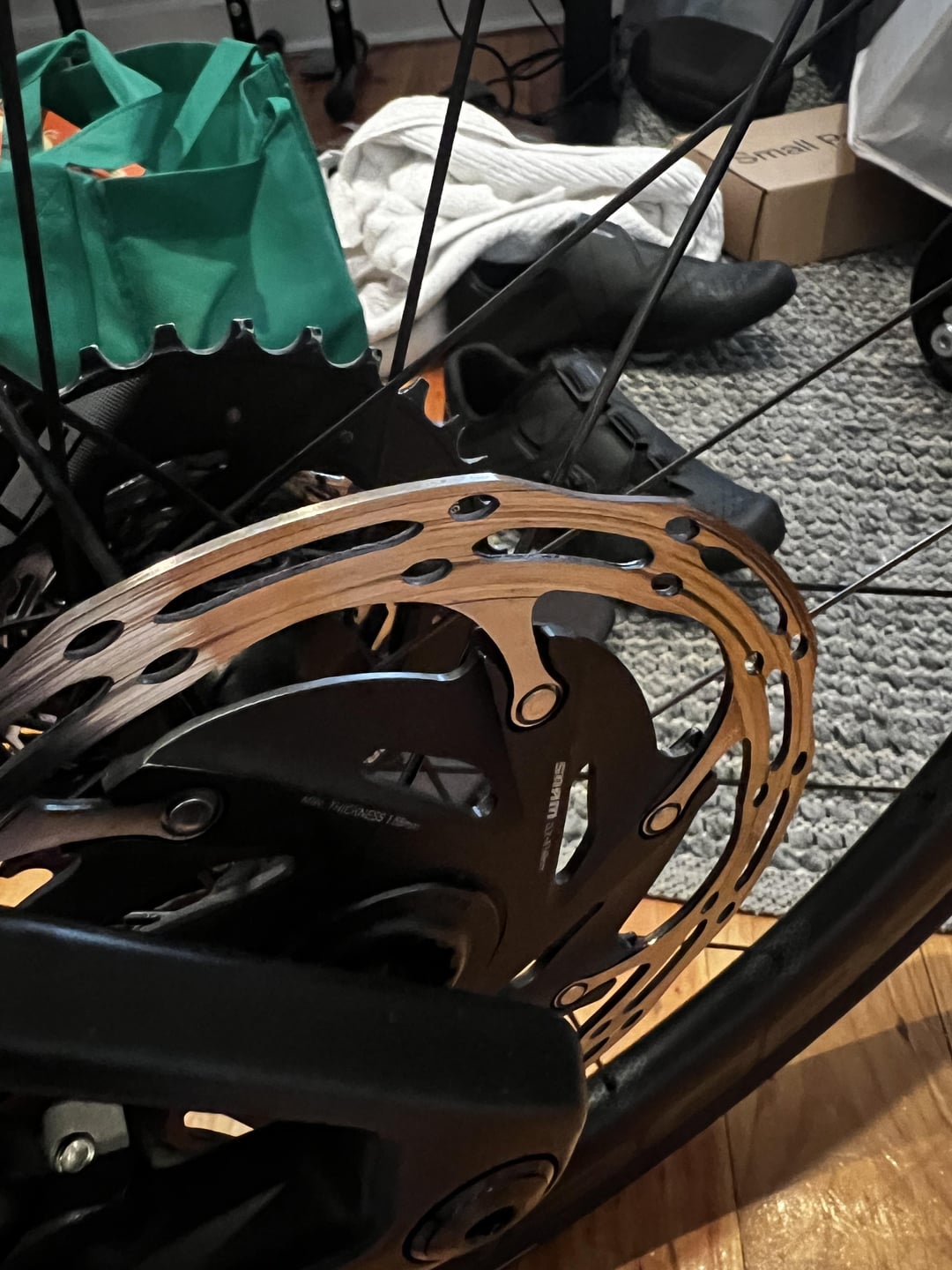
You can see a divit where the rotor starts to wear. So I measured from where the wear line is. It also shows 1.2mm. But the minimum wear is 1.55mm. I assume it’s time for a replacement ?
by DSFanatic625
You can see a divit where the rotor starts to wear. So I measured from where the wear line is. It also shows 1.2mm. But the minimum wear is 1.55mm. I assume it’s time for a replacement ?
by DSFanatic625
9 Comments
Correct technique, replacement time.
You generally want to measure a few spots.
Ideally you would have a caliper with ball ends for the thickness. But otherwise, the dip in the rotor is indeed the best place since it does always wear if things work.
If it actually 1.2 then yes, absolutely replace, asap.
The proper tool would be an outside micrometer. A caliper gives you the width between the high spots on each side, but can’t tell you how thin it is in the low spots.
Realistically use your fingernails. If you can feel a ridge from the braking track, replace the rotors
Technically yes, but there are better more accurate tools to use to get the proper measurement. iGaging makes a digital caliper gauge that has a ball bearing tip and measures paper and sheet metal thickness to get around the edge which is usually taller/thicker.
If it measures 1.2mm it’s way past time to replace it. Replace the pads too. They are worn to that old rotor
I own one of that brand and I frankly don’t trust it for that level of precision.
For this use a caliper like this is accurate enough, no need for outside micrometer. Even a low end vernier can measure up to +/- 0.1 – 0.2 mm reliably and consistently enough. Not much better than that though, regardless of how many digits readout it has. When I worked in the QA department of a large manufacturer of pressure switches etc anything that required an accuracy of more than 0.2mm we were using micrometers or other more accurate methods. Quite a few years ago now, but not much has changed I think.
Your method is fine for your rotor OP, definitely replacement time
The ideal thing is a digital ball anvil thickness gauge. With this you can reach over any peaks/ledges and sweep the entire braking surface. Can be a little pricey. If you’re as cheap as me you can buy a flat anvil thickness gauge (~£10, often sold as a leather gauge) and epoxy ball bearings to the anvil faces. Grind a flat onto the back of the ball bearings, use a hollow cylindrical spacer to align them. Much less annoying when someone drops one of those than a Mitotoyu