
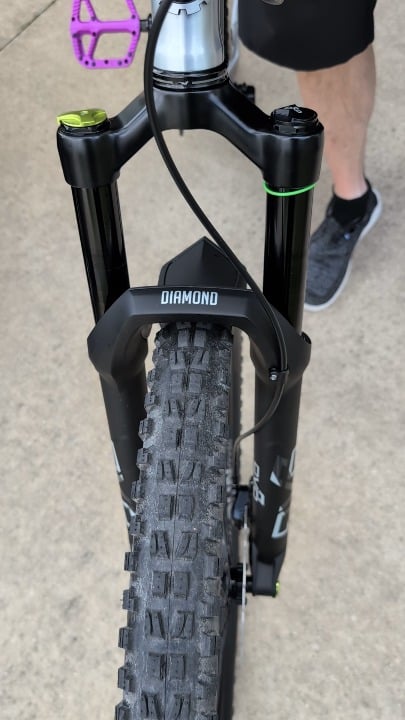
Got a brand new DVO Diamond D2 on my bike. Fork feels great once it engages but it almost feels like the stanchions are locked out / stiff with the first stroke. Fork is set fully open. Anyone had similar issues?
by InterestingAd7771
Got a brand new DVO Diamond D2 on my bike. Fork feels great once it engages but it almost feels like the stanchions are locked out / stiff with the first stroke. Fork is set fully open. Anyone had similar issues?
by InterestingAd7771
5 Comments
Most forks need about 10-15 hours of riding to fully break in. “Sticktion” (the initial friction that sticks the fork at first) is most prominent during that period. Some forks its better when new, some forks its worse. 32 and 34mm XC/downcountry forks its usually the worst because of the small stanchions and flex in the fork itself (thats why they make forks beefier and beefier in the first place for AM/ Enduro/ DH forks)
[You can also burnish a fork](https://nsmb.com/articles/sizing-or-is-it-burnishing-your-fork-bushings-with-rms-tools/) to basically do this yourself but I wouldn’t think it’d make sense for something on the entry level end.
I mean, I have aired down a new fork 2-5psi (so like 22-25% sag not the normal 20%), add a bottom out spacer and basically ride it as hard and shitty as a I can. Felt like it broke in faster.
The DVO has *so much* adjustment that it will take you a few rides to get it dialed. Don’t forget about your OTT negative spring adjustment, as well as your high speed vs low speed compression damping. I’ve been running a 1st gen Diamond 110 for about six years now, rebuilt it with new seals and bushings about every two seasons, and it’s still the best suspension fork I’ve ever ridden.
Spend some time on your favorite trail with your pump and a set of Allen wrenches, experimenting around to find your optimal settings once your sag is dialed in. The thing DVO has dialed is the mid-stroke action- you should be able to feel the fork working thru all the conditions.
Doesn’t the DVO D2 have the off the top (OTT) adjustment on the bottom to help with the initial part of the stroke?
Did you read the manual?
Es gibt Gabeln die haben einen Auslösemoment, tauchen dadurch mit oder ohne Widerstand ein.Nennt sich Ansprechverhalten, ist bei ner Fox anders als bei einer Marzocci oder Bomber. Stell den SAG richtig ein und mach Rebound etwas auf, so kurz vorm springen.