




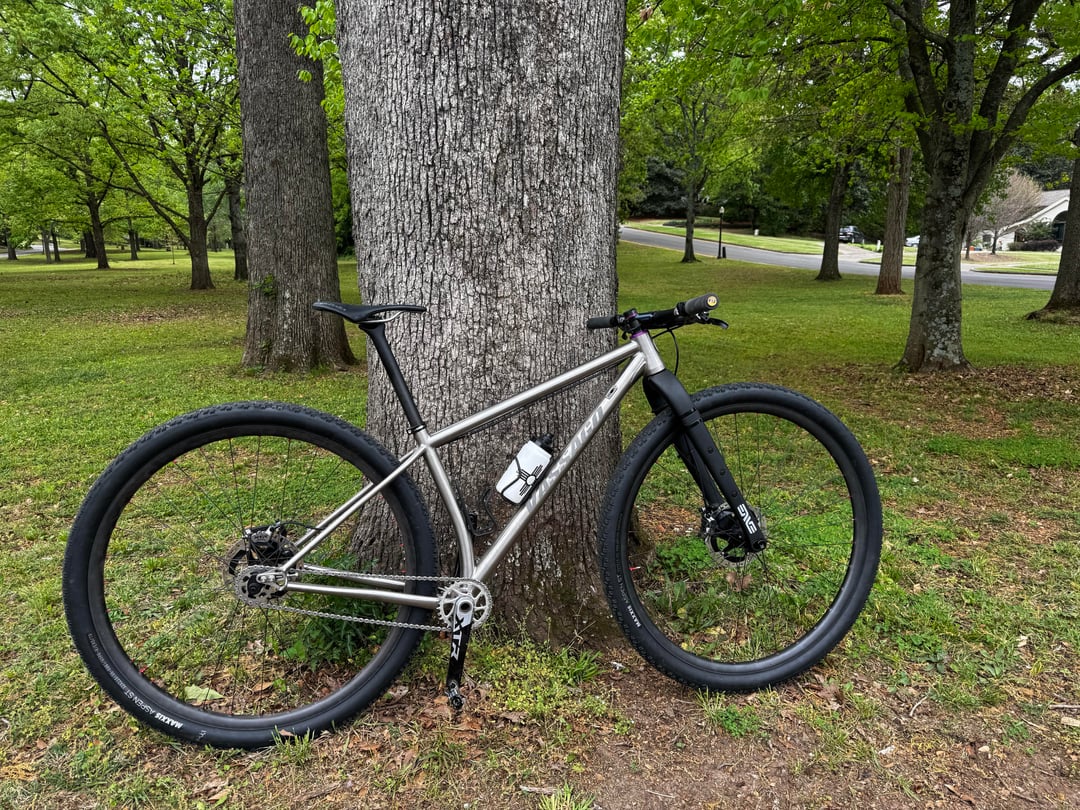
Maxxis officially released the 29er Aspen ST to the public in 2024, but it was quite clearly in use on pro bikes during the early 2020s…most often seen in 170 TPI Team Spec construction but also available in a 120 TPI + EXO TR casing. Both feature the MaxxSpeed compound and come in 2.25 and 2.40 widths. I tested the 29 x 2.25 170 TPI Team Spec tires last year on a Manzanita Whippet gravel bike and came away impressed with their speed and generous volume.
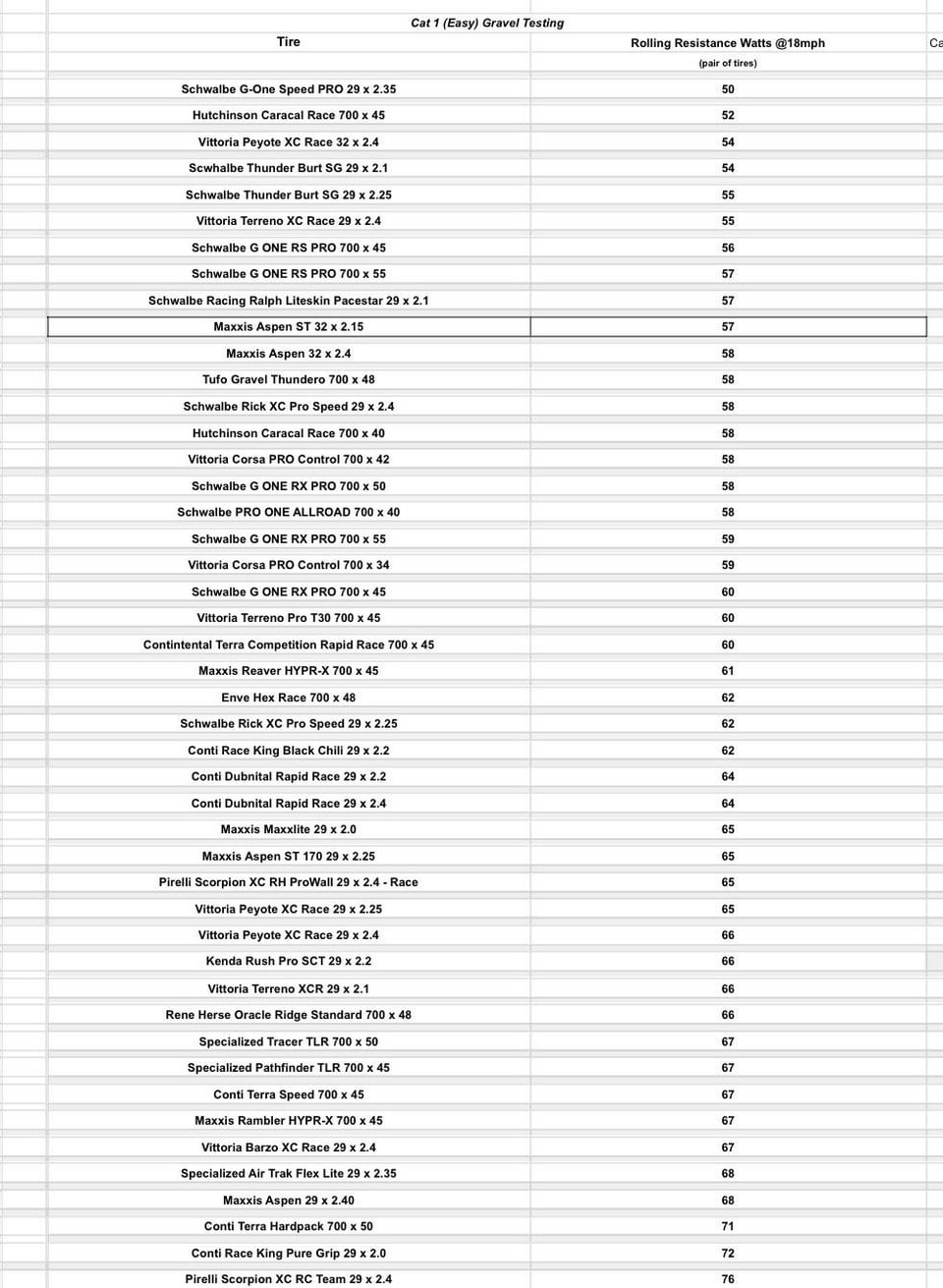
The 32" Aspen ST tested here is a much different tire than its 29" predecessor, with a new 120 TPI EXO casing and HYPR-X compound similar to their new gravel tire options. While the diameter grows 3 inches here, the width on this new model goes down a notch to 2.15 which seems directly targeted for use on larger wheel gravel bikes. Overall, a pretty exciting tire for me to get my hands on as I am a big fan of the HYPR-X Reaver gravel tire I tested from Maxxis last year. While the branding on this looks closer to the Reaver than the 32" Aspen, the tread pattern on the 32" Aspen ST is most definitely closest to that of the 29" Aspen ST.
Given the way total tire volume is calculated (a torus in shape), the volume of a 32er is quite close to that of a 29er setup with a tire 2-3 mm wider in cross section. This gives some eventual very interesting comparisons to be made regarding volume, width, and diameter…I am certainly zoomed in on this compared to the very similar volume 29 x 2.25 Aspen ST 170 I tested before.
It is easy to imagine a world where only tire volume, a supple casing, or tread pattern determines performance. My testing indicates that on- and off-road rolling resistance is influenced by many factors, inluding a benefit from increased diameter. This shows up yet again with the 32 x 2.15 Aspen ST tested here, with notably fast test results on pavement and across all gravel tracks. I have experienced better traction than the 29er Aspen STs in all scenarios which is a nice bonus to the efficiency gains.
All test results my own via Chung/VE method.
A note on tire pressure. Everyone wants to know…what pressure am I using? Obviously, larger tires will require lower pressure than smaller ones to get the best speed and handling in general…especially off road. The Wolf Tooth Advanced calculator is very good in my usage for gravel and mtb tires. The Rough Gravel setting seems to get quite close to best pressure for not only rolling efficiency (yes, even on gravel that’s not super rough) but also comfort and handling. I will start with that based on the measured tire size, go ride some, recheck pressure once the tire warms up, then reasess the setting based on how the tire is riding. If it feels obviously harsh, go down 1 psi…. If it feels squirmy or I am smacking the rim on hard hits, I will go up 1 psi, maybe 2 in that situation. Often I end up sticking quite close to what the calculator says initially but it isn't written in stone. Rolling efficiency is actually almost identical (reference some testing I posted spring 2025 for this graphically) across a bigger span of tire pressures off road than most realize, which means it is quite easy to get the pressure where the tire will be fastest…the rest is fine tuning to rider preference. Even though I’m testing, I am also enjoying being out there so take the extra steps to see how the tire performs best. Ultimately there is no magic “best” pressure… it is up to rider preference with no real speed penalty unless you really mess it up one way or another, and that is a big reason I am explaining this in such detail. It’s not to justify my results, it’s to encourage folks to keep an open mind about how they set their tires and get the best ride possible. All the Smooth Pavement testing I do is with the tires set to the PSI I would use for riding on average pavement, so in practice about 5-7 psi higher than I would use for off road riding.
by gravykarrasch