
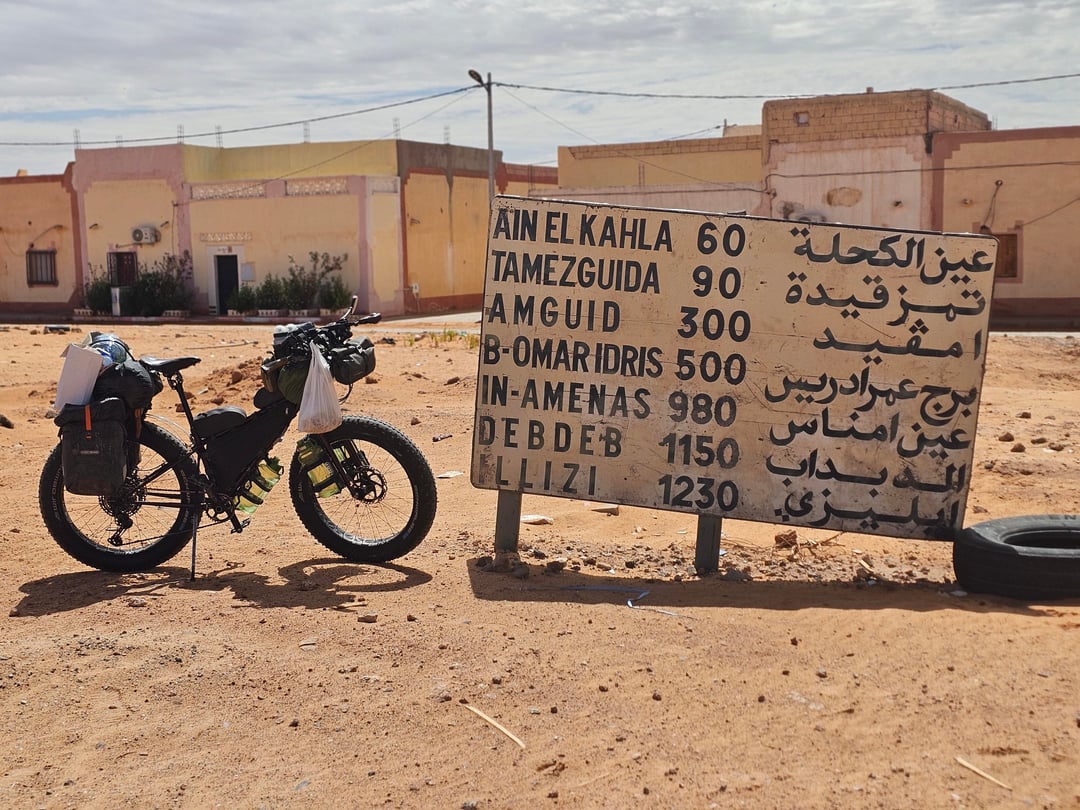
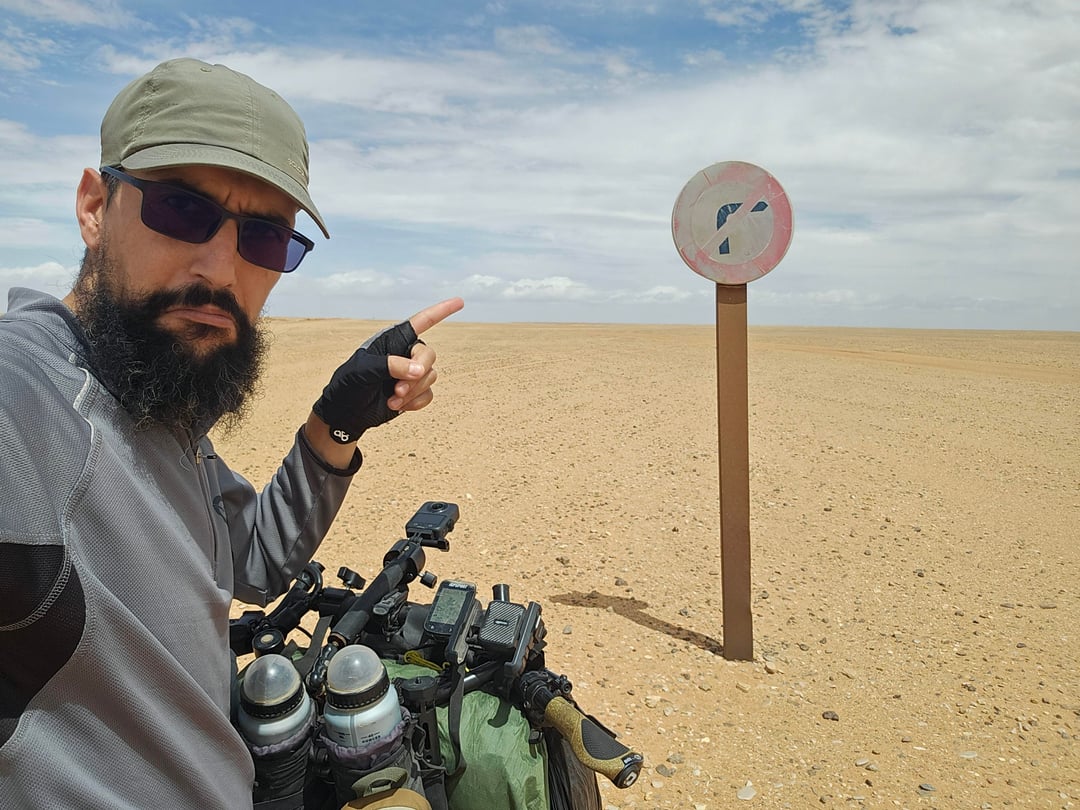
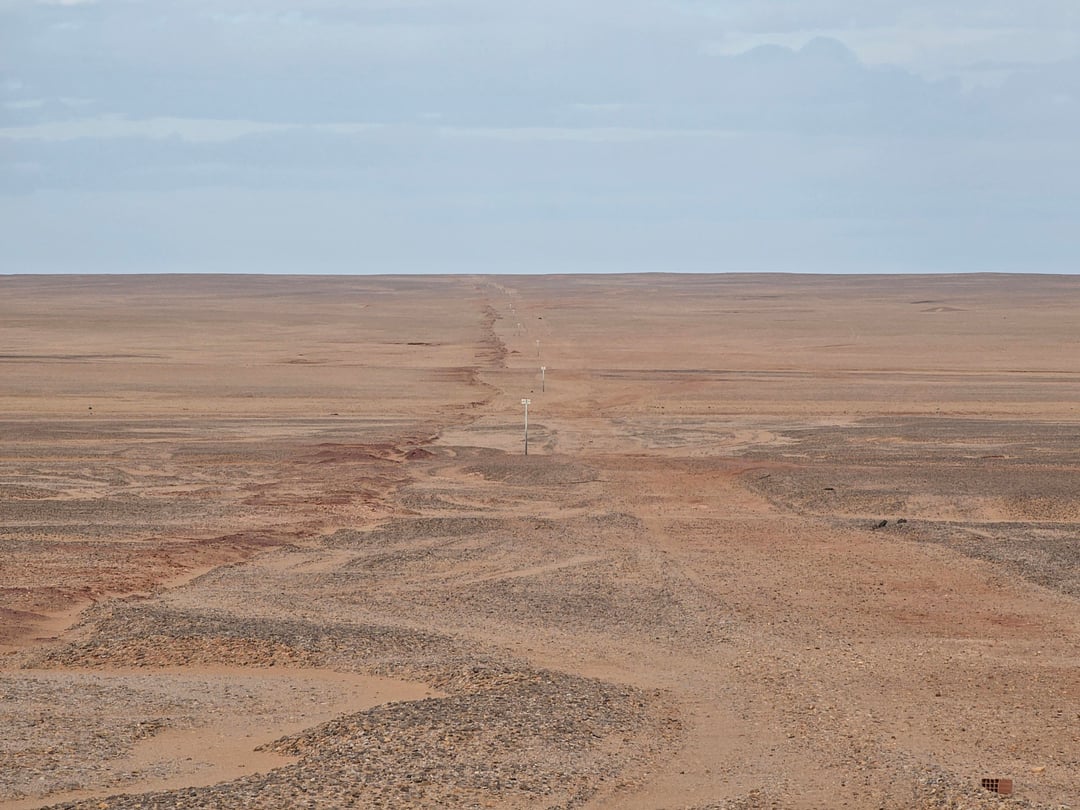
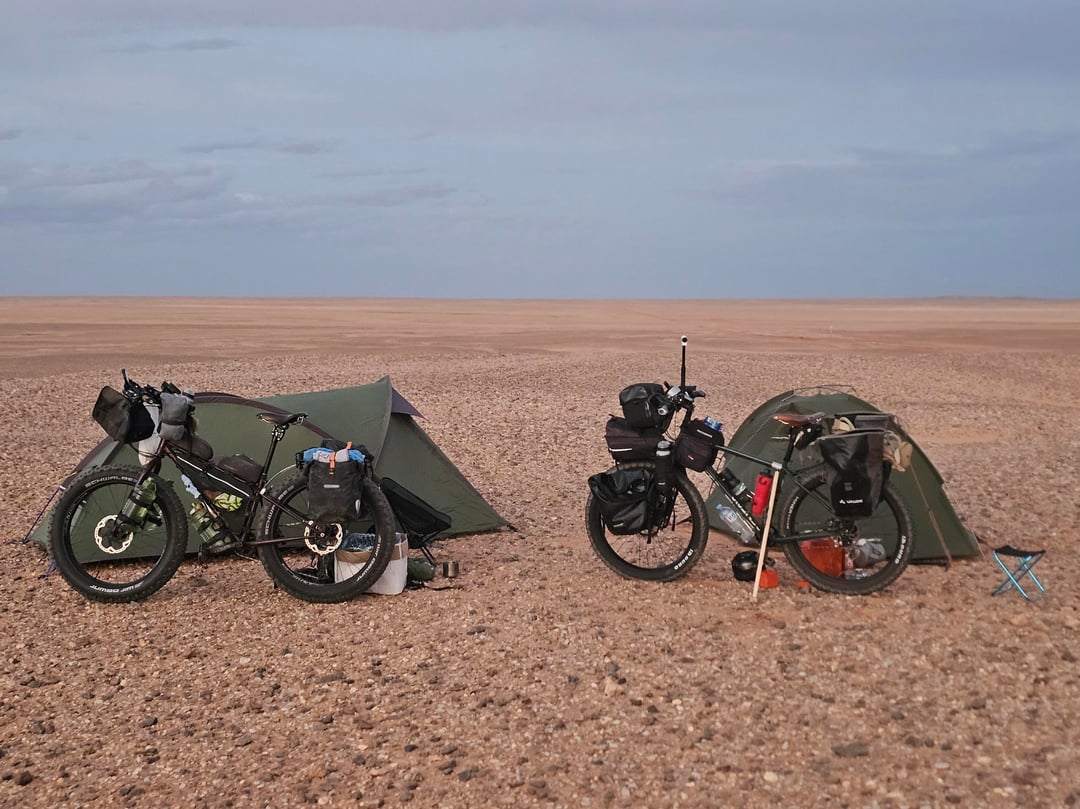
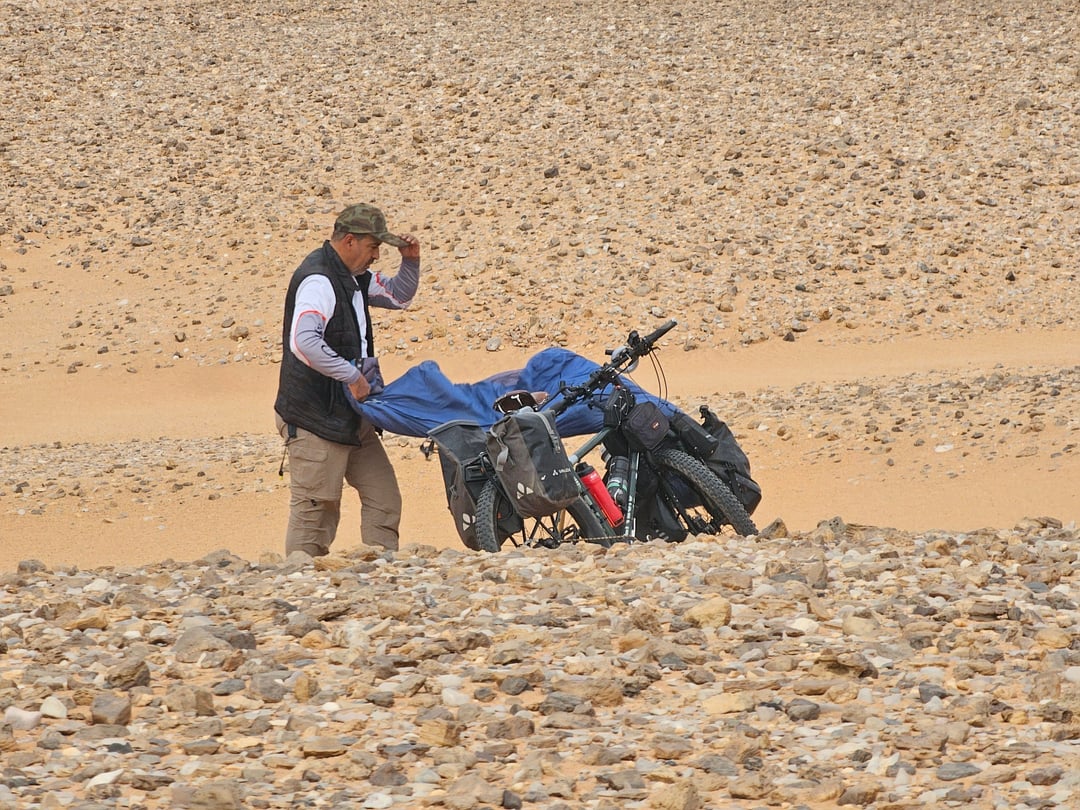
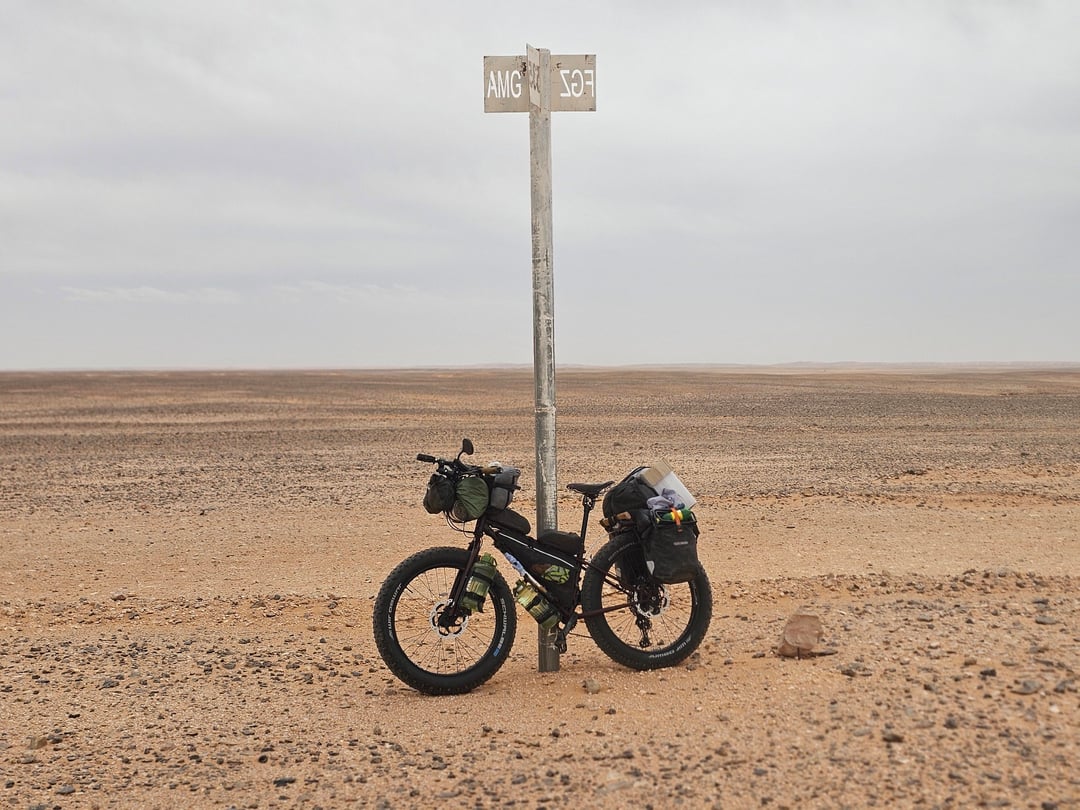
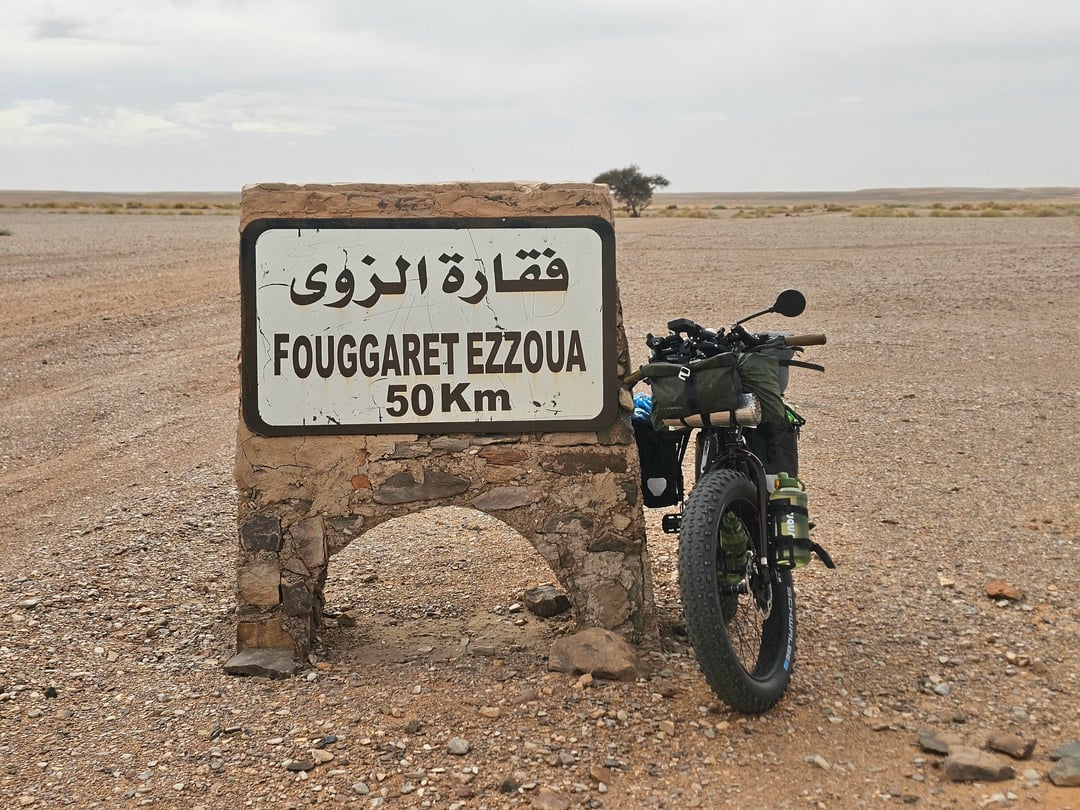
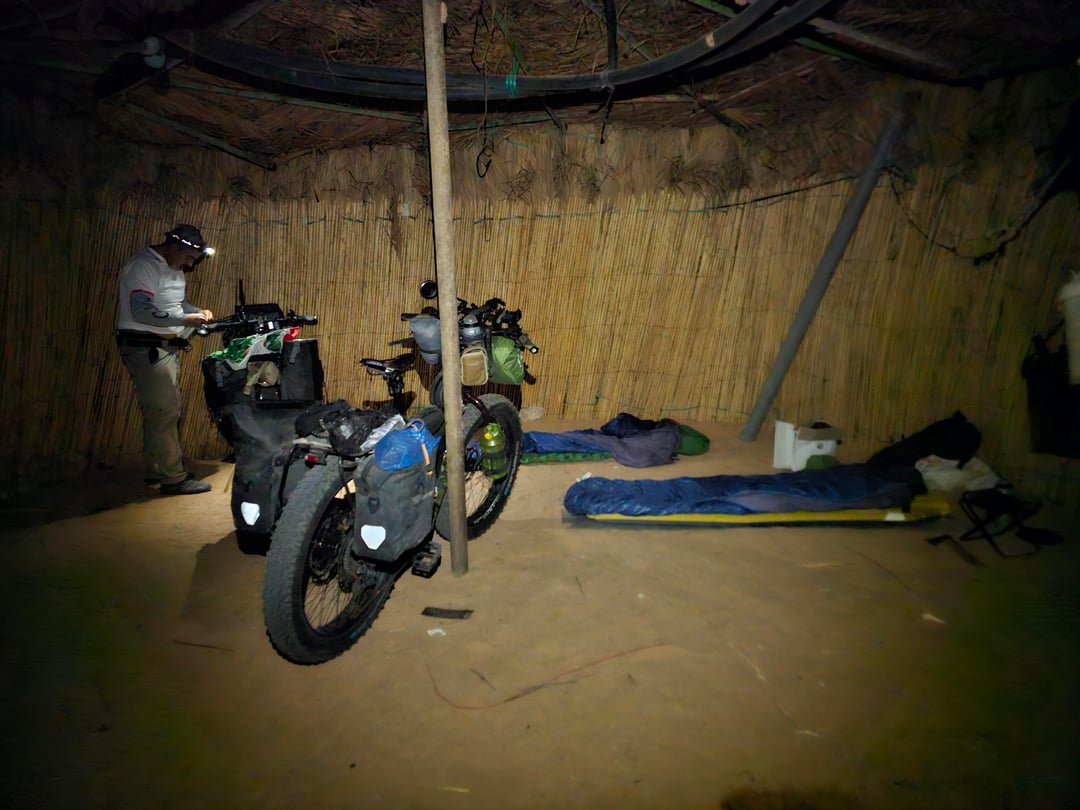
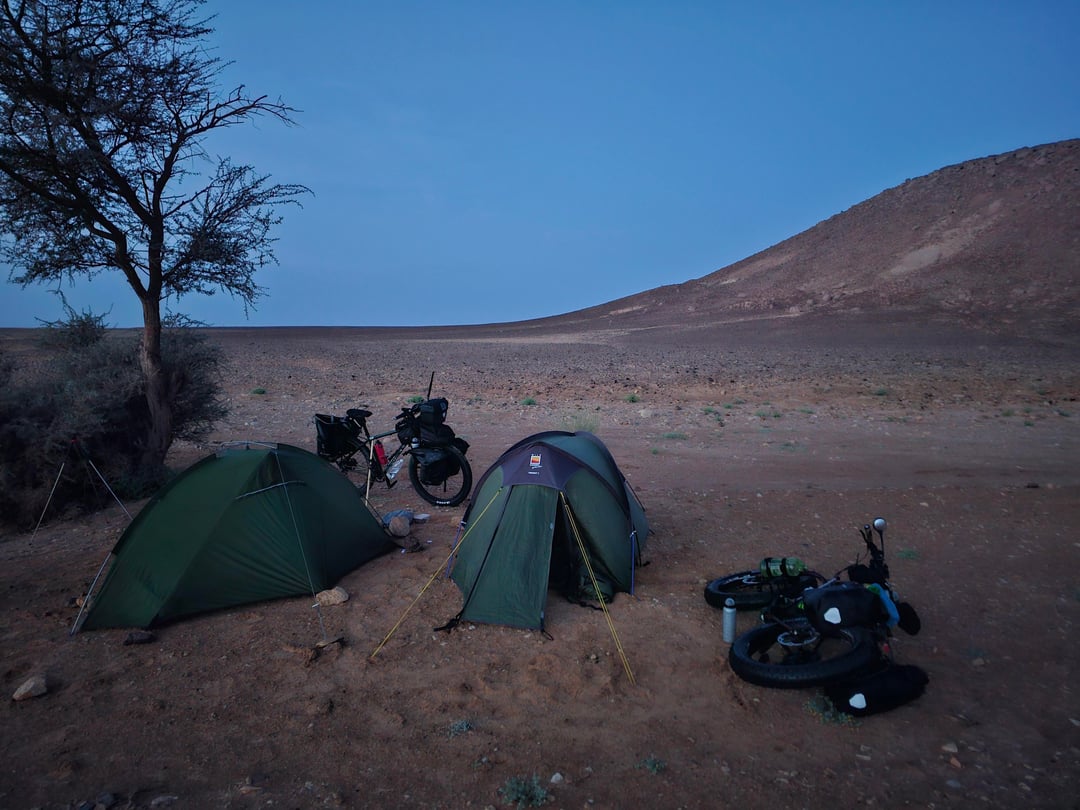
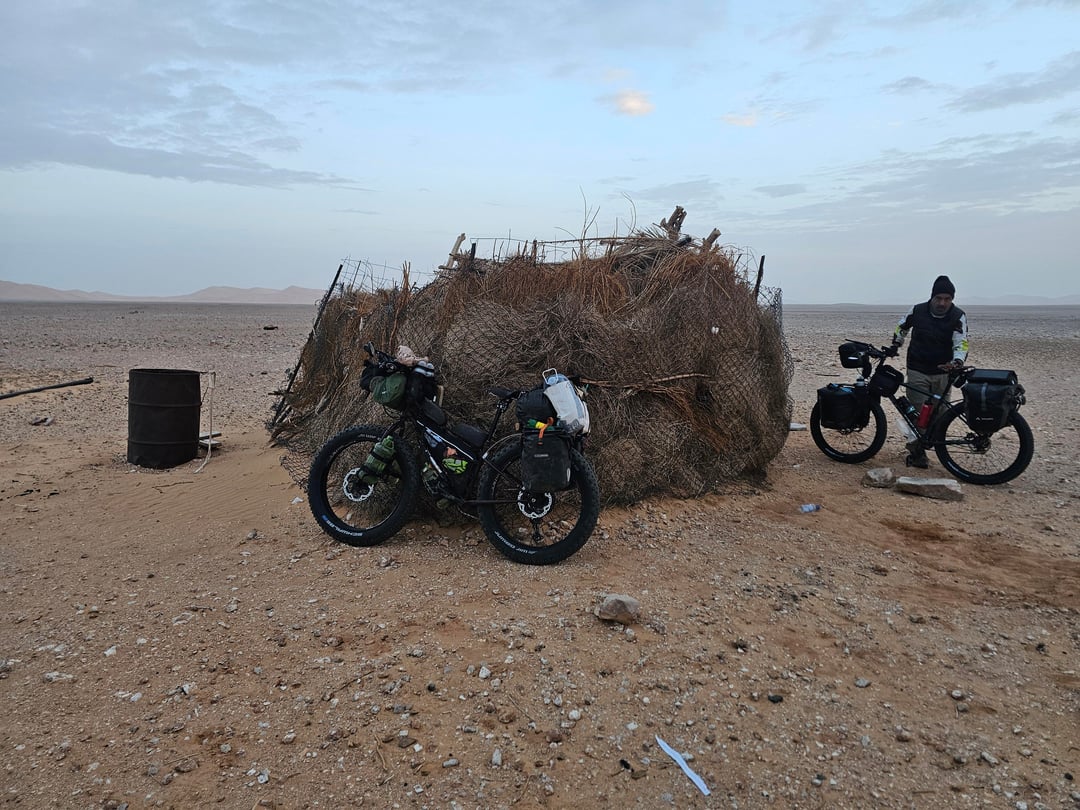
We just completed a 454 km desert crossing in southern Algeria — a route that shares some similarities with the Tanezrouft, but with one key difference: it’s not completely lifeless. Occasionally, you might encounter people.
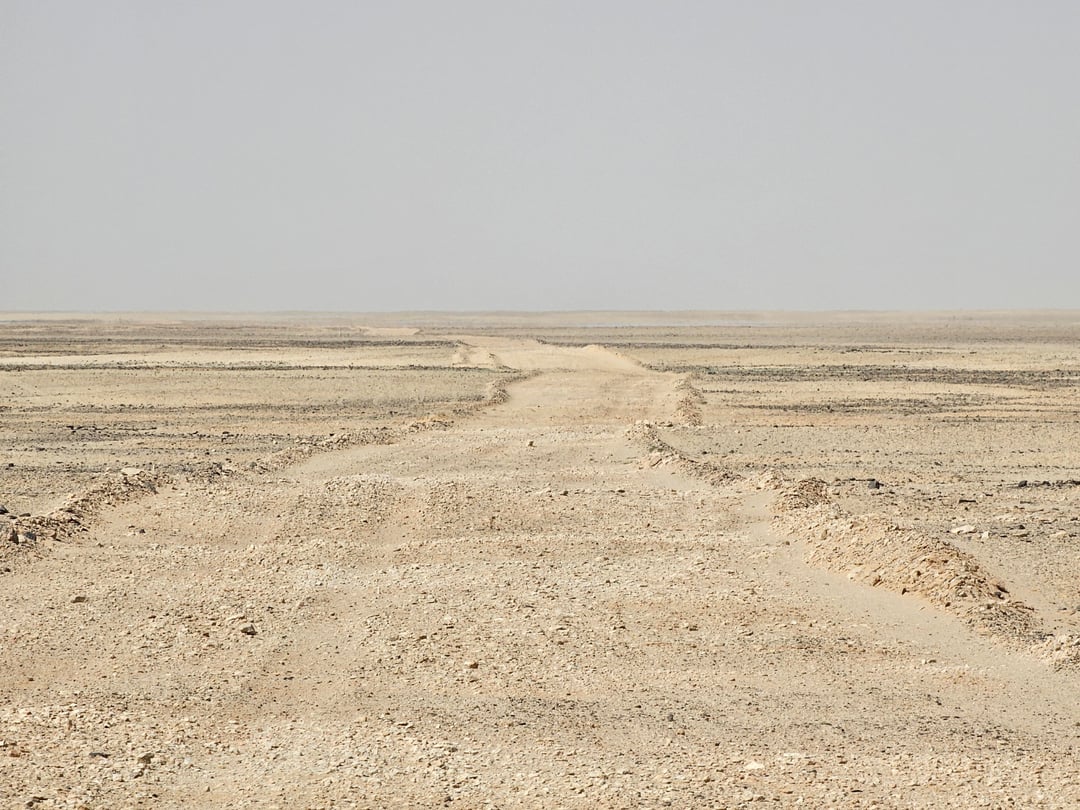
The route connects Ain Salah to the southeast (Hassi Bel Guebbour – Bordj Omar Driss). Around 70% of it is rocky terrain, with some sandy sections in dry valleys.
We did it in 7 days.
And it turned into one of the most intense survival experiences I’ve ever had.
Conditions
Daytime temperatures reached 42°C
Nights and early mornings were extremely cold
We faced strong headwinds for long stretches
For 3 full days, we didn’t see a single human, vehicle, or sign of life
This is not a place where you make mistakes.
Water Strategy… and Failure
We started with 16 liters of water each.
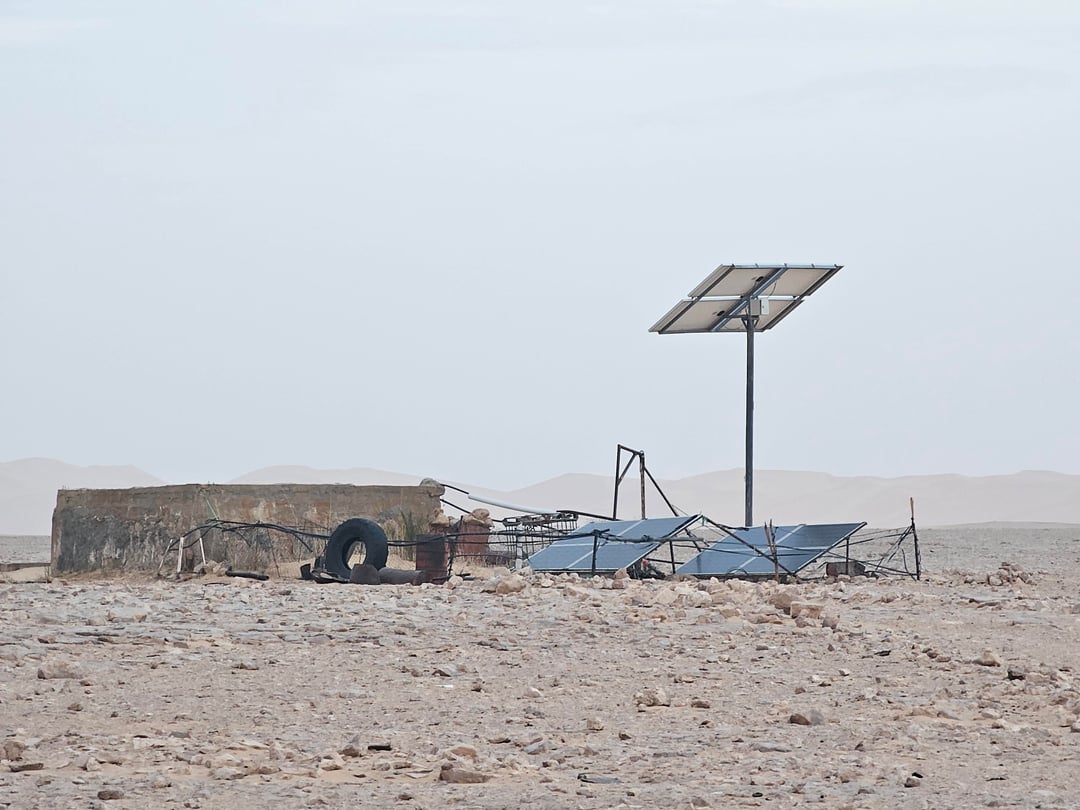
First resupply: a well (Hassi – Massine), about 75 km into the off-road section (~2 days after leaving Ain Salah)
After that… nothing
The plan was solid on paper.
But reality was different.
My partner struggled to manage his water consumption under the heat and effort. By day 4 and 5, we were running critically low. I had to share my supply, which pushed both of us into a dangerous zone.
This is where the desert becomes unforgiving:
one person’s mismanagement becomes both riders’ problem.
The Rescue
At our lowest point, something incredible happened.
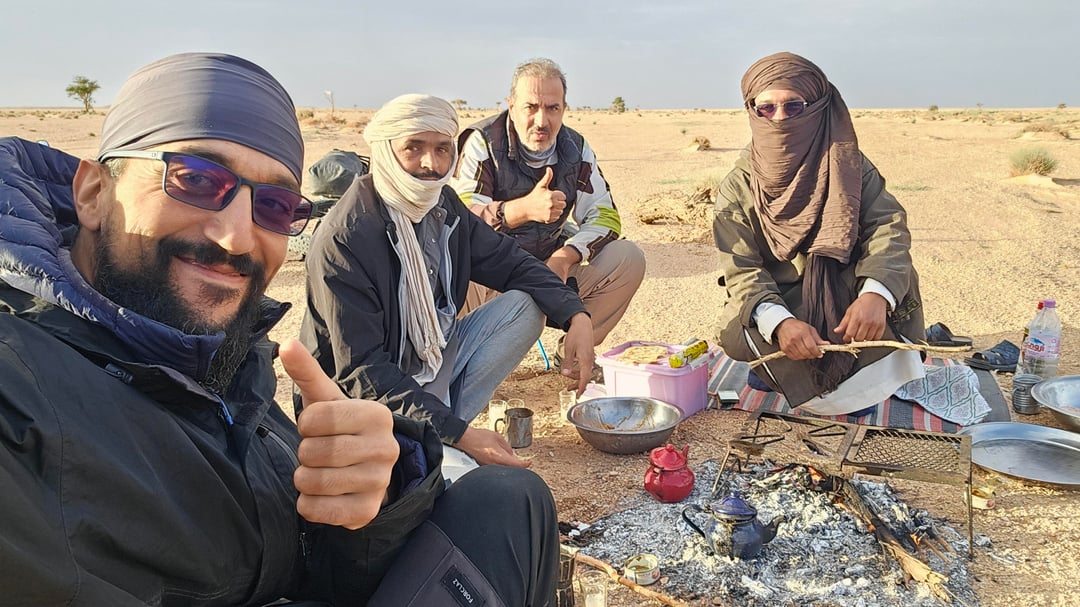
Two meteorite hunters noticed our tracks in the desert. They suspected something was wrong and decided to follow us — for 40 km.
They found us when we needed help the most.
They gave us water.
That moment likely saved the trip… and possibly much more.
Terrain & Equipment
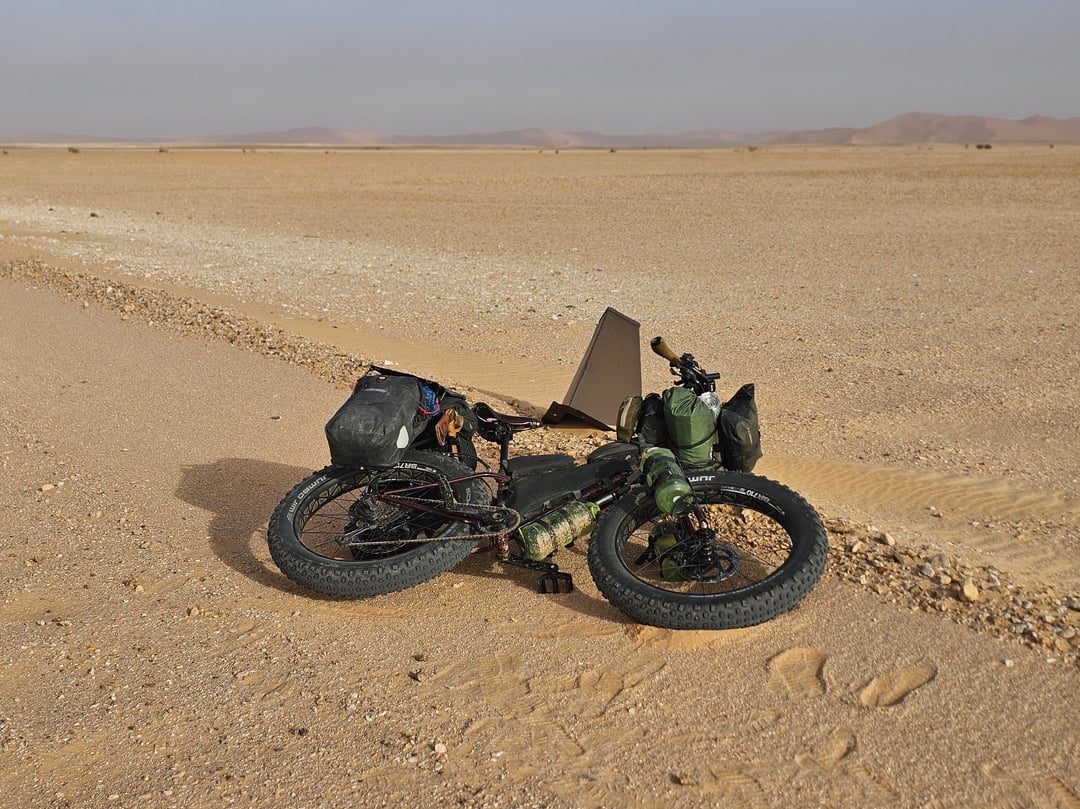
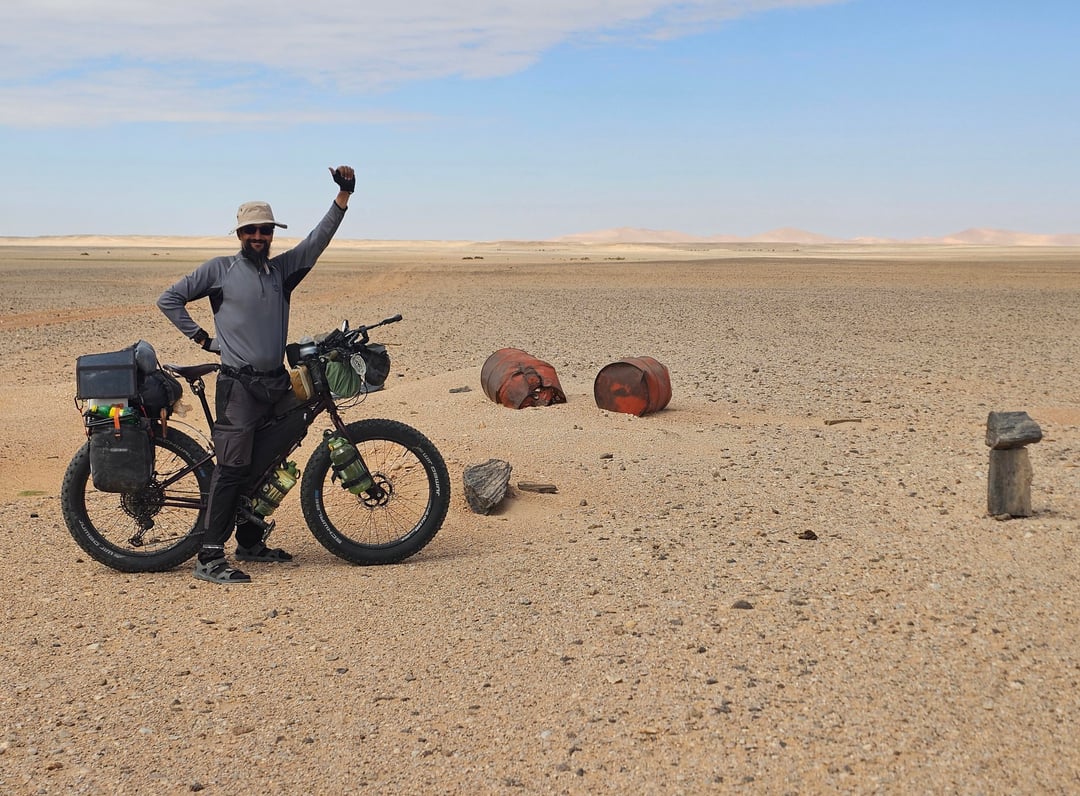
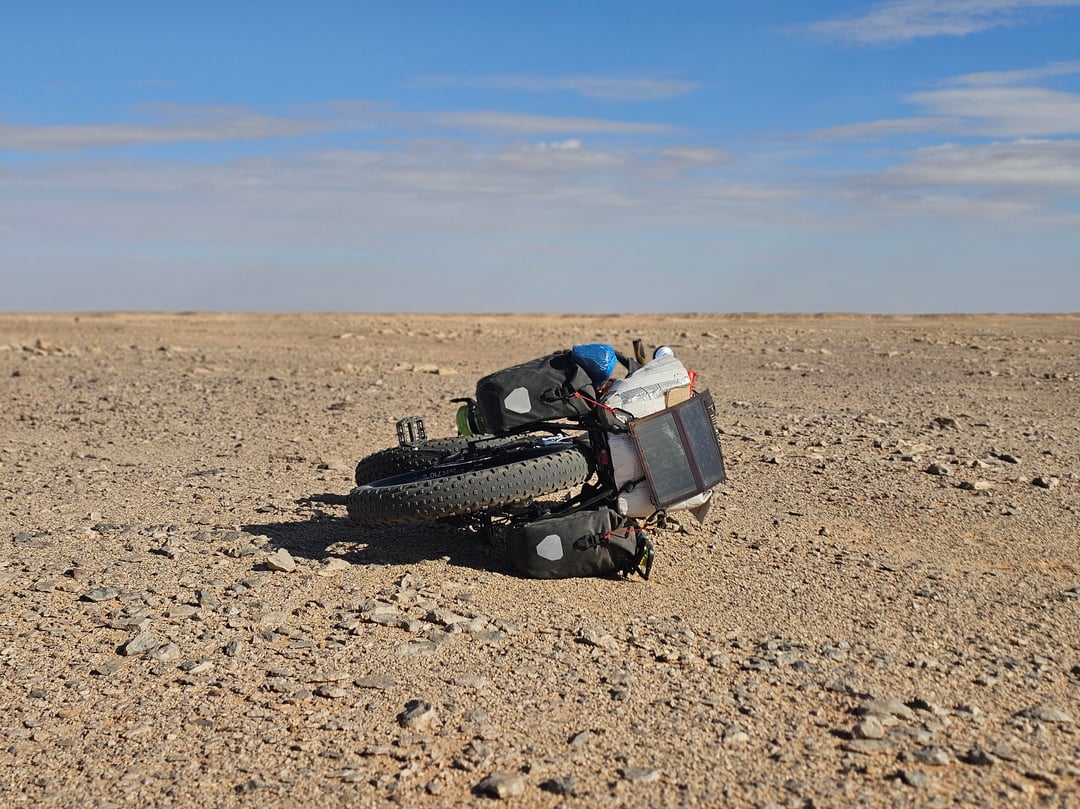
Rocky terrain dominated most of the route
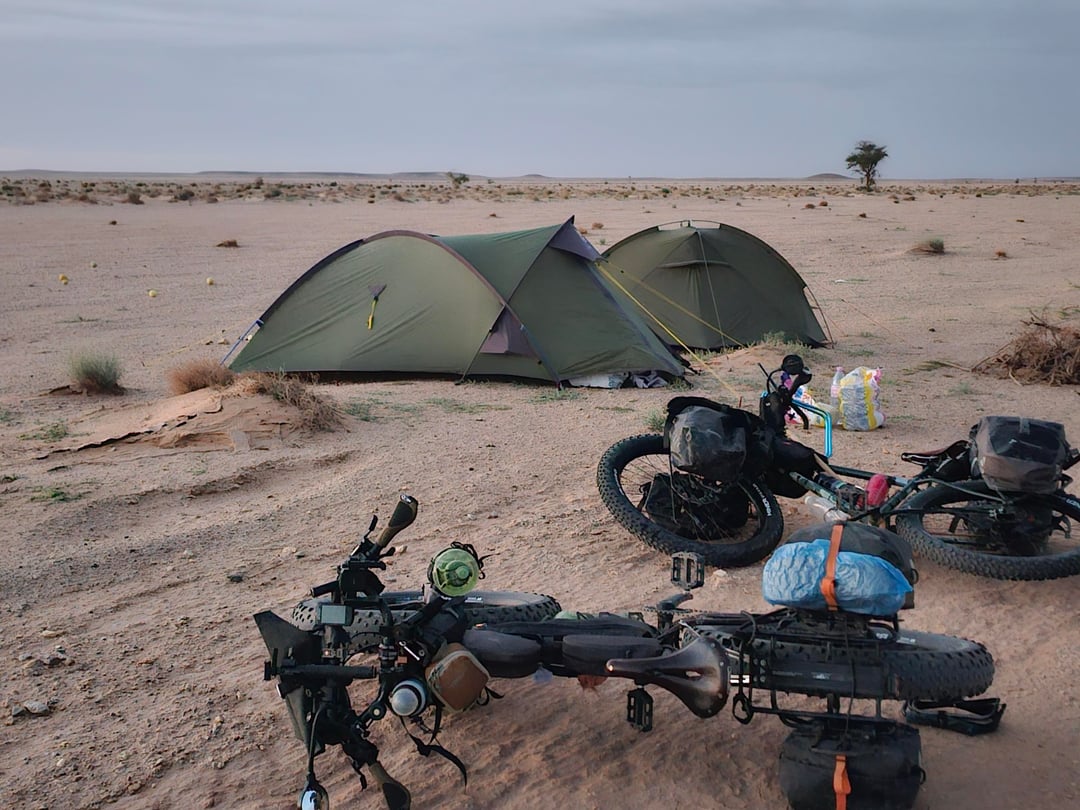
Sandy sections in valleys forced my partner to push his bike (27.5 x 3.25 tires)
I was riding a 26 x 4.40 fat bike, and I had no issues in sand
Punctures:
My partner: 2 punctures
Me: 2–3 punctures
But running tubeless with sealant (Zero Flat) changed everything.
All my punctures sealed instantly — no stops, no stress.
Crossing Three Desert Regions
This route wasn’t just long — it cut across three distinct desert regions of southern Algeria.
We first traversed the southeastern edge of the Tademaït Plateau, a vast and harsh plateau dominating the central Sahara.
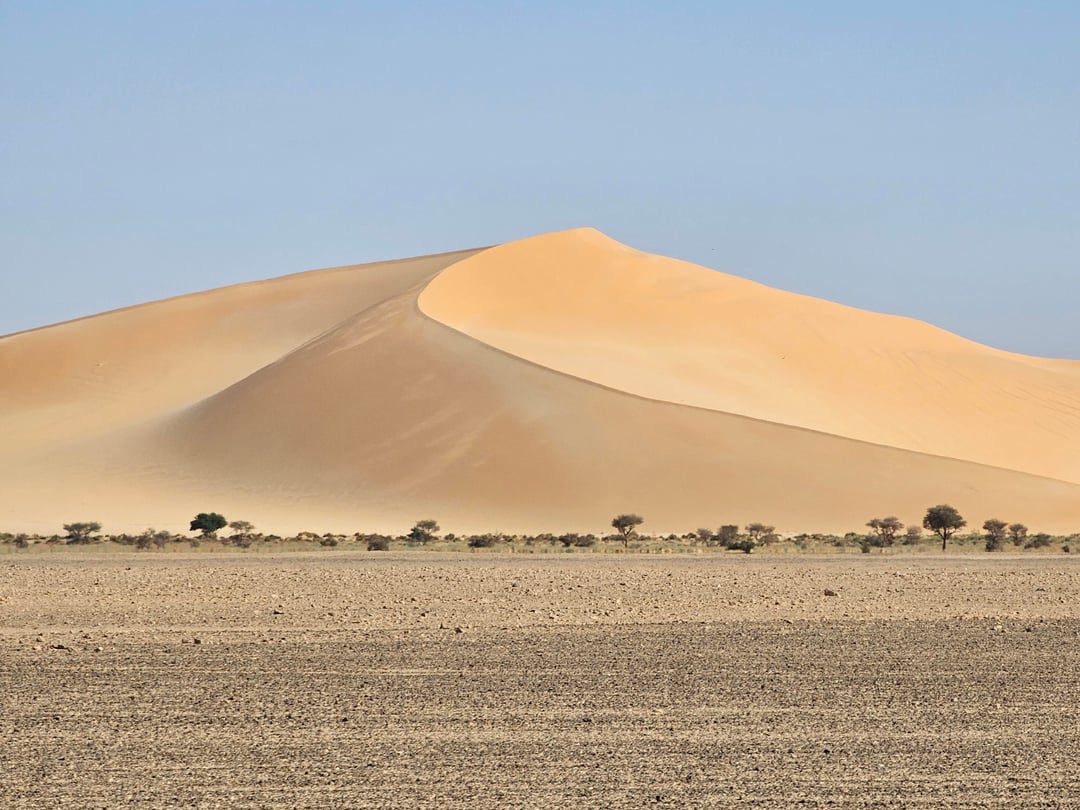
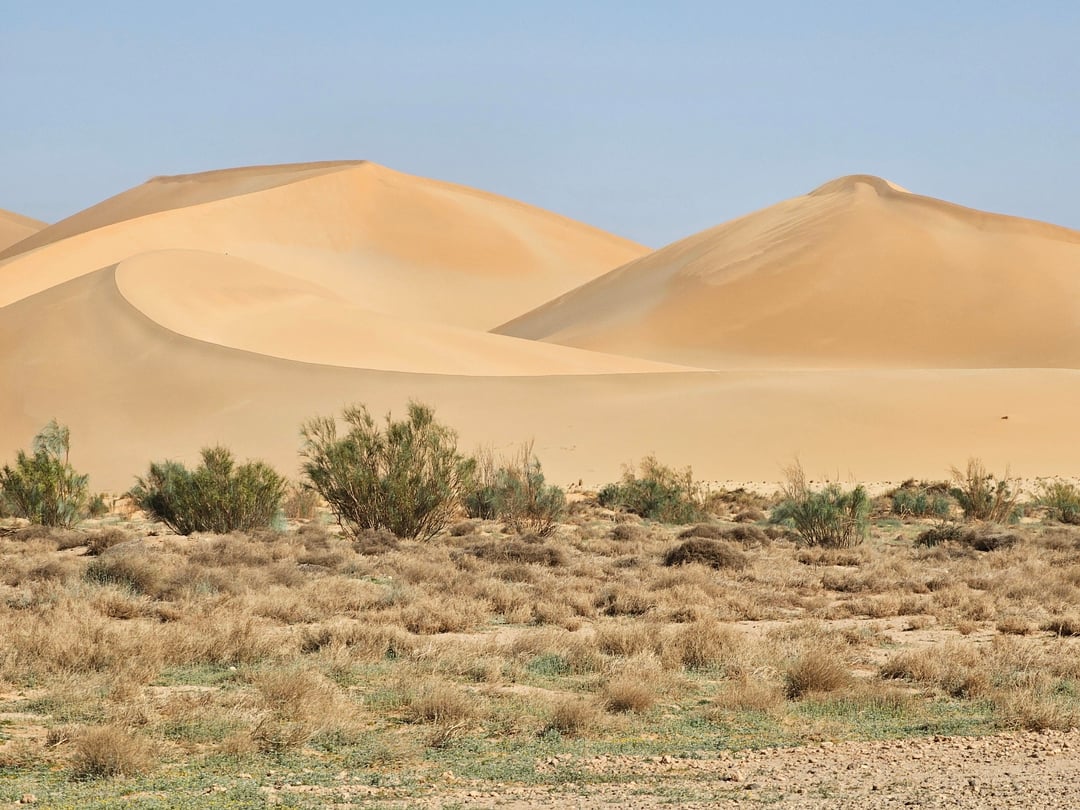
From there, we moved along the lower edge of the Grand Erg Oriental, riding just beneath its massive sea of .
Finally, we entered the Tinghert Plateau, the region that leads toward Bordj Omar Driss.
Each zone had its own character — but all of them shared the same reality: isolation, exposure, and zero margin for error.
Lessons Learned
Water discipline is survival
In desert conditions, poor management is not a small mistake — it escalates quickly into a life-threatening situation.
Your partner matters
In remote environments, you are only as strong as the weakest link in the team.
Fat tires are a major advantage in mixed desert terrain
Especially when sand appears unexpectedly.
Tubeless setup is non-negotiable
It saved time, energy, and possibly the entire trip.
Never rely on luck — but respect it when it shows up
Those meteorite hunters didn’t have to follow our tracks.
Final Thoughts
This route is not as infamous as the Tanezrouft, but don’t underestimate it.
It is isolated.
It is harsh.
And it will expose every weakness in your planning, your gear, and your team.
We made it. But we also came back with a clear understanding:
In the desert, small mistakes don’t stay small.
by Muhammadredha
2 Comments
Respect
Wow. Amazing.