
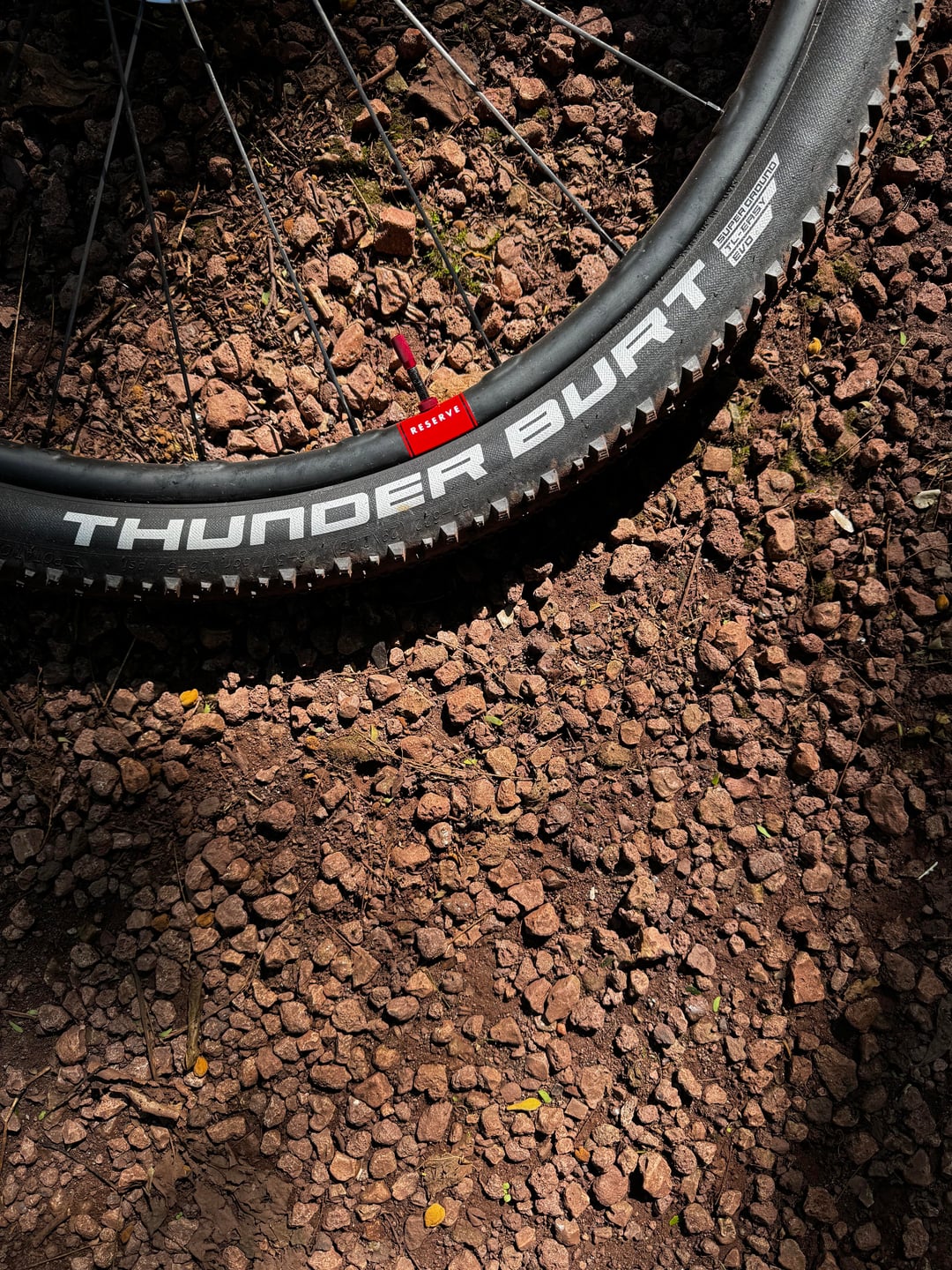
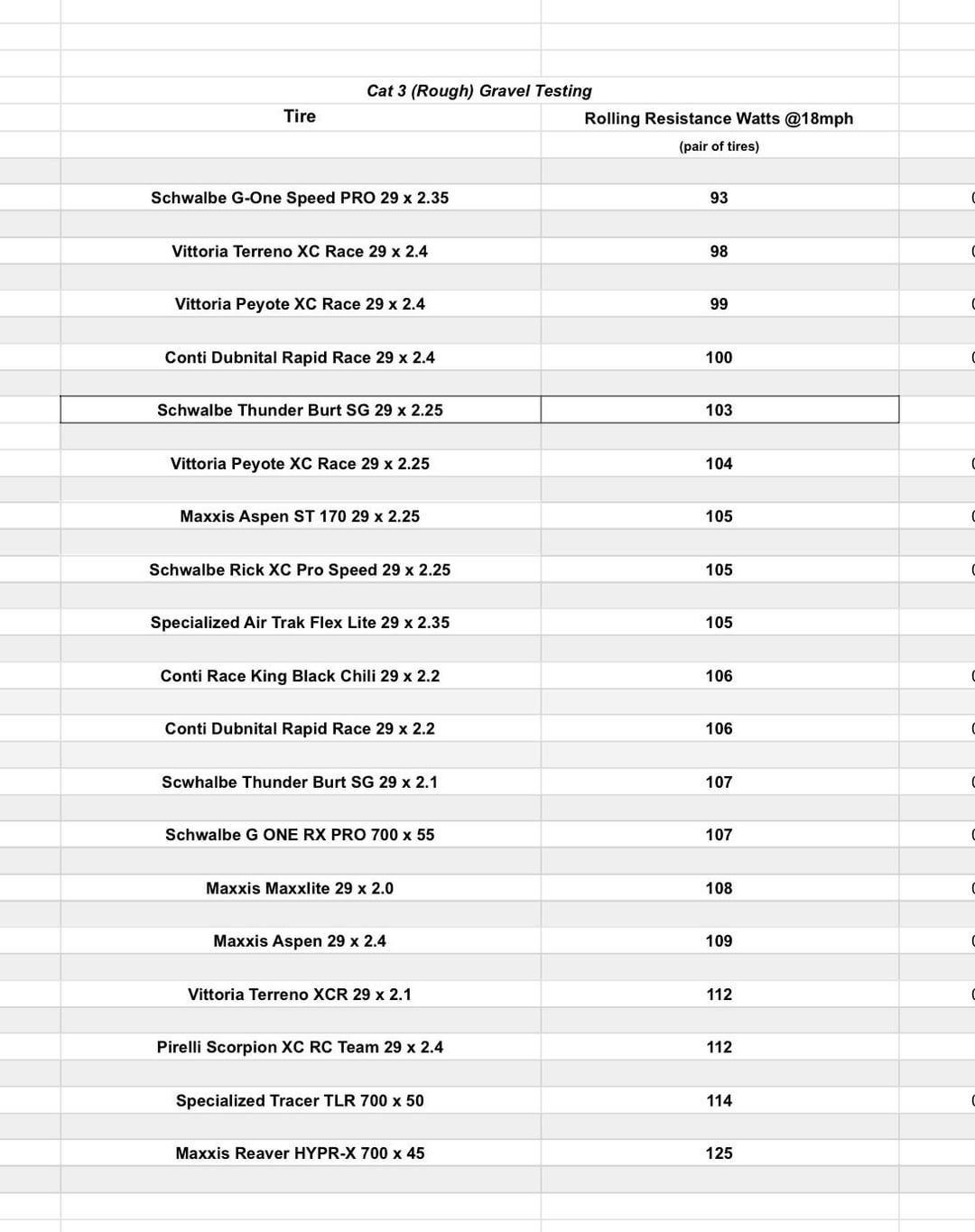
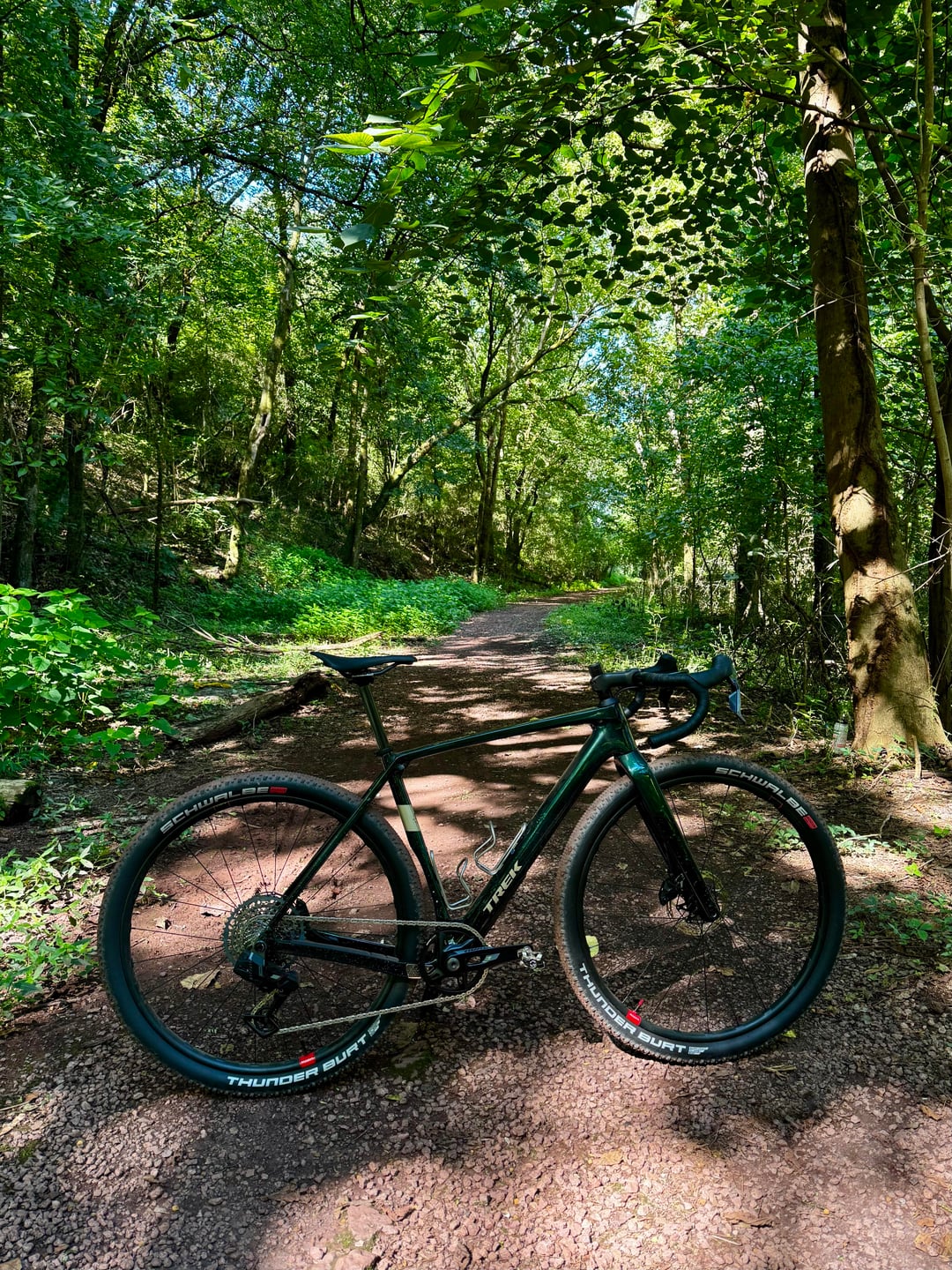
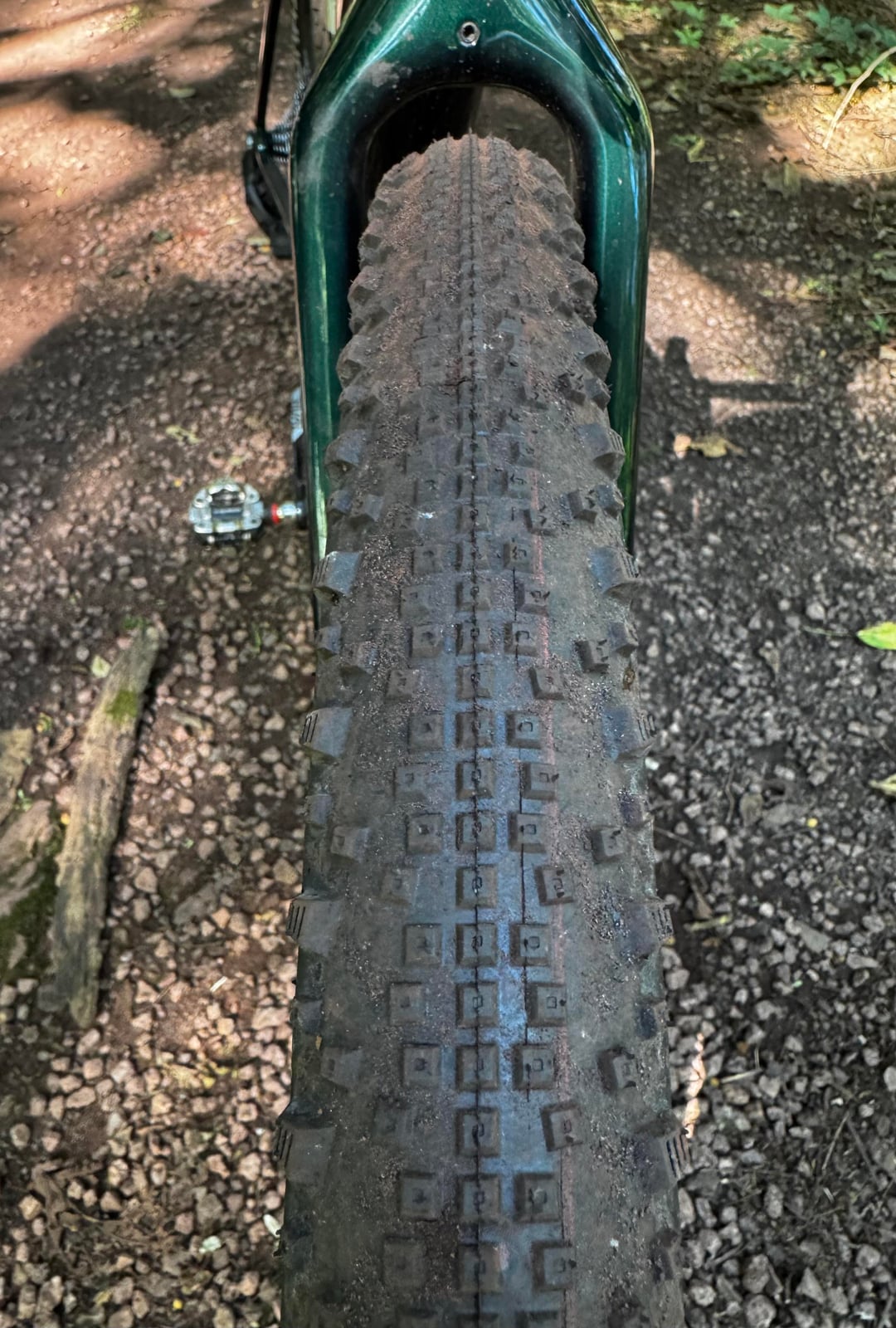
I was not interested in testing this tire initially. I figured it would be super fast and somewhat similar to the 29 x 2.10 version I originally tested back in January. A few things changed my mind. The Bicycle Station boys had good things to say about the 2.25 Burt recently on their YouTube channel, which made me more curious about their performance vs the 2.1 Burt.
Earlier this month, Kate Courtney smashed the Leadville 100 course record on 2.25 Thunder Burts (SR version caveat) and a few days later someone sent me some 2.25s… so I tested them! Super happy to get these as they aren’t the easiest thing to find. Of course, Kate Courtney doing something is no guarantee you'll be able to pull it off. It has to be said.
(NOTE: The 2.25 measured in at 55 mm on a 25 mm rim compared to the 2.10 at 52 mm on a 25 mm rim.)
Based on results I’ve seen from Nick Dart in the UK, the Super Race is a bit faster than Super Ground. Per Schwalbe, the SR has a bit lower puncture resistance. The two versions of this tire are very similar in their weight.
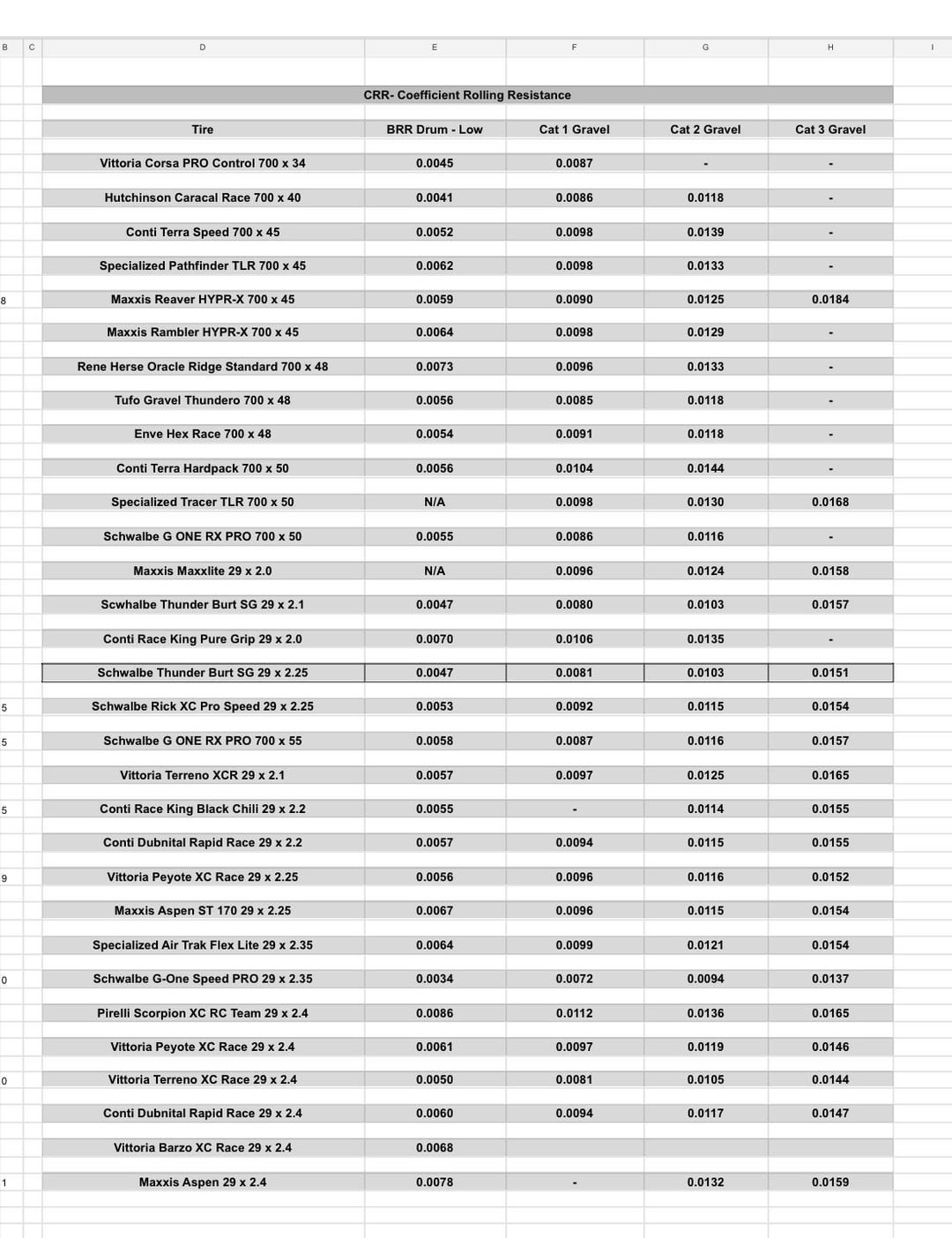
From my own testing, the 29 x 2.10 and 29 x 2.25 Super Ground versions of this tire have identical rolling resistance for me on pavement (0.0042 CRR at 25 psi). This is faster than almost every single gravel tire on the market, despite the slowish feeling these have on the road sometimes.
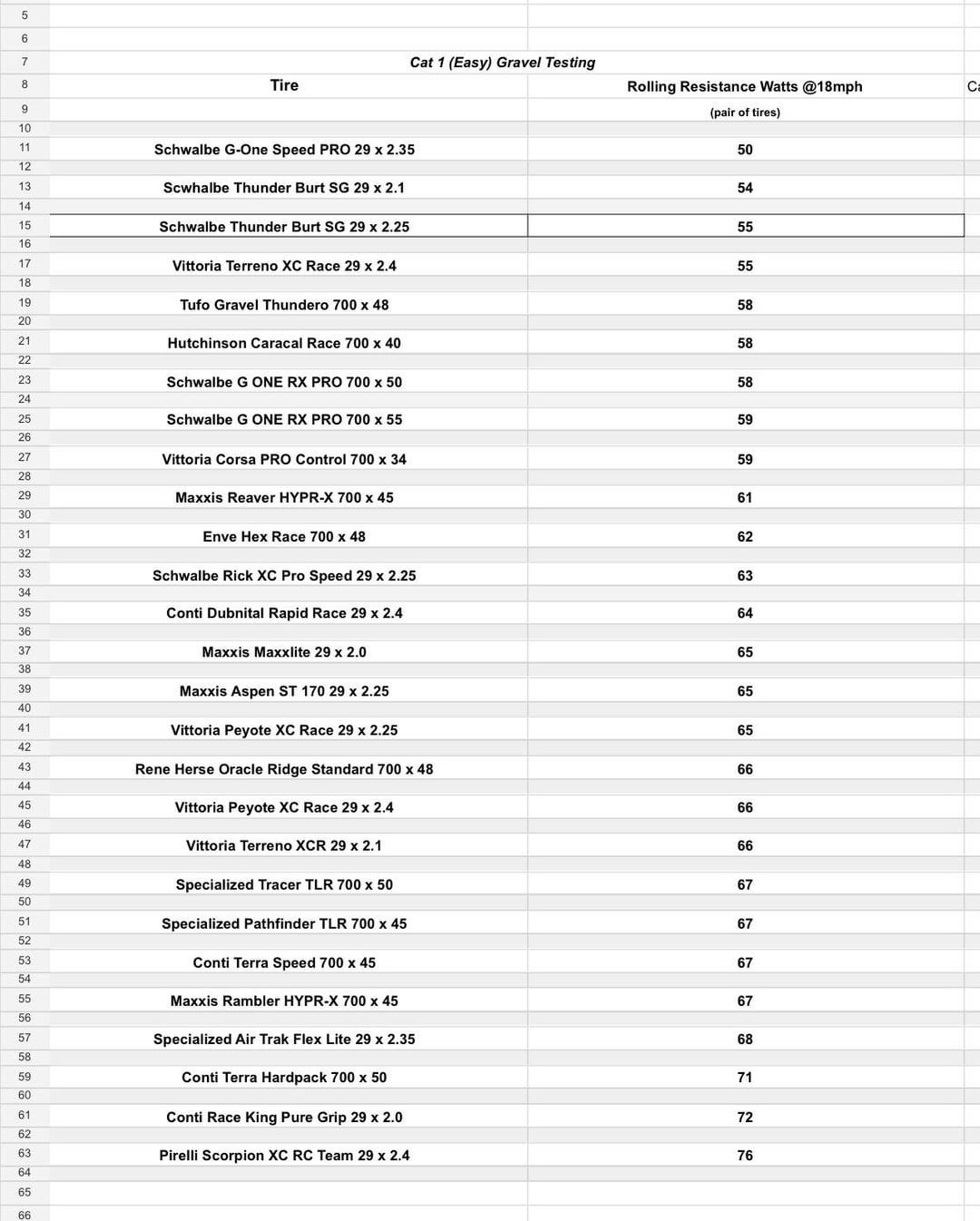
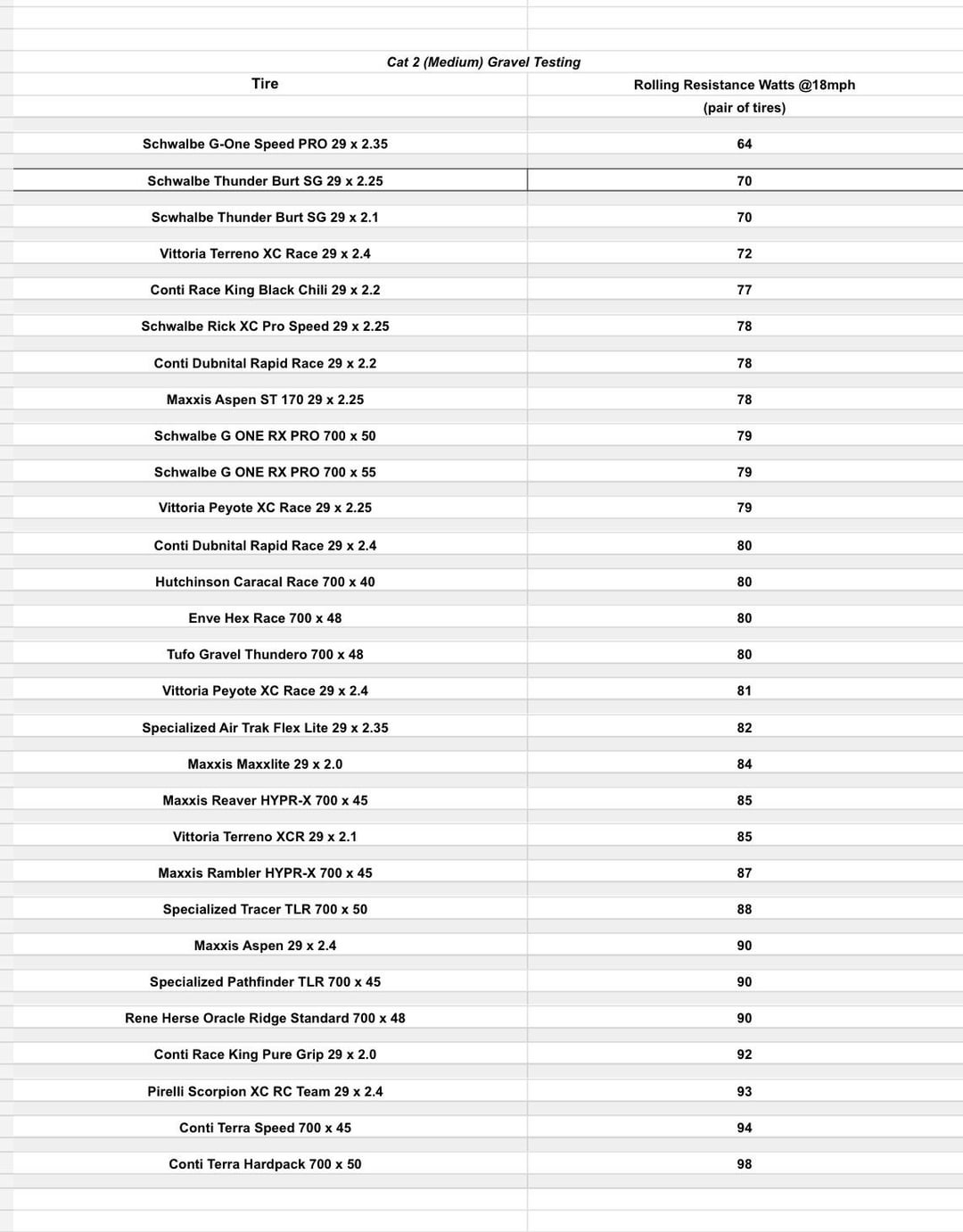
Once off road, these are ridiculously fast. Almost identical performance to the 2.1 until you get to the rough gravel, where the 2.25 is clearly faster and a bit more surefooted.
All results my own via Chung Method outdoor testing. Wattage values are calculated from tested coefficient rolling resistance.
NOTE: Obviously, larger tires will require lower pressure than smaller ones to get the best speed and handling in general…especially off road. The Wolf Tooth calculator is very good in my usage for gravel and mtb tires. The Rough Gravel setting seems to get quite close to best pressure for not only rolling efficiency (yes, even on gravel that’s not super rough) but also comfort and handling. I will start with that based on the measured tire size, go ride some, recheck pressure once the tire warms up, the reasess the setting based on how the tire is riding. If it feels obviously harsh, go down 1 psi at a time. If it feels squirmy or I am smacking the rim on hard hits, I will go up 1 psi at a time. Often I end up sticking quite close to what the calculator says initially but it isn't written in stone. Rolling efficiency is actually almost identical across a bigger span of tire pressures off road than most realize, which means it is quite easy to get the pressure where the tire will be fastest…the rest is fine tuning to rider preference. Even though I’m testing I am also enjoying being out there so take the extra steps to see how the tire performs best. Ultimately there is no magic “best” pressure… it is up to rider preference with no real speed penalty unless you really mess it up one way or another.
by gravykarrasch