
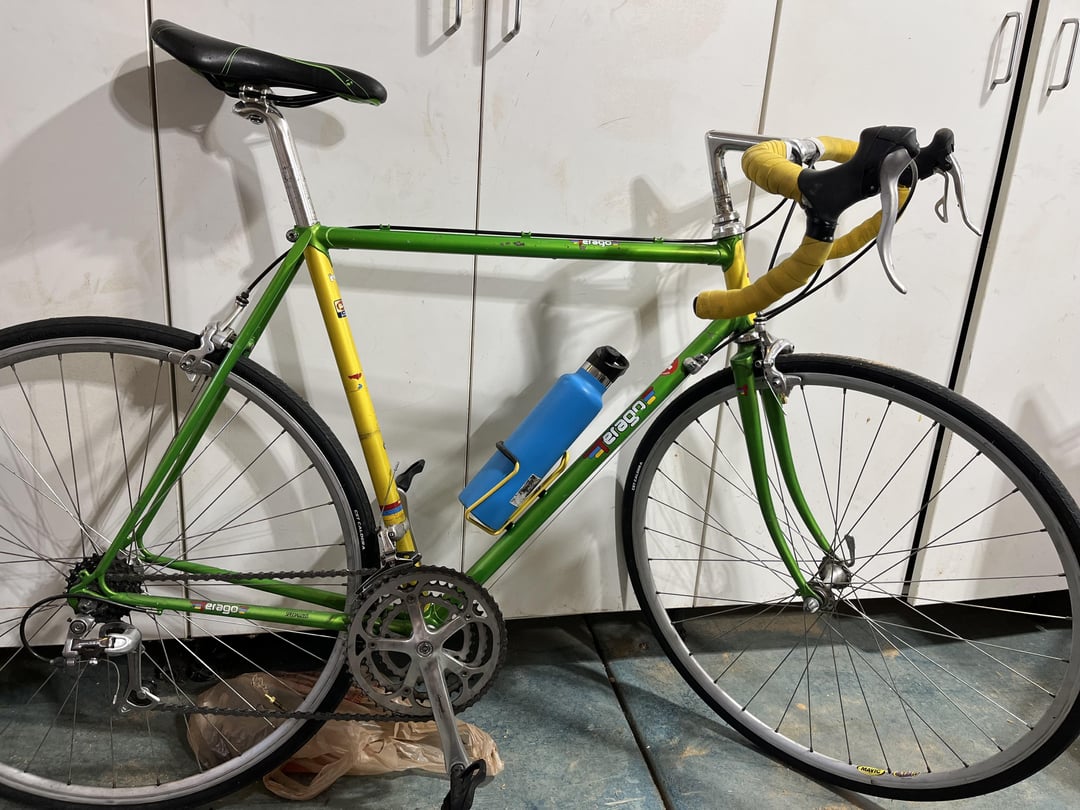
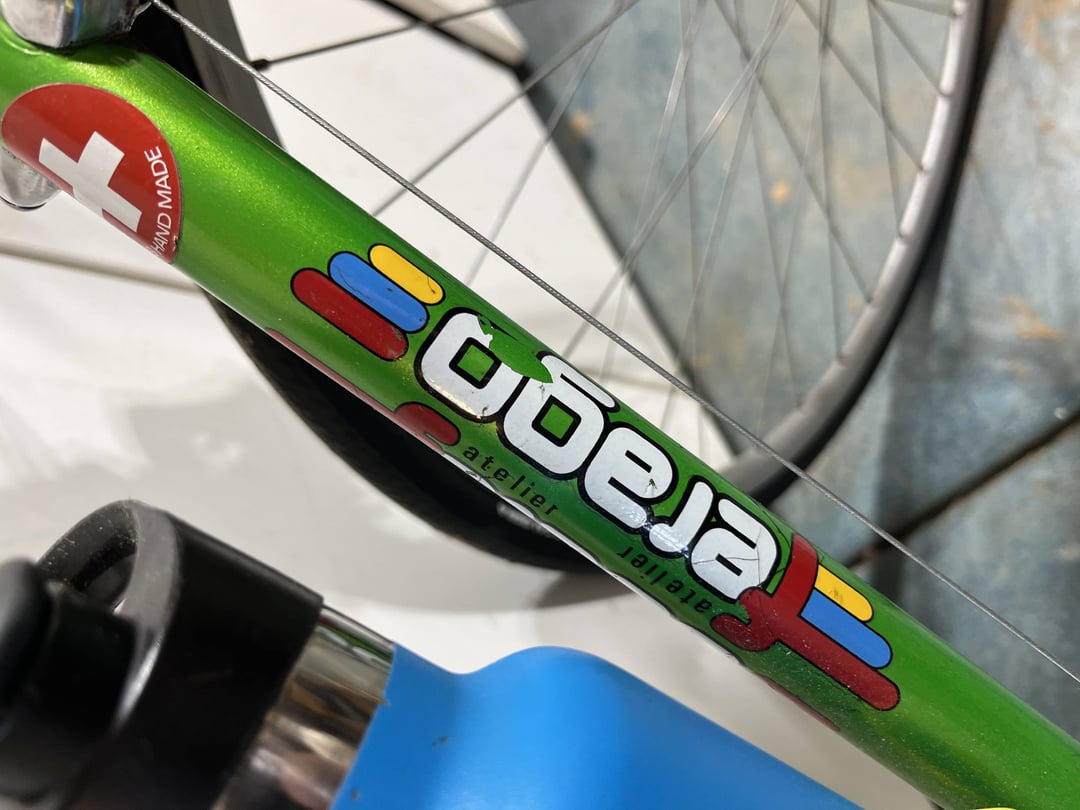
I've recently entered into a long-term relationship with the lime green lady in the image. She came into my possession in Provo, UT after being rebuilt by our local Bicycle Collective, but I get the sense she has a hell of a story behind her.
I've been able to do a good bit of research on her using the tools at my disposal, but I'm not that knowledgeable about bikes and she seems to be both obscure and interesting. The Manufacturer (Atelier Ferago) appears to have been founded by Giorgio Sergio Alessando Gomelsky in partnership with Gianni Bonardi.
The former is most notable for owning the Crawdaddy Club, which is where the Rolling Stones had their first major residency. When they moved on, he replaced them with The Yardbirds, which I suppose is most notable for having Eric Clapton, Jeff Beck, and Jimmy Page as featured guitarists. He also produced and wrote songs for them under a pseudonym and that's only like 1/10th of his wikipedia entry.
I can't find anything about the latter, apart from the typical seo spam you get when you enter a human name into a search engine.
The brand itself seems to have been pretty damn notable in its time, sponsoring a number of local clubs in Ticino (where my beloved LGL was born), being ridden by Rocco Cattaneo and the perhaps (inf)amous Mauro Gianetti, and participating in the 1981 Expo Selezione Ambiente. I have no idea how significant that last thing was but my research tools were very impressed. Ferago itself appears to have been revived in ~2021.
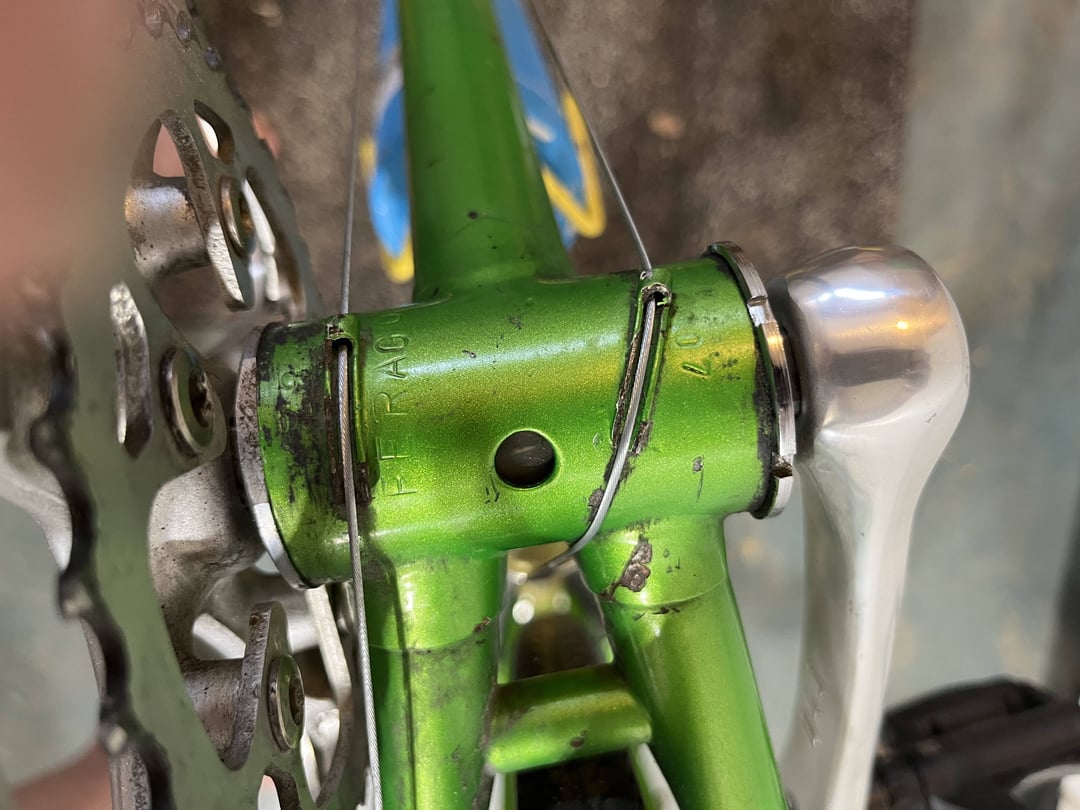
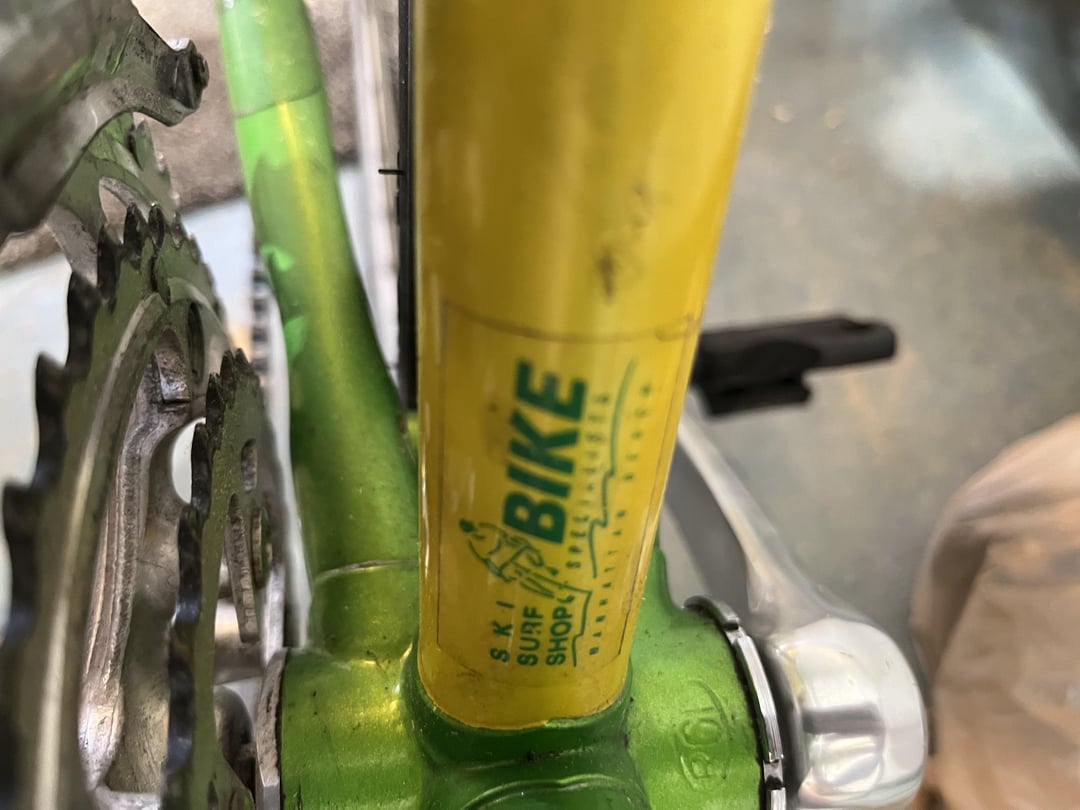
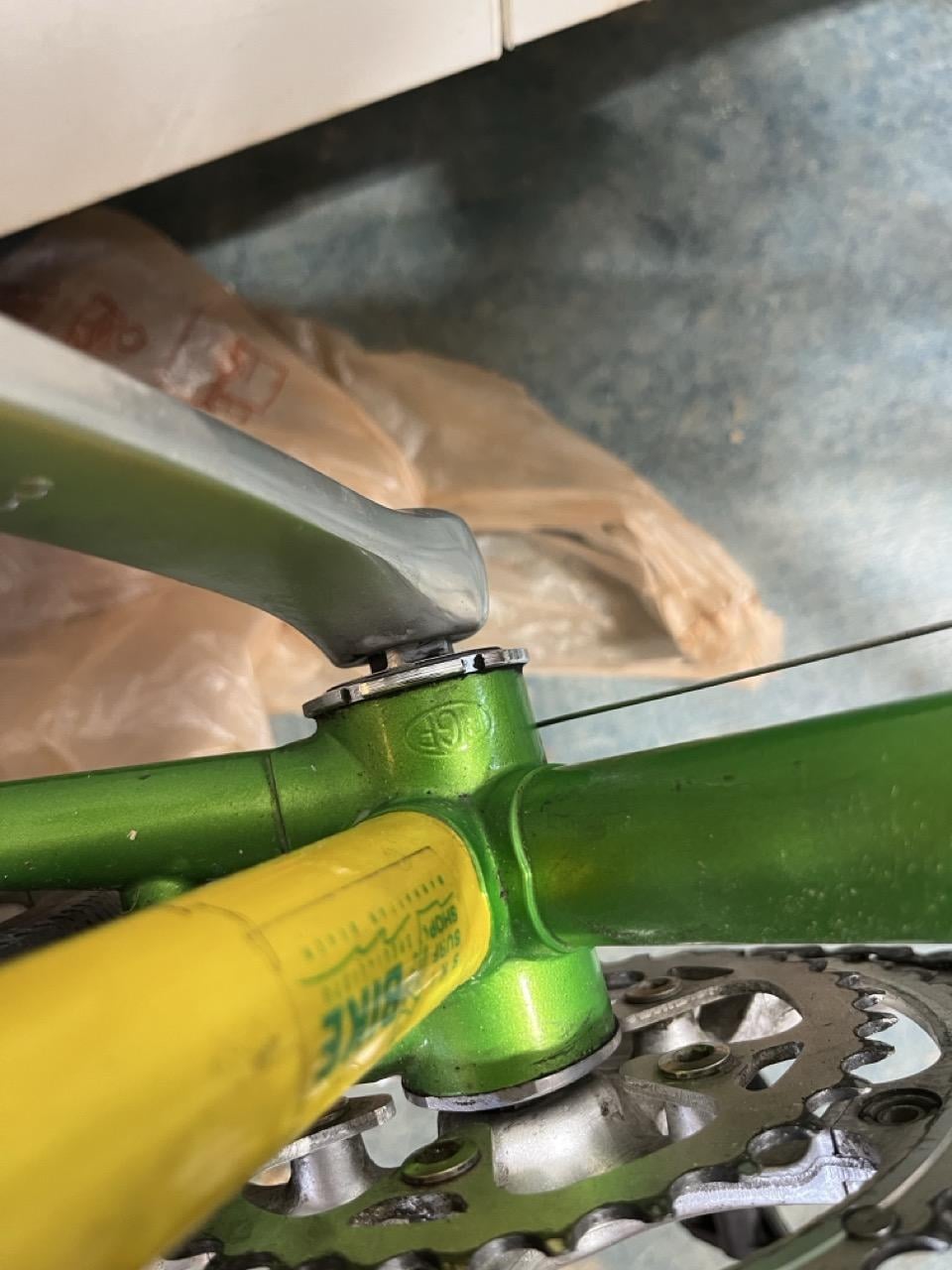
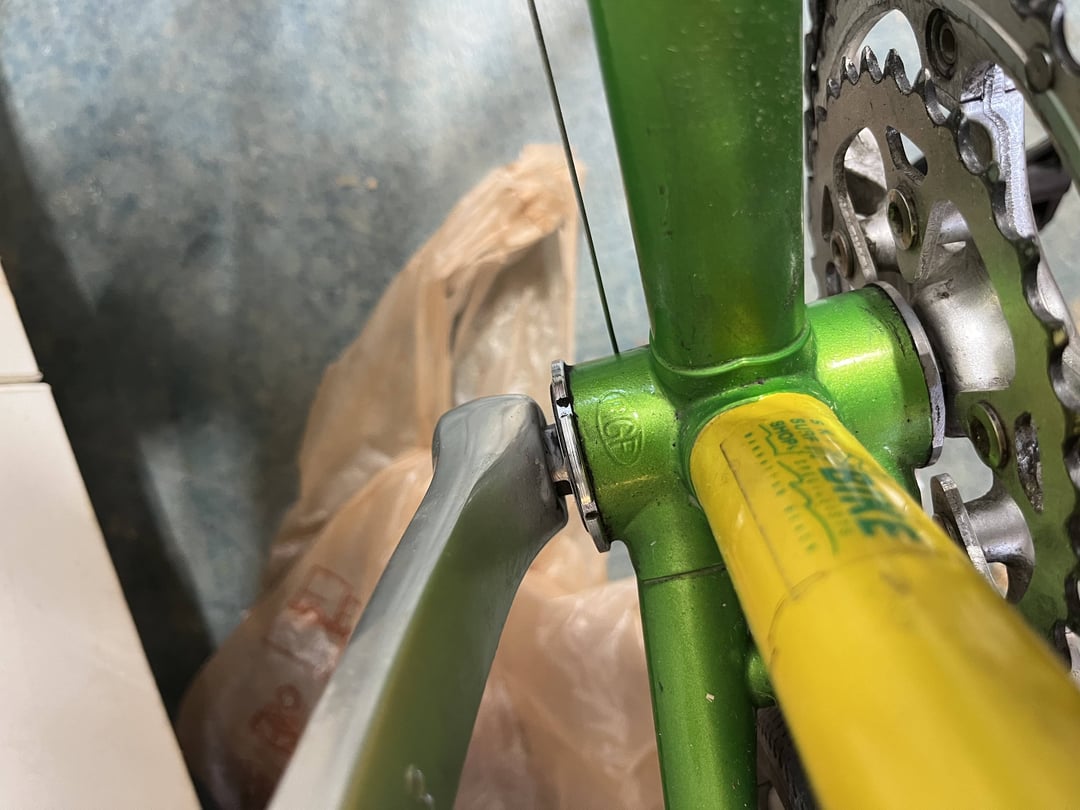
Best I can tell, the LGL made her way from Ticino to Manhattan Beach, CA via a shop called Ski Surf Shop Bike Specialists in Manhattan Beach, CA. The monogram seems to indicate that the original owner's initials were either R.P.G. or they'd adopted it as a nickname (Rocket Propelled Grenade….)
I'd googled the lady's origins in passing once or twice but found close to nothing. Then I fell down this rabbit hole while registering LGL for a license with the city and seeing that its serial number was "07," which seemed kind of low.
Then I stumbled across the monogram and decided to put some of my research tools to work on her. They're really built for digging into companies as prospective investments (I run Ethical Capital) so they are forgivably light on cycling/rock n' roll lore and will not likely improve.
So anyway, I've pasted the rest of what I "know" below, and am hoping y'all hivemind homies can help me color it in a little bit more. The joy of riding her and digging into her history is already well worth the price of admission ($300, tysm Utah Bicycle Collective). But I know there's more, and have the vain hope of sending the human that brought il LGL into the world a long-distance hi five somehow.
Anyway, can any of you help me color in the rest of this lady's story? If not, i hope you find it as neat as I do.
Sending good vibes your way —
Sloane
P.s., "farrago" in english means a "a confused mixture," which feels absolutely perfect.
Frame Info
| Specification | Value | Description |
|---|---|---|
| Frame Material | Steel Alloy | Provides the classic "steel is real" ride quality: compliant, durable, and comfortable over long distances. |
| Tubing Model | Columbus Aelle | A high-quality, straight-gauge Carbon-Manganese (CMn) steel tubeset from a legendary Italian maker. |
| Tubing Type | Straight-Gauge (Non-Butted) | Offers excellent durability and a smooth ride, prioritized over the absolute lightest weight of professional butted tubesets. |
| Frame & Fork Weight | ~2.73 kg (6.02 lbs) | Heavier than a pro-level racing frame of the era, but indicative of a robust build for enthusiast riding. |
| Bottom Bracket | ITA (70mm) | The Italian threaded bottom bracket standard, common on high-end frames from Italy and Italian-influenced Swiss builders. |
| Rear Spacing | 126 mm | The standard rear hub spacing for road bikes with 6 or 7-speed freewheels in the 1980s. |
| Seat Post Diameter | 26.8 mm | A common seat post size for frames built with Columbus Aelle tubing. |
Component Information
| Component | Identified Model | Period | Identifying Features | Materials | Significance |
|---|---|---|---|---|---|
| Rear Derailleur | Campagnolo Chorus (1st Gen) | c. 1987-1991 | Smooth, polished "aero" styling. Features an A-shaped upper knuckle and a canted parallelogram. Lacks the dual-spring pivot of the top-tier C-Record derailleur. | Aluminum Alloy | Campagnolo's first successful attempt at a "slant parallelogram" design to improve shifting precision and compete with Japanese rivals. A major step towards modern derailleur geometry. |
| Crankset | Campagnolo Chorus/Athena | c. 1987-1992 | Smooth, non-fluted crank arms with a five-arm spider. Lacks the "hidden" fifth bolt of the C-Record model. Date code likely stamped on the rear of the arms. | Polished Aluminum Alloy | Embodies the new "aero" aesthetic of the C-Record era. Mechanically identical to the higher-tier Record group, with differences being primarily cosmetic and in material weight savings. |
| Brakes | Campagnolo Chorus Monoplaner | c. 1987-1990 | Single-pivot side-pull design with a distinctive intersecting arm linkage (the "Monoplaner" system). Provides improved mechanical advantage over standard side-pulls. | Polished Aluminum Alloy | An innovative design that offered a powerful and well-regarded alternative to both traditional side-pulls and the controversial Delta brakes. |
| Shift Levers | Campagnolo Friction | c. 1980s | Downtube-mounted levers for non-indexed, friction-based shifting. Simple, reliable, and lightweight design. | Aluminum Alloy | The classic, standard method of gear shifting for racing bicycles for over 40 years, requiring skill and feel from the rider. This bike represents the end of that era. |
| Brake Levers | Campagnolo Chorus/Athena | c. 1986-1988 | Non-aero design with cables exiting from the top of the hoods. Drilled lever blades for weight savings. Hoods are typically made of natural rubber. | Aluminum Alloy Body & Lever | A key dating feature. The non-aero design firmly places the bike in the period just before under-the-tape cable routing became the industry standard around 1988. |
by aspiringsensei