
Hello All, This is the author of the orginal buyers guide in the sidebar (bmied31). A while back I deleted my Reddit account as subs beyond cycling ones were becoming toxic and stressful to my life, however as time went on and I free’d myself of the other crap, I decided I missed specifically the biking community on Reddit. I’d like to get this guide going again and eventually my FAQ’s I had as well. I’m hoping the folks on r/MTB will read this and give their input and eventually the Mod’s of the community will update the sidebar links with the new posts.
This first guide is my orginal. The bike buyers guide for people getting started with serious riding or looking for a budget bike. Freel free to check it out.
————————————————————————————————-
**Budget/Value Bike Buying Guide**
When looking for a starter or budget bike there are a few things I’d recommend that will get you onto a solid/safe bike that should be built to last and be worth upgrading as you see fit. Before we get started on talking bikes and prices, always make sure you’re getting a bike that fits you. If the bike doesn’t fit, it doesn’t matter how good a deal it is. Also, this guide assumes you intend to ride on actual mountain bike single track, not just smooth dirt paths and gravel. If that is all you are hoping for and don’t plan on advancing beyond that, any entry-level mountain bike from a major brand like a Trek Marlin 5 will do just fine, but if you are hoping to ride anything above green-rated singletrack, I’d suggest a little more bike.
**First**, some rough price guidelines. As low as $400 should get you into a **used** but solid entry-level hardtail and about $750+ can get you a used but decent full suspension. In regards to **new**, you can double those prices. A new solid entry-level hardtail will be at least $800 and $1500 for a decent full-suspension bike.
Regarding used bikes, there are lots of places to look. Used bikes offer you a ton of value and if you want to get the most for your money it’s the way to go. You can get 2-year-old $3000 bikes for a huge discount. The most common places are Craigslist, Facebook groups, eBay, Pinkbike, etc. You also can sometimes find great deals at local bike shops selling demo models (which often come with warranties) and rental fleets. Rental bikes are usually good options. They typically are well maintained and only have a season or two on them before they are replaced with something newer.
If you are new to the biking world I’d recommend bringing along a friend who knows bikes to take a look at them or ask about them here. Lastly, if meeting someone, always be smart when meeting people to buy bikes. I would recommend meeting at a police station and bringing a friend.
**These are the specs I’d look for at minimum as of 2023**
1. **Air fork**: The cheapest fork I’d safely recommend is something like the SR Suntour XCR Air fork. Anything less than that from SR Suntour or RST is pretty much a pogo stick with poor damping and limited adjustability. The low-end RockShox coils aren’t terrible, but I’d shoot for air as they are far more adjustable and lighter. Forks can be upgraded down the road, but are often the single most expensive component on the bike.
2. **1x Clutched Drivetrain**: In the last 10 years there has been a shift to 1x drivetrains across the board. At this point, any slightly trail-worthy bike will have this type of drivetrain setup. To clarify what this means to those new or not familiar, 1x is when there is only 1 chainring/cog attached to the crankset instead of the more traditional 2 or 3. 1x drivetrains have fewer gears than the old 3×8 drivetrains but compensate by having 11-42+ cassettes in the rear to still allow you to climb and retain high-speed capability. The benefits of 1x include less weight, less to go wrong, and less to think about when riding. You don’t have to worry about shifting your front derailleur and this results in a simpler and more reliable ride. Now the second half of this requirement is a clutched drivetrain. With a 1x drivetrain, you no longer have a front derailleur to help keep the chain on the chainring. To compensate for this you have two things. One is a narrow-wide chainring in which the teeth of the chainring alternate sizes to match the chain and help keep the chain in place and a clutched rear derailleur. The Clutch in the derailleur is a mechanism that helps keep the chain tight and prevents chain slap and drops. Box, Microshift, Shimano, and SRAM all have budget-friendly 1x options at this point in time.
3. **Hydraulic brakes**: This one is pretty simple, Hydraulic brakes use fluid to move pistons and squeeze down on the brake rotor to stop the bike as opposed to mechanical disc brakes that use a cable to actuate the calipers. This typically results in stronger braking, better modulation/control/and self-adjusting. The only time I’d suggest mechanical brakes is for a bike packing/touring bike as they are easier to fix trailside. SRAM, Shimano, and Tetkro, all offer solid entry-level brakes.
**The following are not as important as the above but will help future-proof the bike and make it a frame worth upgrading or having for a while and in some cases dramatically improve performance/fun factor such as the Dropper post.**
1. **Tapered steerer tube**: Most modern forks use a tapered steerer. If you get a bike with a lower-end fork/frame and want to upgrade down the road, it’s easier if your bike has this for compatibility reasons.
2. **Thru-Axle hubs and Boost Spacing**: In theory, both of these things offer greater stiffness, but in reality, the biggest reason to make sure you have them is future upgradeability. Thru-axles also keep your wheels aligned better so you don’t get as much disc brake rub as you would with QR axles.
3. **Tubeless Compatible Wheels:** Going Tubeless is one of the cheapest upgrades you can perform on a bike that will make the biggest difference. Some of the benefits of going tubeless include shedding weight, tires that are less likely to have flats, and the ability to run lower tire pressures which allows you to have more grip and better ride properties. If you ride on a regular basis, you should go tubeless. They may require a little more maintenance and can be a pain to mount/install, but the positives drastically outweigh the negatives.
4. **Dropper Post:**. A dropper post is a seatpost type that can be raised and lowered with a lever on your handlebars. Dropper posts have been a gamechanger to the mtb world in the last 10 years allowing you to drop the saddle out of the way for technical or fast downhill sections, then quickly return the saddle to optimal pedal height for climbing or flat sections of the trail. With that said, dropper posts are a cheap add-on that can be added to any bike. Brands like Brand-X, PNW, and OneUp all sell great droppers that can be added to any bike for starting around $100. So not having a dropper shouldn’t be a deal breaker as you can add it down the road.
5. **UDH**: UDH stands for Universal Derailluer Hanger. For starters, a derailleur hangar is the component of a bike that allows your rear derailleur to attach to the frame. They are designed to be a sacrificial part. If you take a fall or a hit to your derailleur, the idea is that the hanger will bend/break instead of your frame or your more expensive derailleur itself. Up until SRAM developed and allowed free use of their UDH design, every bike/brand used a different style derailleur hangar which could make sourcing a replacement a pain. Having a bike with a UDH allows you to walk into any good bike shop and find a replacement hangar. In addition to that SRAM playing the long game has designed a new type of MTB Drivetrain called “Transmission”. These new types of derailleur hangars mount directly to a bike’s UDH interface. If your bike does not support UDH, you will not be able to use these new types of drivetrains. (I hesitate to include this one, as it really doesn’t effect the performance of a bike, especially a budget bike, it’s something I felt worth mentioning.
————————————————————————————————-
**Good Value Bikes**
Here are some solid entry-level bikes. Not all of them check off all my recommendations, but they all are solid for the price. For the most part these bikes all fall into the XC and Trail categories as that is where most people start. These are in no particular order and as time goes on I will attempt to modify, update, and possibly add details as to why I like this bike or what it may be lacking.
**Full Suspension** (Cheapest ones that are still solid bikes IMO)
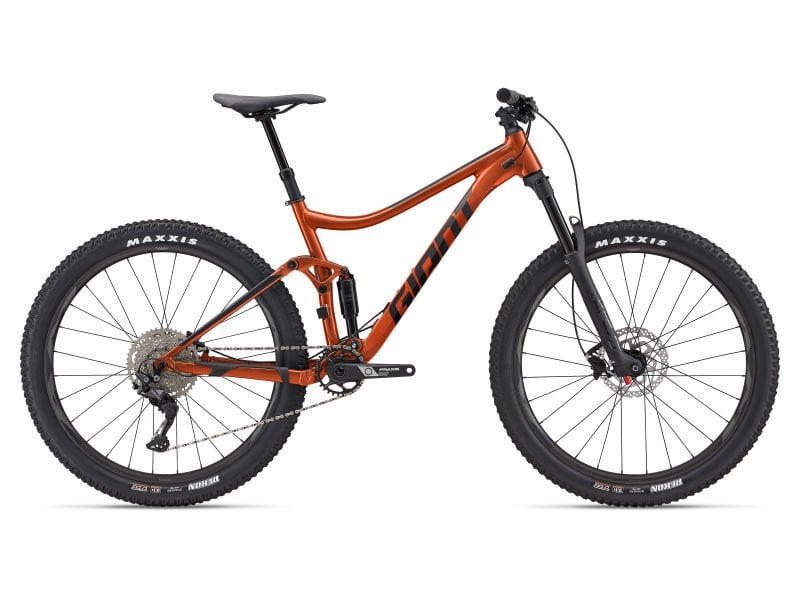
– [Giant Stance](https://www.giant-bicycles.com/us/stance) – $1330+
– [Marin Rift Zone](https://www.marinbikes.com/bikes/2024-rift-zone-29-1#buy) (29er or 27.5) $1700+
– [Vitus Mythique VR](https://www.chainreactioncycles.com/us/p/vitus-mythique-29-vr-mountain-bike) (29er or 27.5) $1700
– [Commencal Meta TR V4 Origin](https://www.commencal.com/us/en/commencal-meta-tr-origin-dark-slate/22METATROGR.html) $2000
– [Canyon Nueron 5](https://www.canyon.com/en-us/mountain-bikes/trail-bikes/neuron/al/neuron-5/4032.html?dwvar_4032_pv_rahmenfarbe=WH%2FBK) $1800
– [Polygon Siskiu D7](https://www.polygonbikes.com/siskiu-d-2/) $1500
– [Polygon Siskiu T7](https://www.polygonbikes.com/siskiu-t/) $1750
– [Norco Fluid FS A4](https://www.norco.com/bikes/mountain/trail/fluid-fs/2023-fluid-fs-a4/) $1900
– [Specialized Status 140/160](https://www.specialized.com/us/en/status-140/p/175279?color=299167-175279) $2250
– [GT Zaskar FS Sport or Comp](https://gtbicycles.com/collections/mountain-bikes/products/zaskar-fs-sport?variant=46480935649577) $1500+
**Hard Tail** (Cheapest ones that are still solid bikes IMO)
– [Vitus Nucleus VR](https://www.chainreactioncycles.com/us/p/vitus-nucleus-29-vr-mountain-bike-blue) (27.5″ and 29″) $800
– [Giant Talon 1](https://www.giant-bicycles.com/us/talon-1) $900
– [Canyon Stoic](https://www.canyon.com/en-us/mountain-bikes/trail-bikes/stoic/) $1300+
– [Kona Mahuna](https://www.konaworld.com/products/mahuna) $1200
– [Salsa Rangefinder](https://www.salsacycles.com/bikes/mountain/Rangefinder) $900+
– [Specialized Rockhopper Elite](https://www.specialized.com/us/en/rockhopper-elite-29/p/199624?color=319769-199624) $1100
– [Specialized Fuse 27.5](https://www.specialized.com/us/en/fuse-275/p/199942?color=321203-199942) $1275
– [Cannondale Trail SE 3](https://www.cannondale.com/en-us/bikes/mountain/trail-bikes/trail/trail-se-3) $1060
– [Cannondale Habit HT](https://www.cannondale.com/en-us/bikes/mountain/trail-bikes/habit-ht/habit-ht-3) $1100
– [Commencal Meta HT Origin](https://www.commencal.com/us/en/commencal-meta-ht-am-origin-green/22METAHTAMO.html) $1100
– [Polygon Extrada 7](https://www.polygonbikes.com/xtrada/) $800
– [Polygon Syncline C3](https://www.polygonbikes.com/syncline-c/) $1250
– [Rocky Mountain Fusion 30](https://bikes.com/collections/hardtail-and-rigid-mountain-bikes/products/fusion-30-22?variant=41230876115107) $860
**Not Bottom Budget, but good value bikes**
– [Cannondale Habit 4](https://www.cannondale.com/en-us/bikes/mountain/trail-bikes/habit/habit-4) $2300
– [YT Izzo Core 2](https://us.yt-industries.com/products/bikes/izzo/core-2/550/izzo-29-core-2/) $$3300
– [YT Jeffsy Core 2](https://us.yt-industries.com/products/bikes/jeffsy/core-2/580/jeffsy-core-2/) $2000
– [Norco Optic C3](https://www.norco.com/bikes/mountain/trail/optic/2023-optic-c3/) $3000
– [Norco Fluid FS A2](https://www.norco.com/bikes/mountain/trail/fluid-fs/2023-fluid-fs-a2/) $3149
– [Trek Fuel EX 7](https://www.trekbikes.com/us/en_US/bikes/mountain-bikes/trail-mountain-bikes/fuel-ex/fuel-ex-7-gen-6/p/36347/?colorCode=black) $3200
– [Ibis Ripley AF Deore](https://www.ibiscycles.com/bikes/ripley-af](https://www.ibiscycles.com/bikes/ripley-af) $2625
– [Ibis Ripmo AF Deore](https://www.ibiscycles.com/bikes/ripmo-af) $2700
These are not all the options, but they are some better and more common budget/value bikes. This list is always changing, I try my best to update it, but it’s difficult to keep up.
————————————————————————————————-
**Last but not least make sure you save some of your budget for additional accessories that you will need.**
– Helmet
– Tire Pump (Most high-end bikes use a Presta valve, make sure the pump is compatible)
– Hydration (Either bottle cage and bottle or hydration pack of some sort.)
– Multi-tool with a chain breaker and basic tools.
– Tire irons/levers and spare tubes (and the knowledge of how to change both).
– Suspension pump assuming you have air suspension.
– Padded shorts or liner at minimum to wear under regular shorts.
– Bike cleaning supplies, chain lube, etc. Taking care of an MTB can be a lot of work, but it will save you in the long run if you properly maintain your ride.
– Quick-link to repair a broken chain.
Along with those required things, here are some things I’d highly recommend.
– MTB Platform shoes (or you can opt to go clipless).
– Tubeless tire kit. Most bikes come “tubeless ready” but don’t come with them setup typically.
– Starter tool kit with the basic tools.
– Work stand
– Torque Wrench, especially with carbon parts
————————————————————————————————-
**Extra Ways to Save Money!**
Check Activejunky.com which is a rebate site that can get you decent savings on a lot of bike websites.
————————————————————————————————-
**Last but not least**
If you found this information helpful, I have two other guides all riders should check out. It answers and goes more in-depth on a lot of topics about mountain biking.
Here are the links for part 1 and part 2 (Work in Progress)
by Optic2020